• HOME
  • NEWS
  • EXPLORE
    • CAREER
      • Companies
      • Jobs
    • EVENTS
    • iGEM
      • News
      • Team
    • PHOTOS
    • VIDEO
    • WIKI
  • BLOG
  • COMMUNITY
    • FACEBOOK
    • INSTAGRAM
    • TWITTER
Thursday, June 25, 2026
BIOENGINEER.ORG
No Result
View All Result
  • Login
  • HOME
  • NEWS
  • EXPLORE
    • CAREER
      • Companies
      • Jobs
        • Lecturer
        • PhD Studentship
        • Postdoc
        • Research Assistant
    • EVENTS
    • iGEM
      • News
      • Team
    • PHOTOS
    • VIDEO
    • WIKI
  • BLOG
  • COMMUNITY
    • FACEBOOK
    • INSTAGRAM
    • TWITTER
  • HOME
  • NEWS
  • EXPLORE
    • CAREER
      • Companies
      • Jobs
        • Lecturer
        • PhD Studentship
        • Postdoc
        • Research Assistant
    • EVENTS
    • iGEM
      • News
      • Team
    • PHOTOS
    • VIDEO
    • WIKI
  • BLOG
  • COMMUNITY
    • FACEBOOK
    • INSTAGRAM
    • TWITTER
No Result
View All Result
Bioengineer.org
No Result
View All Result
Home NEWS Science News Biology

Magnesium deprivation stops pathogen growth

Bioengineer by Bioengineer
November 21, 2019
in Biology
Reading Time: 2 mins read
0
IMAGE
Share on FacebookShare on TwitterShare on LinkedinShare on RedditShare on Telegram

IMAGE

Credit: University of Basel, Biozentrum


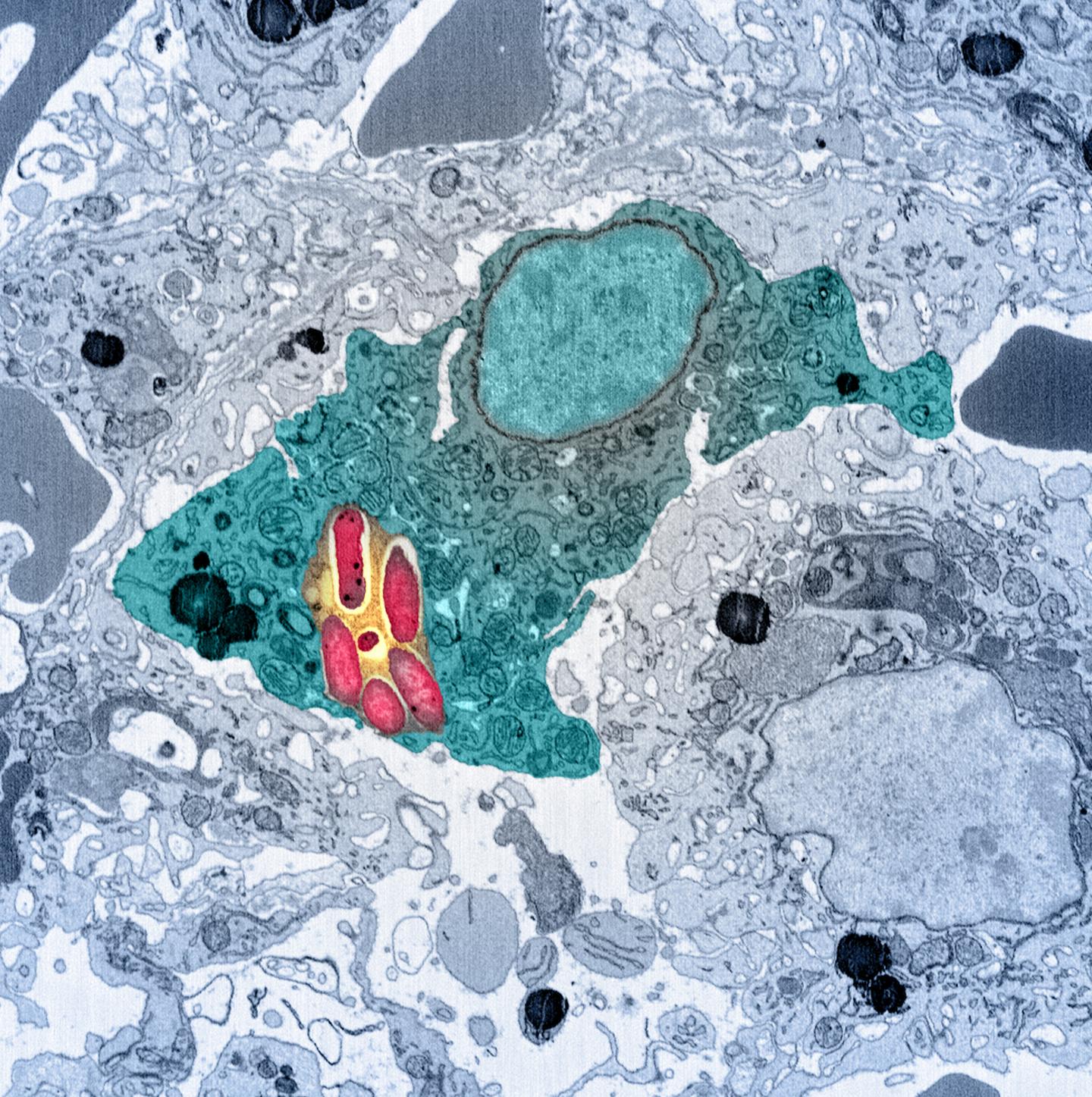
When pathogens invade the cells, our body combats them using various methods. Researchers at the University of Basel’s Biozentrum have now been able to show how a cellular pump keeps such invading pathogens in check. As the researchers report in Science, this pump causes a magnesium shortage, which in turn restricts bacterial growth.

When pathogens infect an organism, the defense system immediately starts to fight the bacteria. To escape the patrolling immune cells, some bacteria invade and replicate inside host cells. However, the host has developed various strategies to keep the intracellular bacteria under control.

Olivier Cunrath and Prof. Dirk Bumann at the Biozentrum, University of Basel, have now discovered that magnesium is crucial for bacterial growth inside host cells. Magnesium starvation is a stress factor for the bacteria, which stops their growth and replication. The host cells limit magnesium supply to these intracellular pathogens using a transport protein called NRAMP1.

Host protein suppresses pathogens

In their study, the researchers investigated Salmonella, a bacterial pathogen that causes gastroenteritis and typhoid fever. The bacteria settle in small inclusions in the macrophages of the immune system. Whether and how quickly Salmonella replicate inside these vesicles and spread depends on the proper functioning of the NRAMP1 transporter.

“It has been known for decades that NRAMP1 makes the host more resistant, but how and why has remained unclear,” says Bumann. “We were greatly surprised to find that this transport protein pumps magnesium ions out of the vesicles and thus restricts Salmonella growth. This is a new and completely unexpected mechanism.”

Magnesium as an Achilles heel for bacteria

As magnesium is a central component of many metabolic enzymes, a shortage reduces bacterial metabolism and growth. “Magnesium seems to be the Achilles heel for intracellular pathogens. The less magnesium is available, the harder they try to get it. The bacteria go on alert and activate all magnesium uptake systems. Nevertheless, they do not manage to get enough,” says first author Cunrath. “However, if the pump in the host cells is defective, magnesium is available in sufficient quantities to enable rapid Salmonella growth.”

Transporter affects host resistance

The function of NRAMP1 determines host susceptibility to infections. Animals and humans with reduced NRAMP1 are more susceptible to various intracellular pathogens. If this transporter is completely absent, even a very small number of pathogens can cause a fatal infection.

Infections are always a race between the host and the pathogen. New drugs that would make it even harder for the bacteria to obtain magnesium, could slow down the pathogens even more and thus provide the host a decisive advantage in defeating the infection.

###

Media Contact
Katrin Buehler
[email protected]
41-612-070-974

Related Journal Article

http://dx.doi.org/10.1126/science.aax7898

Tags: BacteriologyBiologyCell BiologyMicrobiologyMolecular Biology
Share12Tweet8Share2ShareShareShare2

Related Posts

Natural Hallucinogens: Evolution’s Ecological Tools, Not Mere Chemical Byproducts

June 25, 2026

This Famous Butterfly Revealed: Three Distinct Species Hidden in One

June 25, 2026

Scientists Attack Soybean Cyst Nematode by Starving Its Food Source

June 25, 2026

Decoding the Secret Code of a Crucial Immune Sensor

June 24, 2026
Please login to join discussion

POPULAR NEWS

  • Saying Goodbye to PGY-6: Pediatric Fellowship Realities

    103 shares
    Share 41 Tweet 26
  • Multi-Hospital Study Reveals Long Covid Burden Is Twice as High as Current Estimates

    92 shares
    Share 36 Tweet 23
  • Detection of EDCs in Breast Milk and Infant Urine Up to Six Months Highlights Early Exposure Risks

    77 shares
    Share 31 Tweet 19
  • New Drug Candidate Developed at McMaster Shows Potential for Treating Brain Cancer

    58 shares
    Share 23 Tweet 15

About

We bring you the latest biotechnology news from best research centers and universities around the world. Check our website.

Follow us

Recent News

Tracking Lanthanide-Labeled Microplastics in Plants

POSTECH Researchers Slash Cost of Reconstituted Cell-Free Systems by 95%

AI and Physics Collaborate to Design Advanced Hydrogen Storage Materials

Subscribe to Blog via Email

Enter your email address to subscribe to this blog and receive notifications of new posts by email.

Join 82 other subscribers
  • Contact Us

Bioengineer.org © Copyright 2023 All Rights Reserved.

Welcome Back!

Login to your account below

Forgotten Password?

Retrieve your password

Please enter your username or email address to reset your password.

Log In
No Result
View All Result
  • Homepages
    • Home Page 1
    • Home Page 2
  • News
  • National
  • Business
  • Health
  • Lifestyle
  • Science

Bioengineer.org © Copyright 2023 All Rights Reserved.