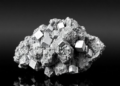
Pitting corrosion is one of the most deceptive threats facing aluminum components. While uniform corrosion can be measured, predicted, and managed over a component’s lifetime, pitting attacks locally and silently, drilling microscopic holes into the metal that can trigger sudden structural failure even when the overall rate of material loss remains reassuringly low. For industries that rely on lightweight aluminum alloys, from automotive engineering to aerospace structures, preventing the onset of these localized attacks is a persistent materials-science challenge. One promising defense is steam coating, a process that exposes the metal to water vapor and encourages the growth of a protective boehmite film on the surface. Yet the very process that builds this shield also reshapes the surface in multiple intertwined ways, and understanding which of those changes actually matters for corrosion resistance has long eluded straightforward analysis.
That difficulty stems from a fundamental problem in coating science: steam treatment does not adjust one property at a time. As the film grows thicker, the surface roughness changes, the crystallites within the film evolve, and the density of dislocations in the underlying substrate shifts as well. These features are entangled, moving together in response to processing conditions such as temperature and treatment time. A conventional experiment that varies processing parameters can therefore show that a certain recipe produces better corrosion resistance, but it cannot cleanly attribute that improvement to thickness, roughness, crystallinity, or substrate defects. Disentangling these contributions requires a different analytical approach, one capable of teasing apart interacting variables in a complex, multivariate dataset.
A research team led by Professor Takahiro Ishizaki and Master’s student Kei Masuhara at Shibaura Institute of Technology in Japan took on this challenge with the tools of modern machine learning. Rather than building a black-box predictor, the team deliberately chose an interpretable framework, one whose internal reasoning could be inspected and questioned. They examined 90 specimens of steam-coated A6061-T6 aluminum alloy, characterizing each one with four physical descriptors: film thickness, surface roughness expressed as the root-mean-square surface height (SQ), crystallite size (CS), and a substrate dislocation density index (FS). The work was published online in the journal npj Materials Degradation on August 18, 2026.
The target quantity in the study was the pitting potential, the voltage at which localized corrosion begins, measured in a 5 weight percent sodium chloride solution at room temperature. A higher pitting potential means the coating withstands more aggressive electrochemical conditions before pits nucleate, making it a direct and meaningful indicator of pitting resistance under the test conditions. Each specimen’s descriptors were measured using established characterization techniques: X-ray diffraction for crystallite size, confocal laser scanning microscopy for surface roughness, and cross-sectional electron microscopy for film thickness. This gave the machine-learning model a physically grounded set of inputs rather than purely operational parameters.
The modeling pipeline combined Random Forest regression with two interpretability techniques: Shapley Additive Explanations (SHAP), which quantifies how much each descriptor contributes to individual predictions, and Accumulated Local Effects (ALE), which reveals how a descriptor’s influence changes across its range and how descriptors interact with one another. The results were striking in two respects. First, the machine-learning model predicted pitting resistance more accurately than a model built only on coating temperature and treatment time, confirming that the physical descriptors carry information that processing parameters alone cannot capture. Second, the analysis identified surface roughness and film thickness as the leading descriptors in the model, ahead of crystallite size and the dislocation density index.
The most consequential finding emerged when the team examined how roughness and thickness interact. For specimens with SQ values in the range of approximately 600 to 1,080 nanometers, the modeled interaction between roughness and thickness changed sign near a film thickness of 2,200 nanometers, or 2.2 micrometers. Below that thickness, the interaction was positive; above it, the interaction turned negative. Crucially, this reversal concerns the interaction between the two descriptors, not a universal claim that every coating thicker than 2.2 micrometers performs worse. The same sign change was not observed in the lower-roughness range, indicating that the effect is specific to the higher-morphology regime studied.
The researchers propose a physical interpretation for this transition, while emphasizing that it remains a model-supported hypothesis rather than a proven mechanism. In thinner coatings, they suggest, surface roughness may primarily reflect the development of protective coverage, with a rougher but well-covered surface contributing positively to pitting resistance. In thicker coatings, the same roughness may instead become associated with structural irregularities, defects, or inhomogeneities in the film that provide pathways for corrosive species such as chloride ions to reach the metal beneath. In other words, the meaning of roughness itself changes as the film grows: what was once a signature of healthy coverage becomes, in a different growth regime, a marker of potential weak points. The team also identified a region-dependent interaction between surface roughness and crystallite size, suggesting that their combined effect matters more than any simple rule that larger crystallites are always better.
Professor Ishizaki summarized the conceptual shift this way: “We wanted to understand which features of the coating most strongly affect its ability to prevent pitting corrosion. Our analysis showed that the importance of these features changes as the coating grows.” He added, “The key insight is that higher roughness should not automatically be considered beneficial or harmful. Its meaning depends on the film-growth regime. Our model suggests a change near 2,200 nanometers within the higher-roughness range examined. This shows why coating design needs to consider how physical features interact.” Such statements underline a broader lesson for materials engineering: single-descriptor optimization, in which one property is pushed toward a presumed optimum, can fail when the significance of that property itself depends on the state of the system.
The team was careful to quantify how much of the model’s error could be attributed to measurement uncertainty. A Monte Carlo analysis estimated that uncertainty in the descriptor measurements contributed approximately 0.080 volts to prediction variability, compared with an overall model root-mean-square error of 0.292 volts. This comparison indicates that measurement noise alone cannot explain the remaining prediction error, leaving room for additional physical factors or more refined descriptors to improve the model in future work. Such transparency about error sources is a hallmark of responsible machine-learning practice in experimental materials science, where noisy measurements and limited sample sizes can otherwise inflate confidence in spurious patterns.
Beyond the specific numbers, the study demonstrates how interpretable machine learning can uncover physically meaningful regime changes in complex coating systems rather than merely predicting corrosion behavior. The identified SQ–FT transition and the other region-dependent interactions provide concrete, testable hypotheses for future experimental validation, and the framework itself may prove transferable to other interface-controlled materials, including environmental barrier coatings for high-temperature applications and interphases in battery electrodes. For the immediate field of water-vapor-based protective coatings on lightweight aluminum alloys, the practical message is that film thickness and surface roughness should be considered together when designing and optimizing coatings. With further validation, the descriptor-based approach could support data-driven coating assessment and quality control, allowing manufacturers to specify not just how thick a protective film should be, but how its surface texture should evolve with that thickness to keep pitting corrosion at bay.
Subject of Research: Interpretable machine learning analysis of how film thickness and surface roughness govern pitting corrosion resistance in steam-coated boehmite films on aluminum alloy
Article Title: AI reveals how coating thickness changes the link between surface roughness and pitting resistance
Article References: AI reveals how coating thickness changes the link between surface roughness and pitting resistance. (n.d.). Original publication
Image Credits: AI Generated
DOI: Not provided
Keywords: pitting corrosion, aluminum alloy, boehmite films, steam coating, machine learning, SHAP, accumulated local effects, surface roughness, film thickness, pitting potential, npj Materials Degradation, coating design
News Source: Teresa Odom. (October 10, 2026). Machine learning uncovers a hidden tipping point in corrosion-protective coatings on aluminum. Scienmag.