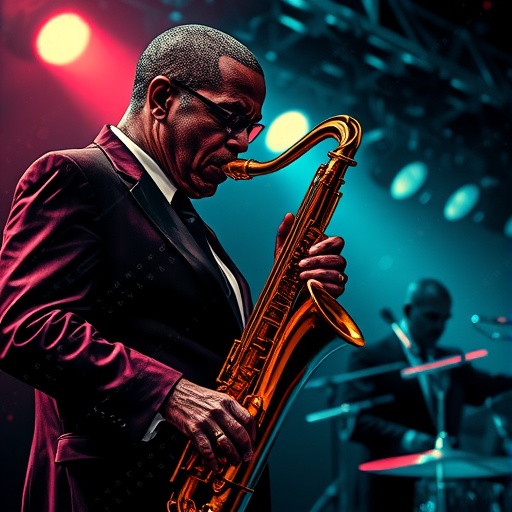
Jazz has long been treated as an art of the moment: a conversation between musicians, a negotiation with rhythm, and a form of expression in which identity can emerge from a single phrase. Now, a study published in Nature Machine Intelligence suggests that those elusive signatures may also be measurable by artificial intelligence. Researchers H. Cheston, R. Bance and P.M.C. Harrison have investigated how machine-learning systems can identify “artistic fingerprints” in jazz, opening a new window onto one of music’s most difficult scientific questions: what makes a performance recognizably belong to a particular artist?
The phrase artistic fingerprint does not mean that an algorithm has discovered one isolated note or sound that uniquely identifies a musician. Instead, it refers to a distributed pattern of choices that may appear across timing, articulation, pitch, rhythm, dynamics, phrasing and interaction with other performers. A jazz musician’s identity can be embedded in tiny deviations from the beat, the way a note begins and ends, the spacing between phrases, or the decision to repeat, delay or transform a musical idea. Individually, these details may be almost impossible to describe. Taken together, they can form a statistical signature that machine learning is designed to detect.
The central challenge is that jazz performances are not fixed objects. The same musician may play the same tune differently from one night to the next, responding to a different ensemble, venue, audience or emotional atmosphere. Recordings also vary in sound quality, instrumentation and arrangement. A model that simply memorates a particular recording, microphone profile or backing band would not be learning artistic style; it would be recognizing the circumstances surrounding the performance. For that reason, studying artistic fingerprints requires separating persistent stylistic tendencies from the accidental features of a single recording.
Machine-learning systems are well suited to this problem because they can analyze many interacting variables at once. Audio can be converted into numerical representations that describe its frequency content, amplitude, pitch trajectory and timing. Other representations can capture higher-level structures, such as note sequences, rhythmic patterns or the relationship between a soloist and the underlying harmony. A model can then search for combinations of features that distinguish one performer from another. In technical terms, it attempts to map complex musical observations into a multidimensional space in which performances with similar stylistic properties lie closer together.
That process is fundamentally different from reducing jazz to a checklist of simple traits. A musician may not always play fast, use the same range or favor one particular rhythmic pattern. Instead, the relevant signal may emerge from conditional behavior: how the performer changes timing during a phrase, how often a note is approached from above or below, or how melodic ideas are reshaped when the harmony changes. These relationships are difficult to encode with traditional rules but can be modeled by statistical learning systems. The algorithm does not need to be told in advance which details matter. It can test patterns across recordings and assign greater importance to features that consistently help explain the data.
The research also speaks to a broader debate about whether machine learning can study creativity without misunderstanding it. Classification is not the same as interpretation. If a model can distinguish performances associated with different artists, that does not mean it understands intention, cultural background or the emotional meaning of a solo. It has identified regularities in the available data. Those regularities may nevertheless be valuable: they can provide evidence about how style is constructed, how it changes over time and which aspects of performance remain stable beneath improvisation. In this sense, machine learning becomes an instrument for musicology rather than a replacement for human listening.
One of the most important implications is the possibility of examining influence and stylistic evolution at a scale that would be difficult for researchers working manually. Jazz history contains dense networks of mentorship, collaboration and exchange. Musicians borrow ideas, transform conventions and develop individual voices within shared traditions. Computational analysis could help map those relationships by comparing performances across decades and identifying patterns of proximity or divergence. A model might reveal that two artists who sound very different share subtle timing behaviors, or that a celebrated stylistic shift was accompanied by gradual changes in articulation and rhythmic placement rather than a sudden break.
The same technology could also reshape the preservation of musical heritage. Archives hold thousands of recordings whose stylistic information is difficult to catalogue using conventional metadata. Automated analysis could assist researchers in organizing performances, tracing unidentified players, detecting changes in an artist’s approach and finding historically related recordings. For listeners, such systems might eventually support more meaningful discovery tools than genre labels alone, recommending music according to phrasing, rhythmic feel or improvisational behavior. Yet those applications would need to be designed carefully, because an algorithmic description of style can influence which artists are heard and how their work is valued.
There are serious risks as well. Artistic fingerprints are not necessarily permanent, private or legally uncomplicated. A musician’s style may evolve, and a model trained on historical recordings may reflect unequal representation of eras, instruments or communities. If a system is used to imitate an artist, authenticate recordings or settle disputes over creative ownership, its conclusions could carry consequences far beyond the laboratory. The apparent precision of a probability score should not be confused with proof of authorship. Machine learning can identify correlations, but questions of originality, attribution and cultural meaning still require human judgment, historical context and transparent evidence.
By bringing computational methods to the intimate details of jazz performance, Cheston, Bance and Harrison place artistic individuality inside a new scientific framework. Their work does not make improvisation less human; it shows how much structure can exist inside spontaneity. The most intriguing possibility is that algorithms may help listeners notice what expert musicians have long sensed but found difficult to articulate: that style lives not in a single gesture, but in the recurring relationships among thousands of small decisions. As artificial intelligence becomes increasingly capable of hearing those relationships, the study of music may move toward a future in which data and interpretation work together to explain why a performance sounds unmistakably like itself.
Subject of Research: Machine learning analysis of artistic fingerprints and individual style in jazz performances.
Article Title: Machine learning of artistic fingerprints in jazz
Article References: Cheston, H., Bance, R. & Harrison, P.M.C. Machine learning of artistic fingerprints in jazz. Nature Machine Intelligence 8, 1261–1274 (2026). https://doi.org/10.1038/s42256-026-01279-9
Image Credits: AI Generated
DOI: https://doi.org/10.1038/s42256-026-01279-9
Keywords: jazz, machine learning, artificial intelligence, artistic fingerprints, musical style, improvisation, computational musicology, music analysis
Tags: AI-driven understanding of musical expressionartificial intelligence in music fingerprintingdecoding musician identity through AIidentifying artist signatures in jazz performancesinfluence of timing and phrasing in jazzinnovative approaches to jazz performance analysisJazz music analysis using machine learningmachine learning techniques for music analysismusical deviations and artist recognitionmusical pattern recognition with AIscientific study of musical individualitystatistical signatures of jazz musicians