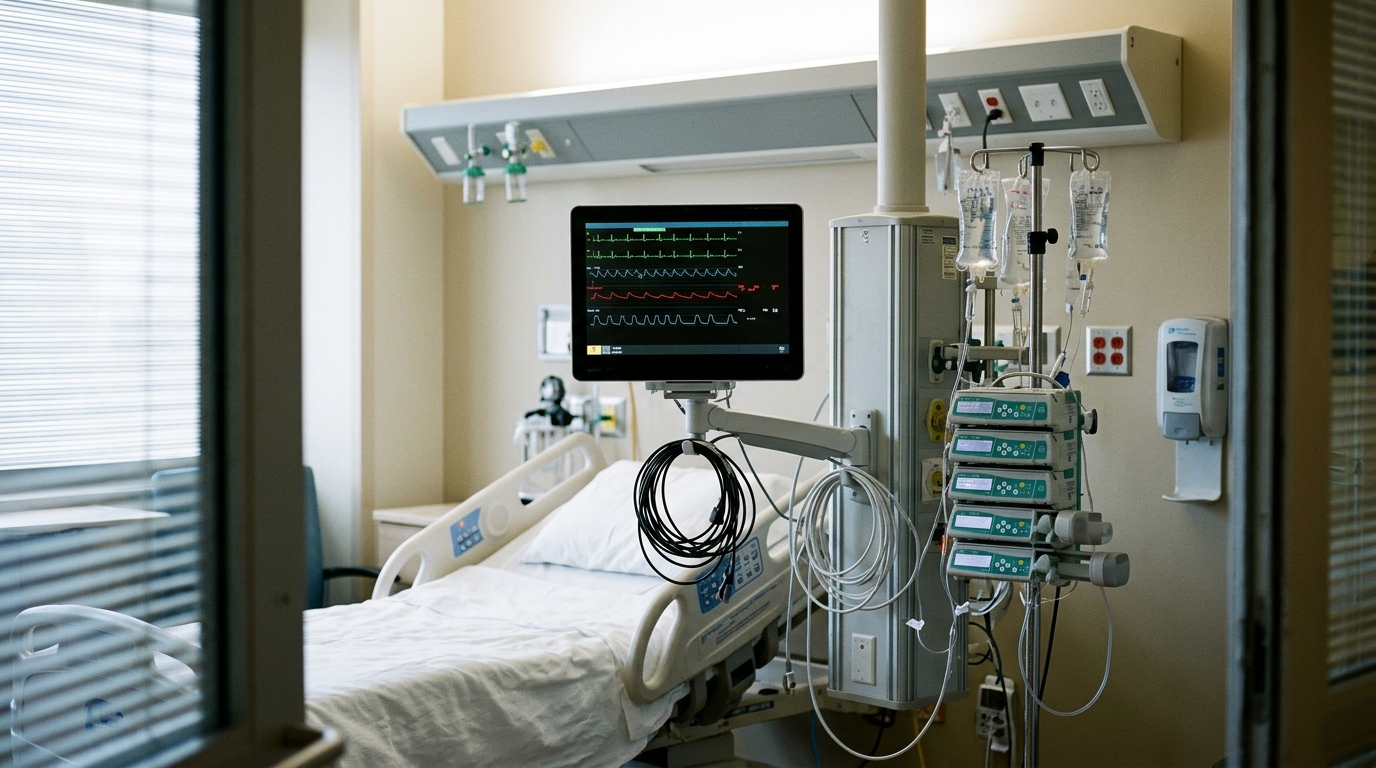
An extreme gradient boosting machine learning model demonstrated moderate discriminative capability in predicting new-onset sepsis among critically ill patients with acute cerebrovascular disease across independent intensive care cohorts. According to findings from a retrospective multicenter study published in BMC Neurology, the computational XGBoost model achieved the highest predictive performance when identifying individuals at risk of developing sepsis following emergency intensive care unit admission.
The investigation addressed an urgent clinical challenge, noting that sepsis remains a leading cause of death among patients admitted to the intensive care unit with acute cerebrovascular disease. Despite this recognized threat to survival, clinical teams currently lack any validated risk-stratification tool designed specifically for this critical patient group. To address this clinical gap, researchers investigated supervised machine learning algorithms to achieve early sepsis prediction.
The research team developed and trained their models using clinical records from 4,689 adult patients undergoing their first intensive care unit admission for acute cerebrovascular disease in the Medical Information Mart for Intensive Care IV database. Fourteen predictor variables recorded within the first twenty-four hours of intensive care unit admission were selected for the algorithms. This systematic variable selection process combined univariate logistic regression, least absolute shrinkage and selection operator regression, and Boruta feature selection methods.
To identify the most effective predictive architecture, the authors trained and evaluated ten distinct supervised machine learning algorithms. Internal model validation was performed through a seven-to-three stratified split of the primary cohort. External validation was then conducted across two independent datasets: the Medical Information Mart for Intensive Care III database, comprising 2,153 patient records, and the multicenter eICU Collaborative Research Database, encompassing 6,621 patient admissions.
In the internal test set, the extreme gradient boosting model, known as XGBoost, yielded the highest discriminative performance, achieving an area under the receiver operating characteristic curve of 0.769 with a 95 percent confidence interval of 0.735 to 0.803. The random forest and AdaBoost algorithms followed closely behind, reaching areas under the receiver operating characteristic curve of 0.763 (95 percent confidence interval 0.729 to 0.797) and 0.757 (95 percent confidence interval 0.722 to 0.792), respectively.
During external validation, the XGBoost algorithm remained the best-performing model across both independent patient cohorts. Within the MIMIC-III database, the model achieved an area under the receiver operating characteristic curve of 0.731, with a 95 percent confidence interval of 0.704 to 0.759. In the multicenter eICU Collaborative Research Database, it reached an area under the curve of 0.709, with a 95 percent confidence interval of 0.690 to 0.729.
Model performance was broadly consistent across three distinct stroke subtypes evaluated in the research. The model achieved an area under the receiver operating characteristic curve of 0.733 (95 percent confidence interval 0.671 to 0.795) for ischemic stroke, 0.802 (0.739 to 0.864) for subarachnoid hemorrhage, and 0.704 (0.648 to 0.760) for intracerebral hemorrhage. Furthermore, decision curve analysis indicated net clinical benefit across a broad range of threshold probabilities throughout all three evaluated cohorts.
To rank feature importance and explain the final model, the researchers utilized the SHapley Additive exPlanation method. This interpretability analysis identified patient sedation, the Acute Physiology Score III, and body temperature as the three most influential predictors of sepsis risk. The authors concluded that the XGBoost model showed moderate discrimination for new-onset sepsis and may support risk stratification, while emphasizing that prospective validation and local recalibration are required before clinical use.
Subject of Research: Machine learning prediction of sepsis in acute cerebrovascular disease intensive care patients
Article Title: A machine learning model for predicting sepsis in intensive care unit patients with acute cerebrovascular disease: a multicenter retrospective study
Article References: Lu, J., Huang, D., Luo, J., Guo, Y., & Zheng, C. (2026). A machine learning model for predicting sepsis in intensive care unit patients with acute cerebrovascular disease: a multicenter retrospective study. BMC Neurology. https://doi.org/10.1186/s12883-026-05646-2
Image Credits: AI Generated
DOI: 10.1186/s12883-026-05646-2
Keywords: acute cerebrovascular disease, sepsis prediction, intensive care unit, machine learning, XGBoost, MIMIC-IV, MIMIC-III, eICU-CRD, ischemic stroke, subarachnoid hemorrhage, intracerebral hemorrhage, decision curve analysis, SHAP analysis, risk stratification, Acute Physiology Score III, body temperature
News Source: Teresa Odom. (November 28, 2026). Machine Learning Model Predicts Sepsis in Intensive Care Stroke Patients. Scienmag.