• HOME
  • NEWS
  • EXPLORE
    • CAREER
      • Companies
      • Jobs
    • EVENTS
    • iGEM
      • News
      • Team
    • PHOTOS
    • VIDEO
    • WIKI
  • BLOG
  • COMMUNITY
    • FACEBOOK
    • INSTAGRAM
    • TWITTER
Saturday, February 7, 2026
BIOENGINEER.ORG
No Result
View All Result
  • Login
  • HOME
  • NEWS
  • EXPLORE
    • CAREER
      • Companies
      • Jobs
        • Lecturer
        • PhD Studentship
        • Postdoc
        • Research Assistant
    • EVENTS
    • iGEM
      • News
      • Team
    • PHOTOS
    • VIDEO
    • WIKI
  • BLOG
  • COMMUNITY
    • FACEBOOK
    • INSTAGRAM
    • TWITTER
  • HOME
  • NEWS
  • EXPLORE
    • CAREER
      • Companies
      • Jobs
        • Lecturer
        • PhD Studentship
        • Postdoc
        • Research Assistant
    • EVENTS
    • iGEM
      • News
      • Team
    • PHOTOS
    • VIDEO
    • WIKI
  • BLOG
  • COMMUNITY
    • FACEBOOK
    • INSTAGRAM
    • TWITTER
No Result
View All Result
Bioengineer.org
No Result
View All Result
Home NEWS Science News Chemistry

Machine learning in sustainable chemistry

Bioengineer by Bioengineer
August 14, 2020
in Chemistry
Reading Time: 2 mins read
0
IMAGE
Share on FacebookShare on TwitterShare on LinkedinShare on RedditShare on Telegram

Research fellowship for Iranian scientist
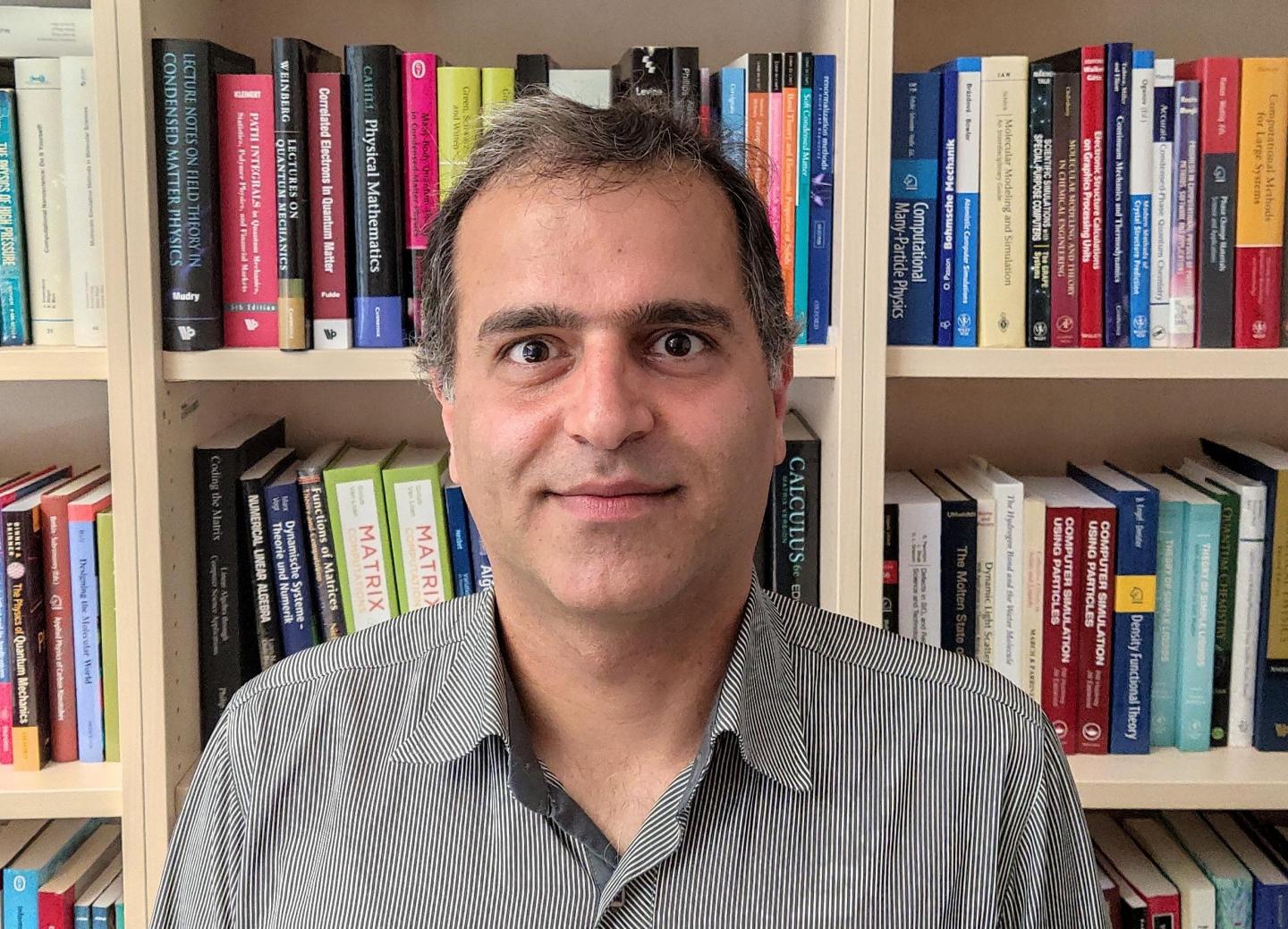
IMAGE

Credit: Mohammad Alaraby Salem, Paderborn University

Dr S. Alireza Ghasemi, a physicist at Paderborn University, has received a Georg Forster Research Fellowship from the Alexander von Humboldt Foundation. The funding will be used to set up a research group to investigate new machine learning methods for photocatalytic water splitting. The fellowship is aimed at postdoc students and experienced scientists from developing and emerging countries. Ghasemi is a member of Professor Thomas D. Kühne’s “Theoretical Chemistry” research group. Prior to this, he was a lecturer at the Institute for Advanced Studies in Basic Sciences (IASBS) in Iran.

“The aim is to leverage machine learning to computationally predict new polymeric carbon nitride compounds. These substances are particularly well-suited for the sustainable photocatalytic splitting of water,” says Kühne, describing the work of his colleague. The advantage of this: This process enables water to be split into its two components hydrogen and oxygen – without the controversial use of ‘rare earths’ or expensive transition metals like gold. In addition, polymeric carbon nitride compounds are also suitable for the adsorption and storage of carbon dioxide and the catalytic conversion of CO2 into biofuels. Ghasemi’s work will therefore also be incorporated in the university’s Centre for Sustainable Systems Design, which is dedicated to interdisciplinary research on sustainability.

###

Media Contact
Professor Thomas D. Kühne
[email protected]

Original Source

https://www.uni-paderborn.de/en/news-item/94251

Tags: Atomic/Molecular/Particle PhysicsChemistry/Physics/Materials SciencesMolecular PhysicsParticle Physics
Share13Tweet8Share2ShareShareShare2

Related Posts

blank

Breakthrough in Environmental Cleanup: Scientists Develop Solar-Activated Biochar for Faster Remediation

February 7, 2026
blank

Cutting Costs: Making Hydrogen Fuel Cells More Affordable

February 6, 2026

Scientists Develop Hand-Held “Levitating” Time Crystals

February 6, 2026

Observing a Key Green-Energy Catalyst Dissolve Atom by Atom

February 6, 2026
Please login to join discussion

POPULAR NEWS

  • Robotic Ureteral Reconstruction: A Novel Approach

    Robotic Ureteral Reconstruction: A Novel Approach

    82 shares
    Share 33 Tweet 21
  • Digital Privacy: Health Data Control in Incarceration

    63 shares
    Share 25 Tweet 16
  • Study Reveals Lipid Accumulation in ME/CFS Cells

    57 shares
    Share 23 Tweet 14
  • Breakthrough in RNA Research Accelerates Medical Innovations Timeline

    53 shares
    Share 21 Tweet 13

About

We bring you the latest biotechnology news from best research centers and universities around the world. Check our website.

Follow us

Recent News

Decoding Prostate Cancer Origins via snFLARE-seq, mxFRIZNGRND

Digital Health Perspectives from Baltic Sea Experts

Florida Cane Toad: Complex Spread and Selective Evolution

Subscribe to Blog via Email

Enter your email address to subscribe to this blog and receive notifications of new posts by email.

Join 73 other subscribers
  • Contact Us

Bioengineer.org © Copyright 2023 All Rights Reserved.

Welcome Back!

Login to your account below

Forgotten Password?

Retrieve your password

Please enter your username or email address to reset your password.

Log In
No Result
View All Result
  • Homepages
    • Home Page 1
    • Home Page 2
  • News
  • National
  • Business
  • Health
  • Lifestyle
  • Science

Bioengineer.org © Copyright 2023 All Rights Reserved.