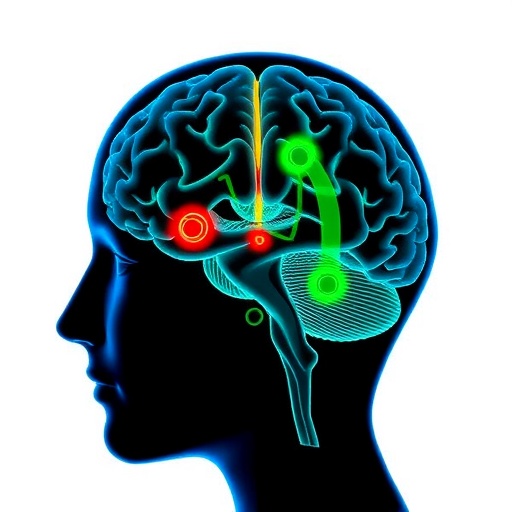
In a groundbreaking advancement that has the potential to redefine therapeutic strategies for Parkinson’s disease, researchers have developed a sophisticated machine learning framework to optimize deep brain stimulation (DBS) targeting both the subthalamic nucleus (STN) and the substantia nigra (SN). This dual-targeting approach, engineered through advanced computational algorithms, promises enhanced clinical outcomes by precisely configuring the stimulation parameters to the unique neural architectures of individual patients. This innovation marks a significant leap forward in personalized neuromodulation therapies, which have thus far been constrained by the anatomical and functional complexities of basal ganglia circuitry.
Deep brain stimulation is a widely accepted intervention for managing the motor symptoms of Parkinson’s disease, a neurodegenerative disorder characterized by the progressive loss of dopaminergic neurons. Traditionally, DBS involves implanting electrodes in the subthalamic nucleus, a critical node in the brain’s motor control pathways. While this technique alleviates tremors and rigidity, its efficacy can be variable and is sometimes accompanied by side effects such as dyskinesia or speech disturbances. The new research addresses these limitations by integrating stimulation of the substantia nigra pars reticulata, a region intricately involved in modulating basal ganglia output, thereby offering a complementary site for intervention.
The core challenge in multi-target DBS lies in the precise calibration of stimulation parameters that will maximize therapeutic benefits while minimizing adverse effects. The research team leveraged advanced machine learning techniques to navigate this complex parameter space. By training algorithms on electrophysiological data, anatomical imaging, and clinical response metrics, they created predictive models capable of generating optimized dual-stimulation protocols. These models not only predicted the best electrode configurations but also dynamically adapted to patient-specific neural responses, paving the way for truly personalized neuromodulation.
Underpinning this innovation is a robust computational pipeline that integrates multimodal data sources. High-resolution imaging captures the anatomical intricacies of the STN and SN, while intraoperative microelectrode recordings provide real-time neural activity patterns. By feeding this rich dataset into machine learning algorithms, the system identifies stimulation patterns that harmonize the complex interplay between these two critical structures. Importantly, this method accounts for interpatient variability, a notorious hurdle in neurostimulation therapies, enhancing the reproducibility and efficacy of DBS across diverse patient populations.
Furthermore, this machine learning-enhanced approach enables adaptive DBS, where stimulation parameters can be continuously refined in response to ongoing neural feedback. This dynamic modulation is particularly critical in Parkinson’s disease, where symptom severity and neural circuitry states fluctuate throughout the day. By incorporating closed-loop feedback mechanisms, the proposed system not only fine-tunes stimulation in real-time but also contributes to a deeper understanding of the pathophysiological mechanisms underlying motor symptom variability.
The implications of targeting both the subthalamic nucleus and the substantia nigra are profound. While the STN has long been the primary focus of DBS, empirical evidence suggests that the substantia nigra also influences motor control and may contribute to non-motor symptoms of Parkinson’s disease. Dual-target stimulation, therefore, may offer a more holistic modulation of basal ganglia circuits, potentially addressing a broader spectrum of symptoms including cognitive and emotional disturbances that often accompany disease progression.
In their study, the researchers demonstrated the efficacy of their approach through computational modeling and simulations that map the functional connectivity changes resulting from various stimulation protocols. Their models predict that dual-target DBS can modulate downstream motor pathways more effectively than single-site stimulation, reducing pathological beta-band oscillations associated with bradykinesia and rigidity. This suppression of pathological neuronal rhythms may underlie the improved motor outcomes observed in patients subjected to dual-target protocols guided by the machine learning system.
One of the remarkable aspects of this research is its potential to minimize the side effects commonly observed with conventional DBS. Machine learning optimization helps identify electrode configurations and stimulation settings that avoid off-target effects such as activation of adjacent fibers that can lead to dysarthria or mood destabilization. This precision is crucial not only for patient comfort but also for maintaining long-term adherence to DBS therapy, a factor that is often hampered by the onset of stimulation-induced complications.
The versatility of this dual-target optimization framework extends beyond Parkinson’s disease. The basal ganglia circuitry is implicated in multiple neurological and psychiatric disorders, including dystonia, Tourette syndrome, and obsessive-compulsive disorder. By tailoring stimulation strategies through data-driven machine learning models, this approach opens new frontiers for neuromodulation therapies targeting complex, multi-nodal neural networks implicated in diverse pathologies.
Moreover, the research leverages state-of-the-art neuroengineering tools, integrating the latest advances in neuroimaging, electrophysiology, and computational neuroscience. This multi-disciplinary synergy is pivotal in translating laboratory findings into clinical practice, ensuring that the optimized stimulation protocols are not only theoretically sound but also feasible and scalable for real-world applications. The researchers emphasize the importance of collaboration between clinicians, engineers, and data scientists to refine and validate these machine learning-guided DBS strategies through clinical trials.
Ethical considerations are also integral to this novel intervention strategy. Precision targeting and adaptive modulation raise questions about patient autonomy, informed consent, and the long-term cognitive effects of neuromodulation. The researchers advocate for transparent communication with patients and robust regulatory frameworks to ensure that technological advancements are deployed responsibly, prioritizing patient safety and quality of life alongside therapeutic innovation.
Looking ahead, the team envisions incorporating artificial intelligence models capable of learning and evolving alongside individual patients. As more longitudinal data are collected, these models could predict disease progression trajectories and preemptively adjust stimulation parameters before symptom exacerbation, embodying a truly anticipatory closed-loop neuromodulation system. Such foresight not only ameliorates symptoms but potentially slows or modifies disease progression, heralding a new era in neurotherapeutics.
Another promising avenue is the integration of wearable biosensors that monitor motor and non-motor symptoms continuously, feeding real-world data into the machine learning algorithms. This real-time patient monitoring could further refine DBS settings, personalize treatment regimens, and facilitate remote care paradigms, reducing the burden of frequent hospital visits and enhancing patient independence.
In summary, the machine learning-based optimization of dual subthalamic nucleus and substantia nigra targeting in deep brain stimulation represents a paradigm shift in Parkinson’s disease treatment. By combining computational precision with neurobiological insight, this approach enhances the efficacy, safety, and personalization of DBS. As these advanced algorithms move closer to clinical adoption, they promise to transform the landscape of neuromodulation therapy and improve the lives of millions living with Parkinson’s disease.
This research exemplifies the transformative power of artificial intelligence in medicine, marrying data-driven modeling with intricate neural science to solve complex clinical challenges. It stands as a testament to the potential of interdisciplinary innovation to unlock new therapeutic horizons and redefine standards of care in neurodegenerative disease management.
Subject of Research: Machine learning optimization of dual-target deep brain stimulation in Parkinson’s disease
Article Title: Machine learning-based optimization of dual subthalamic nucleus and substantia nigra targeting in deep brain stimulation
Article References:
Leavitt, D., Negahbani, F. & Gharabaghi, A. Machine learning-based optimization of dual subthalamic nucleus and substantia nigra targeting in deep brain stimulation. npj Parkinsons Dis. 12, 124 (2026). https://doi.org/10.1038/s41531-026-01406-8
Image Credits: AI Generated
DOI: https://doi.org/10.1038/s41531-026-01406-8
Tags: advanced computational neurologybasal ganglia circuitry modulationdual-target deep brain stimulationinnovative Parkinson’s disease therapiesmachine learning for deep brain stimulationmulti-target brain stimulation strategiesoptimizing DBS parameters with algorithmsParkinson’s disease motor symptom treatmentpersonalized neuromodulation therapiesreducing DBS side effectssubstantia nigra DBSsubthalamic nucleus stimulation