• HOME
  • NEWS
  • EXPLORE
    • CAREER
      • Companies
      • Jobs
    • EVENTS
    • iGEM
      • News
      • Team
    • PHOTOS
    • VIDEO
    • WIKI
  • BLOG
  • COMMUNITY
    • FACEBOOK
    • INSTAGRAM
    • TWITTER
Friday, November 13, 2026
BIOENGINEER.ORG
No Result
View All Result
  • Login
  • HOME
  • NEWS
  • EXPLORE
    • CAREER
      • Companies
      • Jobs
        • Lecturer
        • PhD Studentship
        • Postdoc
        • Research Assistant
    • EVENTS
    • iGEM
      • News
      • Team
    • PHOTOS
    • VIDEO
    • WIKI
  • BLOG
  • COMMUNITY
    • FACEBOOK
    • INSTAGRAM
    • TWITTER
No Result
View All Result
Bioengineer.org
No Result
View All Result
Home NEWS Science News Technology

Machine Learning and Deep Learning Advance Antimicrobial Resistance Prediction

by
November 13, 2026
in Technology
Reading Time: 2 mins read
0
Machine Learning and Deep Learning Advance Antimicrobial Resistance Prediction

Machine Learning and Deep Learning Advance Antimicrobial Resistance Prediction

Share on FacebookShare on TwitterShare on LinkedinShare on RedditShare on Telegram

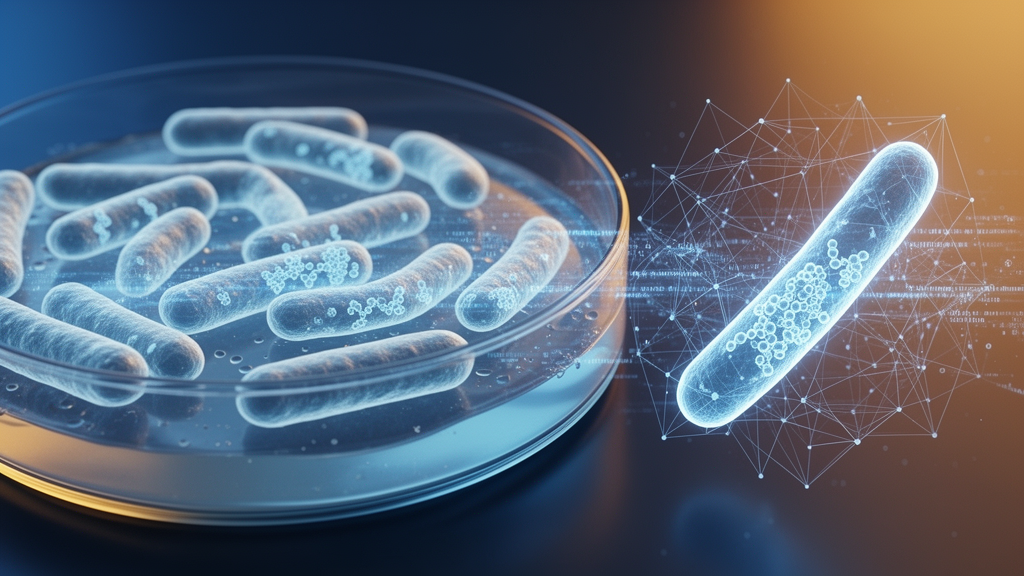
Advances in artificial intelligence, machine learning, and deep learning have created practical opportunities to predict antimicrobial resistance rapidly, addressing a major public health risk where conventional patient susceptibility testing typically requires a week or more to deliver actionable results. According to a scientific review published in Discover Applied Sciences, computational models can accelerate these timelines by integrating diverse biological datasets spanning genomic, transcriptomic, proteomic, phenotypic, and clinical information to detect bacterial resistance profiles with increased speed.

The review emphasizes that recent progress in analytical infrastructure forms the essential foundation for building robust predictive architectures. These experimental inputs are further bolstered by curated public repositories, including the Comprehensive Antibiotic Resistance Database (CARD), which provide reference annotations necessary for model training.

By surveying recent computational studies, the authors highlight how machine learning and deep learning algorithms are currently applied across both pathogen-specific and pan-species investigations. Beyond basic biological categorization, such predictive tools are structured to improve antimicrobial stewardship programs and guide pharmaceutical discovery pipelines.

Despite these technological strides, the review outlines substantial technical challenges that continue to constrain the real-world deployment of resistance prediction models. Key challenges include a lack of dataset diversity, class imbalance, and inconsistent testing methods across studies.

Models also face hurdles related to limited result interpretability and the need for further validation.

Future directions include developing explainable AI models, using federated learning approaches to improve datasets, and integrating digital diagnostics into electronic health records.

In their synthesis of the field, the authors examine the core methodologies underpinning contemporary resistance modeling, paying particular attention to the diverse data inputs, feature engineering techniques, and specific computational algorithms deployed across both pathogen-specific and broader pan-species research initiatives.

The review concludes that continuing refinements in machine learning and deep learning architectures hold meaningful potential to transform precision medicine paradigms, strengthen ongoing global monitoring of antimicrobial resistance, and accelerate the discovery and pipeline development of novel therapeutic drugs.

Subject of Research: Machine learning and deep learning applications in predicting antimicrobial resistance

Article Title: Advances in machine learning and deep learning for antimicrobial resistance prediction

Article References: Musini, A., Yata, V. K., Bukke, S. P. N., Akhila, K., Shivani, T., & Thalluri, C. (2026). Advances in machine learning and deep learning for antimicrobial resistance prediction. Discover Applied Sciences. https://doi.org/10.1007/s42452-026-09115-w

Image Credits: AI Generated

DOI: 10.1007/s42452-026-09115-w

Keywords: antimicrobial resistance, machine learning, deep learning, artificial intelligence, pathogen diagnostics, whole genome sequencing, metagenomics, MALDI-TOF mass spectrometry, phenotypic data, transcriptomics, proteomics, antimicrobial stewardship, explainable AI, federated learning, drug discovery, electronic health records, precision medicine

News Source: Blake Davidson. (November 13, 2026). Machine Learning and Deep Learning Advance Antimicrobial Resistance Prediction. Scienmag.


Tags: Antimicrobial ResistanceAntimicrobial StewardshipArtificial Intelligencedeep learningdrug discoveryelectronic health recordsExplainable AIfederated learningMachine LearningMALDI-TOF mass spectrometrymetagenomicspathogen diagnosticsphenotypic dataPrecision MedicineProteomicsTranscriptomicswhole-genome sequencing
Share12Tweet7Share2ShareShareShare1

Related Posts

Yazd Study Links Economic Stability to Learning City Development

Yazd Study Links Economic Stability to Learning City Development

November 13, 2026
Combined-Function Magnet Optics Boost Effective Dipole Field for Future Collider Arcs

Combined-Function Magnet Optics Boost Effective Dipole Field for Future Collider Arcs

November 13, 2026

Dynamic Convolution Model Enhances 3D Reconstruction of Complex Mesoscale Neurons

November 13, 2026

Dynamic Network Reconfiguration Reduces Losses and Balances Voltages in Unbalanced Power Systems

November 13, 2026

POPULAR NEWS

  • Astrocytic IL-17A Drives Blood Vessel Repair Following Stroke-Like Brain Injury

    Astrocytic IL-17A Drives Blood Vessel Repair Following Stroke-Like Brain Injury

    29 shares
    Share 12 Tweet 7
  • SWEET Genes Regulate Development and Stress Responses in Cunninghamia lanceolata

    29 shares
    Share 12 Tweet 7
  • Fermented Fish Isolates Show Resilience and Safety in Laboratory Probiotic Screening

    29 shares
    Share 12 Tweet 7
  • Multimodal AI Detects Prestressed Concrete Beam Defects in Controlled Laboratory Tests

    29 shares
    Share 12 Tweet 7

About

We bring you the latest biotechnology news from best research centers and universities around the world. Check our website.

Follow us

Recent News

Mica-rich sheet moulds like plastic and resists 1,300 °C heat

Yazd Study Links Economic Stability to Learning City Development

Echocardiographic Indices Fail to Accurately Reflect Right Ventricular Diastolic Chamber Properties

Subscribe to Blog via Email

Enter your email address to subscribe to this blog and receive notifications of new posts by email.

Join 86 other subscribers
  • Contact Us

Bioengineer.org © Copyright 2023 All Rights Reserved.

Welcome Back!

Login to your account below

Forgotten Password?

Retrieve your password

Please enter your username or email address to reset your password.

Log In
No Result
View All Result
  • Homepages
    • Home Page 1
    • Home Page 2
  • News
  • National
  • Business
  • Health
  • Lifestyle
  • Science

Bioengineer.org © Copyright 2023 All Rights Reserved.