• HOME
  • NEWS
  • EXPLORE
    • CAREER
      • Companies
      • Jobs
    • EVENTS
    • iGEM
      • News
      • Team
    • PHOTOS
    • VIDEO
    • WIKI
  • BLOG
  • COMMUNITY
    • FACEBOOK
    • INSTAGRAM
    • TWITTER
Friday, July 17, 2026
BIOENGINEER.ORG
No Result
View All Result
  • Login
  • HOME
  • NEWS
  • EXPLORE
    • CAREER
      • Companies
      • Jobs
        • Lecturer
        • PhD Studentship
        • Postdoc
        • Research Assistant
    • EVENTS
    • iGEM
      • News
      • Team
    • PHOTOS
    • VIDEO
    • WIKI
  • BLOG
  • COMMUNITY
    • FACEBOOK
    • INSTAGRAM
    • TWITTER
  • HOME
  • NEWS
  • EXPLORE
    • CAREER
      • Companies
      • Jobs
        • Lecturer
        • PhD Studentship
        • Postdoc
        • Research Assistant
    • EVENTS
    • iGEM
      • News
      • Team
    • PHOTOS
    • VIDEO
    • WIKI
  • BLOG
  • COMMUNITY
    • FACEBOOK
    • INSTAGRAM
    • TWITTER
No Result
View All Result
Bioengineer.org
No Result
View All Result
Home NEWS Science News Health

Lymphatic endothelial cells promote melanoma to spread

Bioengineer by Bioengineer
May 1, 2018
in Health
Reading Time: 2 mins read
0
Share on FacebookShare on TwitterShare on LinkedinShare on RedditShare on Telegram
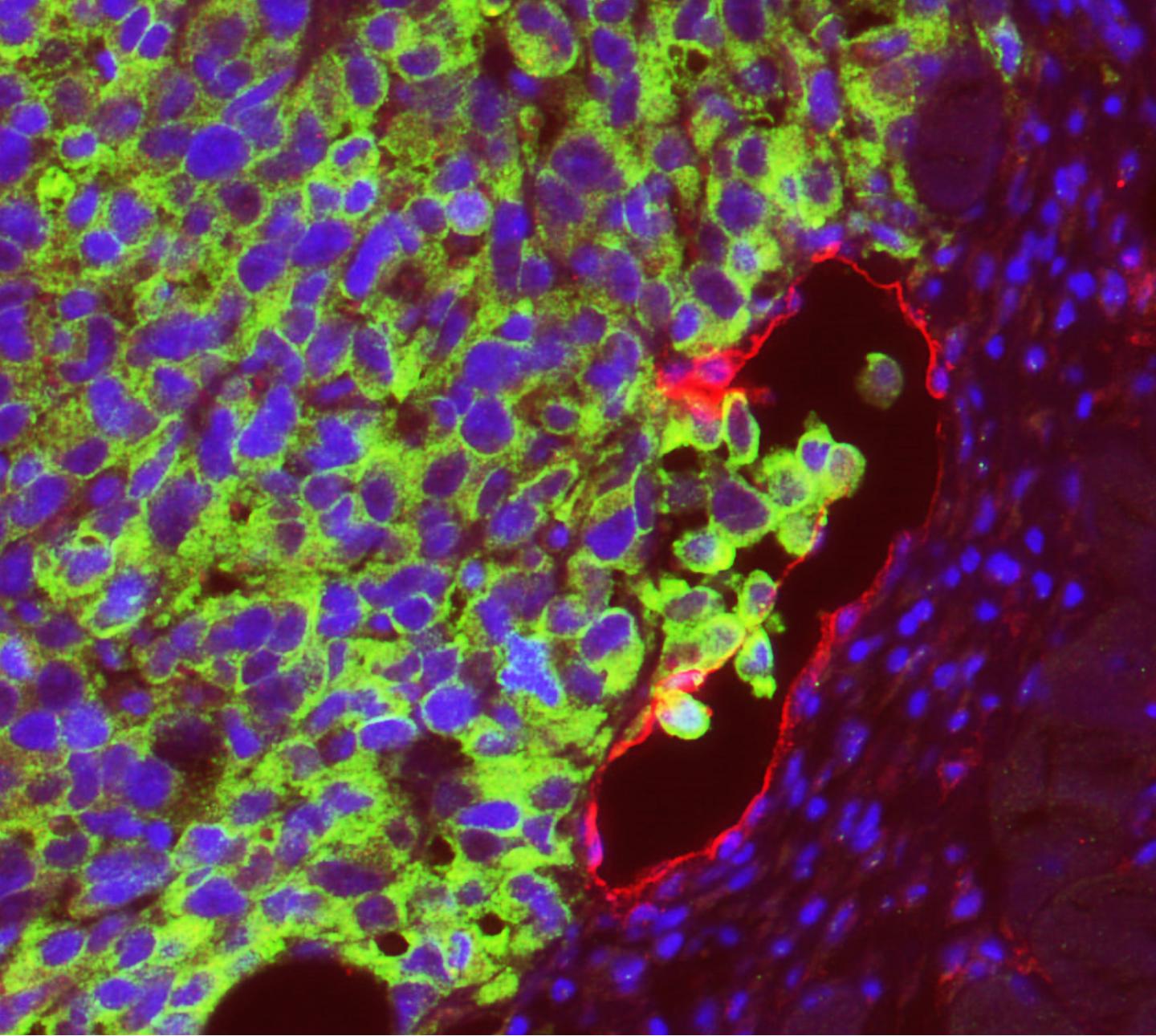
IMAGE

Credit: Päivi Ojala Lab/University of Helsinki

Despite the declining death rates for many individual cancer types, mortality for a few cancers has stabilized or even increased. One of these is melanoma due to its ability, in later stages, to spread to other parts of the body. Melanoma is considered metastatic – also called Stage IV melanoma – when the cancer cells have spread through the lymph nodes to distant sites in the body, the most often affected being liver, lungs, bones and brain.

Often primary melanomas grow and spread horizontally on the top layer of the skin before penetrating deeper into the layers of the dermis where they can reach the lymph and blood vessels. Lymphatic invasion and lymph node metastasis correlate with poor clinical outcome in melanoma.

In addition to providing a direct route for dissemination, the lymph vessels have been proposed to directly modulate the metastatic process through mechanisms that have remained elusive.

"Because the mechanisms and functional contribution of lymphatic dissemination in distant organ melanoma metastasis remain incompletely understood, we have investigated the contribution of the cells that form the walls of the lymphatic vessels, the lymphatic endothelial cells, to human melanoma cell invasion and metastasis", tells Professor Päivi Ojala from the University of Helsinki, Finland. She continues:

"In particular, our goal was to uncover the critical factors in the tumor lymphatic microenvironment that promote the melanoma cell distant organ metastasis and thereby to generate new leads and potential targets to more efficient treatments and prognosis for metastatic cancer."

Growing human melanoma cells in co-cultures with human primary lymphatic endothelial cells increased the invasive growth of melanoma cells in cell culture conditions that mimick the tissue environment and facilitated melanoma distant organ metastasis in mice implanted with human melanoma cells. This lymphatic endothelium mediated change in the melanoma was dependent on MMP14, Notch3 and ?1-integrin proteins, and MMP14 and Notch3 were necessary for the increased metastasis of human melanoma cells in a zebrafish tumor model.

The study uncovers a unique mechanism whereby the direct contact with lymphatic endothelial cells promotes melanoma metastasis.

"These findings can represent new leads that clinicians can consider as prognostic markers for metastasis and the pharmaceutical industry can pursue for further therapeutics development", Professor Ojala says.

###

Media Contact

Päivi Ojala
[email protected]
358-294-159-445
@helsinkiuni

http://www.helsinki.fi/university/

Original Source

https://www.helsinki.fi/en/news/health/lymphatic-endothelial-cells-promote-melanoma-to-spread http://dx.doi.org/10.7554/eLife.32490

Share12Tweet8Share2ShareShareShare2

Related Posts

Japan Study Explores Community Supporters’ Experiences with Team Orange Dementia Program

July 17, 2026

COVID-19 Booster Strategies Deliver Long-Lasting Immunity

July 17, 2026

Body Detects Temperature Shifts: How Warm and Cool Signals Are Sensed

July 17, 2026

Aral Sea Drying Turns Carbon Sink Into Major Carbon Source

July 17, 2026
Please login to join discussion

POPULAR NEWS

  • Scientists Overcome Antimicrobial Resistance in Bacteria Linked to Cystic Fibrosis

    Scientists Overcome Antimicrobial Resistance in Bacteria Linked to Cystic Fibrosis

    42 shares
    Share 17 Tweet 11
  • Porcine Heart Transplant

    50 shares
    Share 20 Tweet 13
  • 高齢者の骨粗鬆症治療の持続性比較

    51 shares
    Share 20 Tweet 13
  • A multifaceted sensation

    49 shares
    Share 20 Tweet 12

About

We bring you the latest biotechnology news from best research centers and universities around the world. Check our website.

Follow us

Recent News

Japan Study Explores Community Supporters’ Experiences with Team Orange Dementia Program

Phosphorus Promotes Synergistic Activity in Evolving NiFe Phosphides for Better Water Oxidation

Researchers Launch Physics-Informed Digital Twin to Revolutionize Thermal Energy Systems

Subscribe to Blog via Email

Enter your email address to subscribe to this blog and receive notifications of new posts by email.

Join 85 other subscribers
  • Contact Us

Bioengineer.org © Copyright 2023 All Rights Reserved.

Welcome Back!

Login to your account below

Forgotten Password?

Retrieve your password

Please enter your username or email address to reset your password.

Log In
No Result
View All Result
  • Homepages
    • Home Page 1
    • Home Page 2
  • News
  • National
  • Business
  • Health
  • Lifestyle
  • Science

Bioengineer.org © Copyright 2023 All Rights Reserved.