• HOME
  • NEWS
  • EXPLORE
    • CAREER
      • Companies
      • Jobs
    • EVENTS
    • iGEM
      • News
      • Team
    • PHOTOS
    • VIDEO
    • WIKI
  • BLOG
  • COMMUNITY
    • FACEBOOK
    • INSTAGRAM
    • TWITTER
Wednesday, July 15, 2026
BIOENGINEER.ORG
No Result
View All Result
  • Login
  • HOME
  • NEWS
  • EXPLORE
    • CAREER
      • Companies
      • Jobs
        • Lecturer
        • PhD Studentship
        • Postdoc
        • Research Assistant
    • EVENTS
    • iGEM
      • News
      • Team
    • PHOTOS
    • VIDEO
    • WIKI
  • BLOG
  • COMMUNITY
    • FACEBOOK
    • INSTAGRAM
    • TWITTER
  • HOME
  • NEWS
  • EXPLORE
    • CAREER
      • Companies
      • Jobs
        • Lecturer
        • PhD Studentship
        • Postdoc
        • Research Assistant
    • EVENTS
    • iGEM
      • News
      • Team
    • PHOTOS
    • VIDEO
    • WIKI
  • BLOG
  • COMMUNITY
    • FACEBOOK
    • INSTAGRAM
    • TWITTER
No Result
View All Result
Bioengineer.org
No Result
View All Result
Home NEWS Science News Biology

Luring hornets: Scientists unlock sex pheromone of notorious honey bee predator

Bioengineer by Bioengineer
October 12, 2017
in Biology
Reading Time: 2 mins read
0
Share on FacebookShare on TwitterShare on LinkedinShare on RedditShare on Telegram
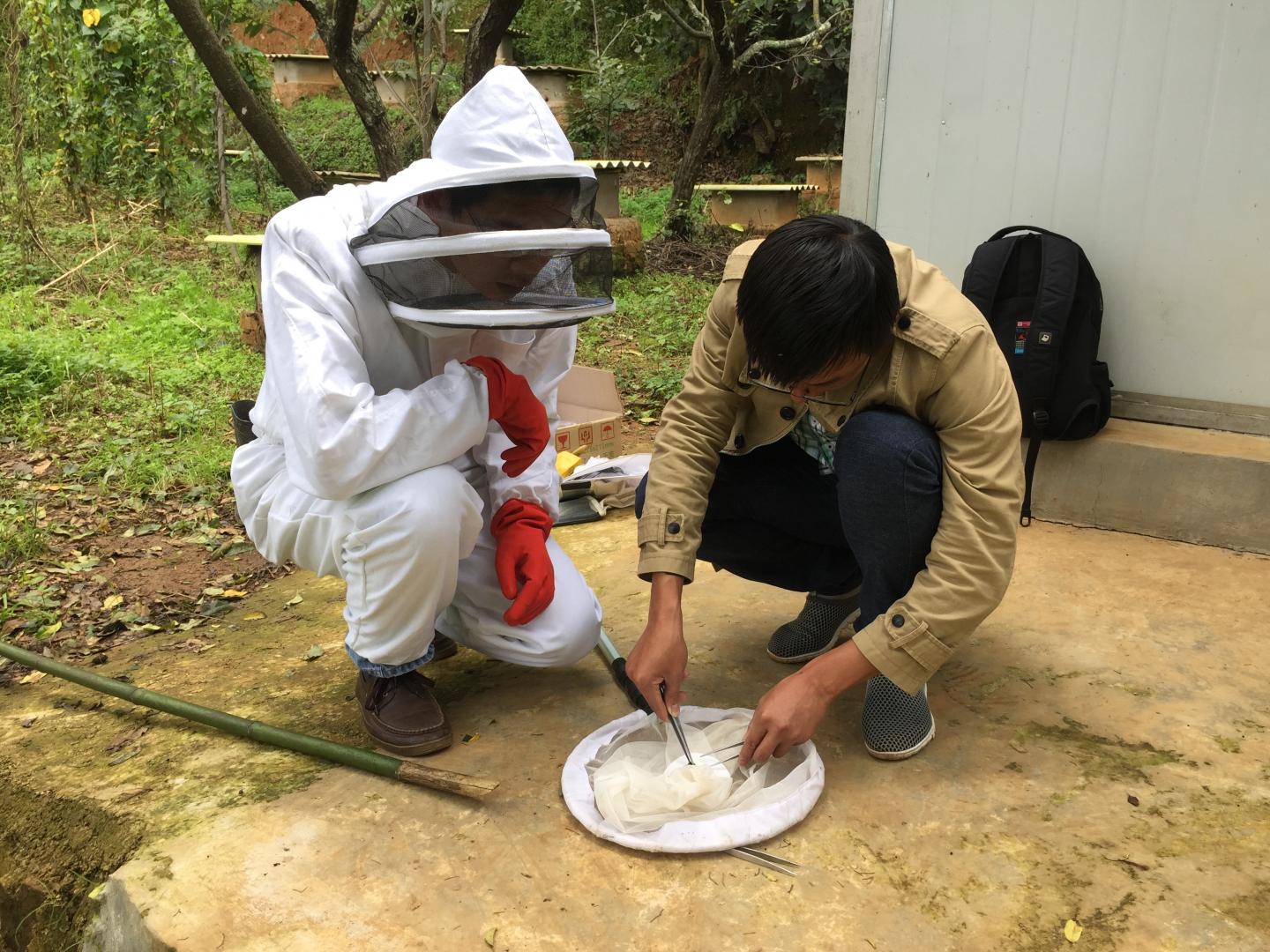
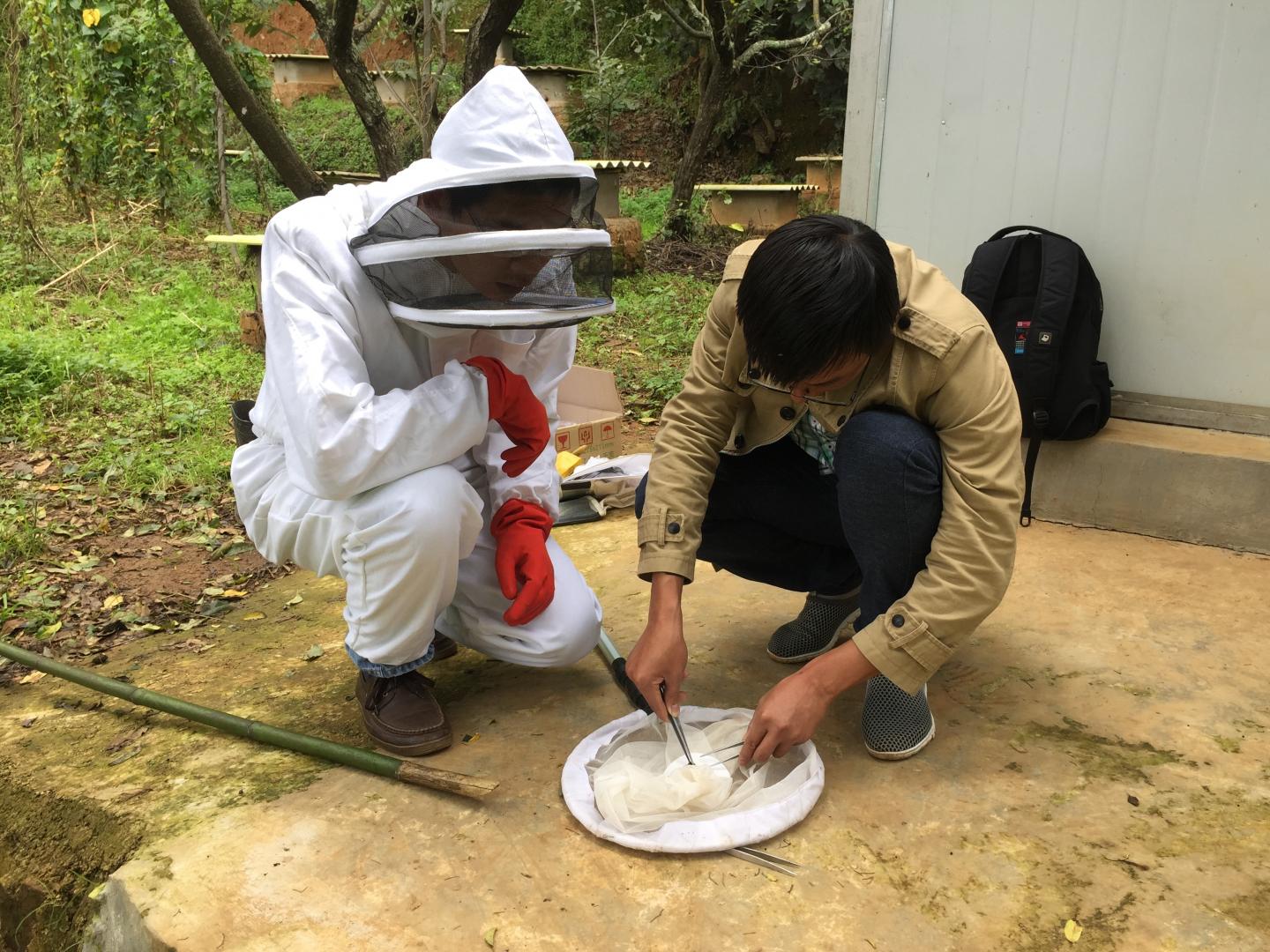
IMAGE

Credit: James Nieh

Over the past decade, Asian hornets, predatory insects with a widespread and expanding population, have invaded parts of Europe and Korea. Vespa velutina has a growing reputation as a species that proliferates rapidly, preys on honey bees and poses risks to humans.

Now a biologist at the University of California San Diego and his colleagues in Asia have developed a solution for controlling Asian hornets derived from the insect's natural chemical mating instincts.

As reported in the Oct. 11 edition of Scientific Reports, UC San Diego's James Nieh and researchers at the Chinese Academy of Sciences and Yunnan Agricultural University have deciphered the sex pheromone of Vespa velutina. Further, they developed a method of controlling Asian hornets by luring males into traps baited with synthesized versions of the pheromones.

"We have successfully tested the key sex pheromone compounds of this species and the results show that males are highly attracted to them," said Nieh, a professor in UC San Diego's Division of Biological Sciences.

Nieh noted that recently Turkey and Balkan nations have been invaded by Asian hornets, with much of Western Europe at risk. A single hornet can bite and kill hundreds of honey bees in its quest to obtain honey bee larvae. European honey bees have not evolved with this deadly predator and have poor defenses. As a result, "the European economic impact is high," said Nieh, and "major colony losses have led some beekeepers to abandon apiculture."

Nieh noted that Asian hornets are difficult to control because their colonies can spread rapidly and their nests are difficult to find in non-urban areas. They pose dangers to humans with stings that are painful and, in rare cases, deadly.

Pheromones are chemical signals that transmit information between members of the same species. Sex pheromones play a key role in mating and the continued survival of the species. In the case of Asian hornets, which have limited vision, sex pheromones likely play a key role in long-distance attraction. The new research demonstrates a simple, reliable way to monitor and potentially reduce the populations of these invading insects.

###

Coauthors of the Scientific Reports paper include Ping Wen, Ya-Nan Cheng, Shi-Hao Dong, Zheng-Wei Wang and Ken Tan.

The research was supported by the Key Laboratory of Tropical Forest Ecology, Xishuangbanna Tropical Botanical Garden, and the CAS 135 program (XTBGT01) of the Chinese Academy of Science.

Media Contact

Mario Aguilera
[email protected]
858-822-5148
@UCSanDiego

http://www.ucsd.edu

Share12Tweet8Share2ShareShareShare2

Related Posts

Targeted Nanoparticles Make Tumors’ Copper Into a Lethal Weapon

Targeted Nanoparticles Make Tumors’ Copper Into a Lethal Weapon

July 15, 2026
Kansas City University Review Identifies Astrocytes as Drivers of Chronic Traumatic Encephalopathy

Kansas City University Review Identifies Astrocytes as Drivers of Chronic Traumatic Encephalopathy

July 15, 2026

Elephants Use Ground Vibrations for Communication via Specialized Middle Ear Anatomy

July 15, 2026

Sequential mating reduces medaka sperm speed, impacting fertilization success

July 15, 2026
Please login to join discussion

POPULAR NEWS

  • New Drug Candidate Developed at McMaster Shows Potential for Treating Brain Cancer

    58 shares
    Share 23 Tweet 15
  • A varied menu

    51 shares
    Share 22 Tweet 12
  • 研究人员开发认知工具包,实现阿尔茨海默症早期检测

    50 shares
    Share 20 Tweet 13
  • Porcine Heart Transplant

    50 shares
    Share 20 Tweet 13

About

We bring you the latest biotechnology news from best research centers and universities around the world. Check our website.

Follow us

Recent News

Machine Learning Method Widens Accurate Use of Martin-Hopkins LDL Risk Equation

Study Finds Smokers Rarely Increase Smoking After Switching to Low-Nicotine Cigarettes

SIRT5-SUCLG2 Desuccinylation Axis Delays Ovarian Aging Through Mitochondrial-Epigenetic Control

Subscribe to Blog via Email

Success! An email was just sent to confirm your subscription. Please find the email now and click 'Confirm' to start subscribing.

Join 85 other subscribers
  • Contact Us

Bioengineer.org © Copyright 2023 All Rights Reserved.

Welcome Back!

Login to your account below

Forgotten Password?

Retrieve your password

Please enter your username or email address to reset your password.

Log In
No Result
View All Result
  • Homepages
    • Home Page 1
    • Home Page 2
  • News
  • National
  • Business
  • Health
  • Lifestyle
  • Science

Bioengineer.org © Copyright 2023 All Rights Reserved.