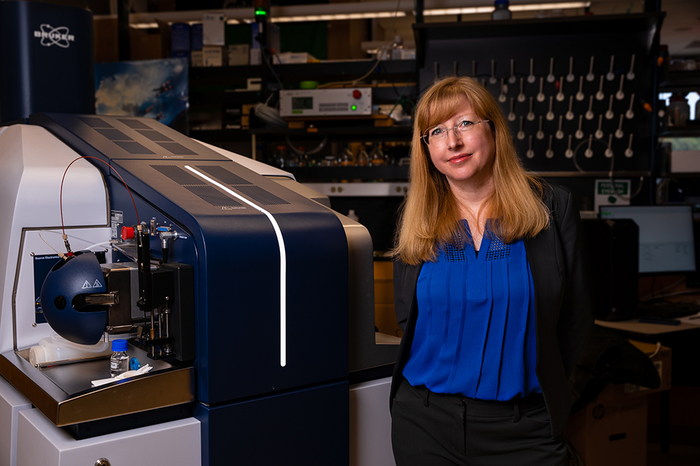
In a landmark advancement in cancer research, Ludwig Cancer Research has proudly announced that Xin Lu, Director of the Oxford Branch of the Ludwig Institute, alongside Chi Van Dang, the Institute’s CEO and Scientific Director, are honored co-recipients of the 2026 Cancer Grand Challenges award. Together, they are integral members of the pioneering ATLAS team—Antibody Tracking for Long-term Avoidance and Surveillance—which stands at the forefront of developing innovative strategies to unravel the complexities of cancer biology and prevention.
Cancer Grand Challenges, a visionary initiative launched in 2020 by Cancer Research UK in collaboration with the U.S. National Cancer Institute, is renowned for fostering bold, interdisciplinary collaborations across borders aimed at solving some of the most daunting obstacles in cancer science and care. This year, the program has allocated up to $125 million to a select group of five teams representing 34 institutions spanning nine countries, thereby uniting approximately 1,800 researchers working on 21 ambitious cancer research challenges. Notably, the ATLAS consortium operates under the aegis of Cancer Research UK and the Torrey Coast Foundation, both motivated by accelerating immunological insights.
At the helm of ATLAS, international principal investigators led by Paul Bastard at Institut IMAGINE in Paris are embarking on a five-year, $25 million mission to construct the Cancer Antibody Atlas. This ambitious project seeks to catalog and understand the antibody repertoires of individuals, especially those aged or otherwise predisposed to cancer, who remarkably evade malignant diseases. The Atlas aims to illuminate the serological footprints that underpin cancer avoidance, offering a potentially transformative platform in cancer diagnosis, prevention, and therapy.
While T cell-mediated immunotherapy has revolutionized cancer treatment by harnessing the adaptive immune system’s cytotoxic potential, its efficacy remains limited to certain cancer types and patients. However, the other critical adaptive immune component—B cells and the antibodies they produce—has remained comparatively underexplored in oncology. B cells generate an immense diversity of antibodies that primarily fend off infectious agents but are known also to target cancer cells and, intriguingly, sometimes the body’s own molecules through autoantibodies.
This vast antibody diversity circulating in the bloodstream constitutes a serological memory bank filled with historical records of the immune system’s past encounters. The ATLAS initiative plans to investigate these antibody signatures across over 10,000 individuals, ranging from centenarians and high-risk patients to discordant twins and healthy young adults, enabling the identification of correlates of immune surveillance and cancer resistance. These efforts are poised to unearth novel biomarkers and therapeutic targets by decoding the complexities of humoral immunity to cancer.
Central to the technology harnessed by ATLAS is the use of cutting-edge protein profiling techniques that capture the intricate relationships between antibody repertoires and cancer states across diverse cohorts. This multiplexed approach enables the detection of antibodies directed against a wide array of antigens, including those involved directly in tumor suppression and those mediating modulatory immune responses. Importantly, the project delves not only into antibodies that attack cancer cells but also examines autoantibodies implicated in the modulation of immune checkpoint therapies—immunotherapeutics that have dramatically reshaped the cancer treatment landscape yet still suffer from variable patient responses.
Moreover, the team investigates antibodies that arise in response to pathogens, commensal microorganisms such as gut microbiota, dietary components, and environmental exposures, unraveling their complex roles in tumor immunity and patient outcomes. Through this holistic serological mapping, ATLAS aspires to discover previously unknown immune mechanisms that could be harnessed to enhance early cancer detection, develop vaccines, or improve immunotherapeutic approaches.
The integration of immunological, genetic, and epidemiological data within the ATLAS framework promises to yield high-resolution insights into the immune signatures of cancer resistance. The collaborative validation of these discoveries in preclinical models will not only elucidate fundamental cancer immunobiology but also pave the way for translational applications with immense clinical potential. There is a compelling optimism among the team that this research could lead to breakthroughs approaching the elusive goal of cancer prevention, a milestone that has remained out of reach despite decades of progress in cancer therapy.
Xin Lu, who also holds a professorship in cancer biology at Oxford University, emphasized that the intricacies of antibody-mediated immunity in cancer remain a largely untapped reservoir of scientific knowledge. Complementing this, Chi Van Dang, Bloomberg Distinguished Professor of Cancer Medicine at Johns Hopkins University, underscored the initiative’s transformative potential in shaping the future of oncology across diagnostics, therapeutics, and preventive medicine.
This Cancer Grand Challenges award marks a significant milestone within Ludwig Cancer Research’s expanding portfolio of collaborative projects. It complements another active endeavor: the CANCAN team, co-led by Ludwig Princeton Associate Director Eileen White, which since 2022 has been investigating cancer-associated cachexia—a devastating wasting syndrome linked to poor prognosis and treatment resistance.
As the ATLAS team embarks on this unprecedented journey, the broader scientific community watches with anticipation. Their efforts may not only redefine the landscape of cancer immunology but also unlock the door to highly personalized and effective cancer prevention strategies. Further insights into this groundbreaking work are available through video presentations by both Dang and Lu, elucidating the scientific vision and collaborative ethos driving this transformative project.
Subject of Research:
Cancer antibody repertoires and their role in cancer avoidance, diagnosis, and treatment
Article Title:
Ludwig Cancer Researchers Lead Innovative ATLAS Initiative to Decipher Cancer-Avoidance Antibody Landscapes
News Publication Date:
March 4, 2026
Web References:
https://caatlas.com
Image Credits:
Ludwig Cancer Research
Keywords:
Cancer immunotherapy, antibody repertoires, B cells, serological memory, Cancer Grand Challenges, Cancer Antibody Atlas, tumor immunology, cancer prevention, autoantibodies, biomarker discovery, adaptive immune system
Tags: ATLAS antibody tracking projectCancer Grand Challenges 2026cancer prevention researchCancer Research UK initiativesfunding for cancer innovationglobal cancer research consortiumimmunological cancer insightsinnovative cancer biology strategiesinterdisciplinary cancer collaborationsinternational cancer research teamslong-term cancer surveillanceLudwig Cancer Research award recipients