Neonatal sepsis remains one of the most feared complications in newborn medicine, a fast-moving bloodstream infection that can overwhelm an infant within hours and claims a substantial share of the roughly two to three million neonatal sepsis cases estimated worldwide each year. Now, a research team based in Guangzhou, China, has added a new piece of evidence to a long-running debate: whether a newborn’s vitamin D status in the first hours of life has anything to do with the odds of developing sepsis during the hospital stay. The study, published in BMC Pediatrics by Xinyi Xie of Sun Yat-sen University and colleagues, combined a retrospective cohort of hospitalized neonates with a complementary genetic analysis known as Mendelian randomization, and its findings point in a direction that could eventually influence how clinicians think about vitamin D in the neonatal intensive care unit.
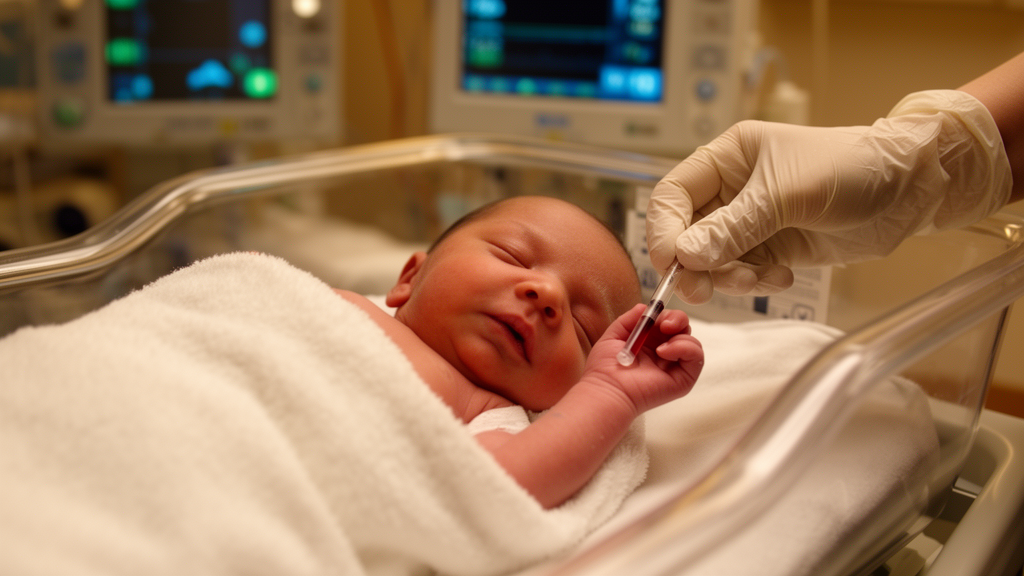
The clinical half of the study drew on 366 hospitalized neonates born between 2018 and 2023 at Sun Yat-sen Memorial Hospital. What makes this dataset unusual is the timing of the blood work: every infant had serum 25-hydroxyvitamin D, or 25(OH)D, the standard laboratory marker of vitamin D status, measured within 72 hours of birth and, crucially, before any vitamin D supplementation had been given. That timing matters because it captures the vitamin D status the infant acquired in utero, through placental transfer of the vitamin from the mother, rather than any status achieved after birth through feeding or supplementation. The researchers then tracked which of these infants went on to be diagnosed with neonatal sepsis during their hospitalization.
The numbers that emerged were striking. The median 25(OH)D concentration across the cohort was just 37.7 nanomoles per liter, a figure that sits well below the 50 nanomoles per liter threshold generally considered sufficient in pediatric practice. Nearly eight in ten infants fell short of that mark: 28.4 percent were frankly deficient, with concentrations below 30 nanomoles per liter, and another 49.5 percent were insufficient, landing between 30 and 50. In other words, vitamin D inadequacy was the norm rather than the exception in this population of hospitalized newborns, a pattern consistent with the widespread vitamin D deficiency documented among pregnant women in many parts of the world, since the newborn’s stores largely mirror the mother’s.
When the researchers ran the statistical analysis, they prespecified the 235 term neonates in the cohort as the primary analysis population, a decision that reflects the clinical reality that preterm infants face a fundamentally different risk landscape for sepsis, with immature skin barriers, invasive procedures, and prolonged hospital stays all playing outsized roles. Among those term infants, the association was clear: every 10-nanomole-per-liter increase in 25(OH)D was associated with roughly 30 percent lower odds of neonatal sepsis, with an adjusted odds ratio of 0.70 and a 95 percent confidence interval of 0.54 to 0.90, reaching statistical significance at p equals 0.006. The adjustment accounted for potential confounders, meaning the relationship held even after accounting for other factors that might independently influence sepsis risk.
But an observational association, however carefully adjusted, always leaves open the possibility of reverse causation or residual confounding. Perhaps sepsis-prone infants are simply sicker in ways that also depress their vitamin D levels, or perhaps some unmeasured factor, from maternal nutrition to socioeconomic circumstances, drives both. This is where the second half of the study comes in. The team turned to Mendelian randomization, a technique that exploits the random allocation of genetic variants at conception to approximate a randomized trial. Because single-nucleotide polymorphisms, or SNPs, that influence vitamin D levels are fixed at conception and generally not confounded by later environmental exposures or disease processes, they can serve as proxies for lifelong vitamin D status, allowing researchers to ask whether genetically predicted higher 25(OH)D is associated with disease outcomes in ways that are harder to dismiss as mere correlation.
Using summary statistics from large genome-wide association studies, the researchers performed a two-sample Mendelian randomization analysis examining whether genetically predicted vitamin D status relates to sepsis outcomes. The result was intriguing but deliberately cautious in its interpretation: genetically predicted higher 25(OH)D was nominally associated with lower odds of streptococcal septicemia, with an odds ratio of 0.96 per unit increase and a confidence interval of 0.924 to 0.996, yielding a p value of 0.029. The word nominal is doing important work here. In the context of multiple genetic instruments and multiple outcomes, a p value just under the conventional 0.05 threshold does not constitute strong evidence, and the authors were explicit that this exploratory estimate, while directionally consistent with the cohort finding, does not establish causality. The effect size, roughly a 4 percent reduction in odds per genetically predicted increase in 25(OH)D, is modest, and the confidence interval grazes the null value at its upper bound.
Still, the convergence of two very different lines of evidence is what gives the study its interest. The retrospective cohort captures real-world clinical variation in vitamin D status at a moment, the first 72 hours of life, when intervention might theoretically still be possible through maternal supplementation during pregnancy or early neonatal dosing. The genetic analysis, for all its limitations, offers a triangulation point that is immune to the reverse-causation problem, since a newborn’s germline variants cannot be altered by the sepsis that follows. That the two approaches point in the same direction, with the genetic signal specifically implicating streptococcal septicemia, a major bacterial cause of neonatal sepsis, lends biological plausibility to the association, even if neither line alone can settle the question.
The mechanistic backdrop is also worth understanding. Vitamin D is not merely a bone-regulating hormone; its active form binds to the vitamin D receptor expressed on immune cells, including macrophages and dendritic cells, and modulates the production of antimicrobial peptides such as cathelicidin, which play a direct role in killing bacteria. In the neonatal period, when the innate immune system is still maturing and the adaptive arm is largely naive, this antimicrobial pathway may be particularly consequential. Animal models and in vitro studies have long suggested that vitamin D deficiency impairs antibacterial responses, and the neonatal context, with its immature immune defenses and high vulnerability to bloodstream infection, is precisely where such a deficit might matter most.
The authors are careful about what their study cannot say. This was a selected cohort of hospitalized neonates who had clinician-directed 25(OH)D testing, which means the sample may overrepresent infants already suspected of having problems, and the retrospective design means sepsis diagnoses were drawn from clinical records rather than standardized prospective criteria. The cohort was also drawn from a single center in southern China, and vitamin D status varies substantially across populations, seasons, and latitudes, so the generalizability of the 37.7 nanomole-per-liter median and the magnitude of the association remain open questions. The Mendelian randomization analysis, meanwhile, relied on genetic instruments developed primarily in European-ancestry populations, which can limit the precision and transportability of the estimates when applied to other populations.
What the study does establish is a well-defined hypothesis worth testing prospectively: that early neonatal vitamin D status, established largely in utero, is associated with sepsis risk in term infants, and that the relationship may be at least partially causal. The authors call for prospective multicenter validation, which would mean following newborns forward from birth with standardized 25(OH)D measurements and sepsis surveillance, ideally across diverse populations. If such studies confirm the association and the genetic signal strengthens, the implications could be significant for a condition where prevention options remain limited. Maternal vitamin D supplementation during pregnancy is already recommended in many guidelines for skeletal health, and if the immune benefits extend to sepsis prevention, the case for ensuring adequate maternal and neonatal vitamin D status would become considerably stronger. For now, the message is one of cautious promise: a cheap, widely available nutrient, a common deficiency in newborns, and a serious infection, all linked by evidence that is suggestive but not yet definitive.
Subject of Research: The association between early neonatal vitamin D status and neonatal sepsis, examined through a retrospective cohort and Mendelian randomization
Article Title: Early neonatal vitamin D status and neonatal sepsis: a retrospective cohort study complemented by Mendelian randomization
Article References: Xie, X., Chen, Y., Jin, N., Sha, S., Zhou, R., Bamo, A., Chen, J., Yu, Z., & Ouyang, Y. (2026). Early neonatal vitamin D status and neonatal sepsis: a retrospective cohort study complemented by Mendelian randomization. BMC Pediatrics. https://doi.org/10.1186/s12887-026-07678-6
Image Credits: AI Generated
DOI: 10.1186/s12887-026-07678-6
Keywords: neonatal sepsis, vitamin D, 25-hydroxyvitamin D, Mendelian randomization, newborns, term neonates, Sun Yat-sen University, retrospective cohort, genetic analysis, streptococcal septicemia, neonatology, immune regulation
News Source: Ophelia Keating. (October 19, 2026). Low Vitamin D in Newborns Linked to Higher Sepsis Risk, Study Finds. Scienmag.