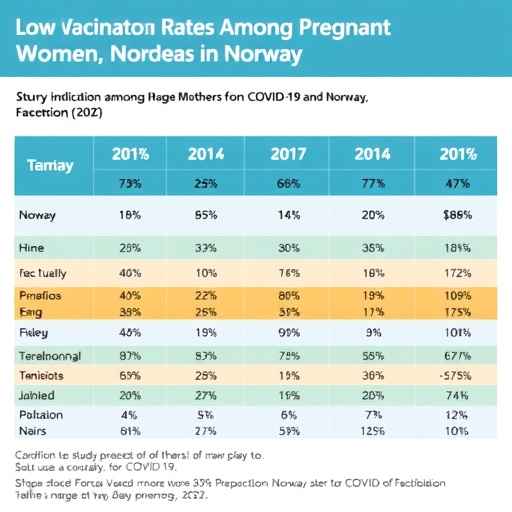
A recent population-based registry study published in Eurosurveillance sheds light on an alarming issue in maternal healthcare during the 2023/24 influenza season in Norway. Despite clear recommendations from health authorities, vaccination coverage against influenza and COVID-19 among pregnant women remains critically low, exposing both mothers and their newborns to heightened risks of severe disease outcomes. The comprehensive study, conducted by Stecher et al. at the Norwegian Institute of Public Health, analysed vaccination patterns in over 50,000 pregnant women, revealing systemic gaps in public health interventions for this vulnerable population.
Pregnant women are universally recognized as a high-risk group for complications arising from influenza and COVID-19 infections. Both the World Health Organization (WHO) and Norwegian health authorities strongly advise immunization during pregnancy, particularly in the second and third trimesters, to protect not only maternal health but also the neonatal immune system through transplacental antibody transfer. The WHO posits a vaccination coverage target of 75% for at-risk groups, including pregnant women, to achieve adequate herd immunity and prevent outbreaks. However, the Norwegian data indicates a stark discrepancy between guidelines and real-world uptake.
Utilizing linked data from the Medical Birth Registry Norway (MBRN) and the Norwegian Immunisation Registry (SYSVAK), the study meticulously tracked maternal immunization from October 2023 through September 2024. The analysis captured vaccination timing relative to pregnancy trimesters and delivery months, as well as demographic variables such as age and regional distribution. The findings unearthed a vaccination uptake of just 29.9% for influenza and a mere 12.1% for COVID-19 during pregnancy. Critically, only 11.4% of the cohort received both vaccines, elucidating significant missed opportunities for comprehensive maternal protection.
Temporal patterns in vaccine administration exhibited notable variations. Influenza vaccine uptake marginally improved from 16.4% in early October to approximately 26.4% by November, plateauing thereafter. Vaccination rates peaked among women delivering in February, with coverage reaching 50.8%, before declining in subsequent months. This temporal gradient suggests a potential correlation between seasonal influenza activity and vaccination timing, yet overall rates remain suboptimal. The COVID-19 vaccination followed a similar trajectory but at distinctly lower coverage levels, emphasizing compounded vulnerabilities.
One of the more perplexing aspects highlighted by the study is the dissonance between Norway’s high public trust in healthcare authorities and the low maternal vaccine uptake. Despite extensive communication strategies and evidence-based recommendations, practical and psychological barriers continue to hinder pregnant women’s vaccination decisions. Younger women, particularly those aged 25 and under, displayed the lowest uptake, suggesting age-related factors such as perceived risk, vaccine hesitancy, or access issues may be influential.
Geographical disparities further complicate the maternal immunization landscape within Norway. The highest vaccine coverage was observed in urbanized counties such as Oslo and Vestland, which likely benefit from better healthcare infrastructure and provider availability. Conversely, Northern Norway demonstrated the lowest vaccination rates, raising concerns about rural health inequities, logistic challenges, and potential sociocultural differences impacting immunization behaviors.
The study’s authors advocate for multifaceted interventions to bridge these immunization gaps. Removing financial barriers, especially given that the influenza vaccine incurs a cost while the COVID-19 vaccine is free, is critical. Enhancing accessibility through dedicated prenatal vaccination programs integrated into routine obstetric care visits could reduce reliance on self-initiated healthcare appointments. Furthermore, leveraging trusted sources of vaccine information tailored to the concerns of pregnant women may mitigate psychological hesitancy.
Importantly, international evidence cited by the researchers underscores the success of embedding free vaccinations like the pertussis vaccine into Norway’s maternal immunization schedule, which substantially improved uptake. Applying similar frameworks to influenza and COVID-19 vaccines could reinforce the normalization and prioritization of maternal immunization. The study’s implications extend beyond Norway, mirroring global challenges including inconsistent surveillance systems and fragmented integration of maternal vaccines into healthcare pathways.
The researchers call for comprehensive surveillance mechanisms to continually monitor maternal vaccination trends, allowing timely identification of gaps and evaluation of interventions. Such systems should ideally provide granular, real-time data to inform public health policy and address inequalities at multiple levels. Coordinated efforts across Europe and worldwide are imperative to elevate maternal immunization coverage and ultimately safeguard maternal and neonatal health on a broader scale.
Clinicians and public health professionals must recognize the critical window of opportunity that pregnancy represents for vaccination, harnessing trust in healthcare while effectively addressing logistical and psychosocial barriers. This study highlights an urgent need for innovative approaches that move beyond mere recommendations, striving for systematic integration, community engagement, and policy support to improve maternal vaccine uptake in Norway and globally.
In summary, Stecher et al.’s in-depth registry study is a clarion call to health systems worldwide: while scientific consensus affirms the safety and efficacy of influenza and COVID-19 vaccinations during pregnancy, actual coverage remains alarmingly insufficient. Without proactive, targeted interventions to dismantle financial, access-related, and informational barriers, pregnant women and their infants will continue to face preventable risks from these serious viral infections.
Subject of Research: People
Article Title: Missed opportunities for maternal immunisation against influenza and COVID-19, Norway, October 2023 to May 2024: a population-based registry study
News Publication Date: 19-Feb-2026
Web References: 10.2807/1560-7917.ES.2026.31.7.2500504
Keywords: Health and medicine, Vaccination, COVID 19 vaccines, Flu vaccines, Vaccine target, Pregnancy, Public health, Infectious diseases, Influenza, COVID 19
Tags: COVID-19 vaccination in pregnancyinfluenza vaccination during pregnancylow vaccination rates among pregnant womenmaternal and neonatal health risksmaternal immunization data Norwaymaternal vaccination coverage NorwayNorwegian Institute of Public Health studypopulation-based registry study pregnancypublic health interventions for pregnant womentransplacental antibody transfervaccination uptake barriers in pregnancyWHO vaccination targets pregnant women