A group led by researchers at Nagoya University and Meijo University in Japan has developed a disinfection technology that uses low-temperature plasma generated by electricity to cultivate environmentally friendly hydroponically grown crops. This innovative technology sterilizes the crops, promoting plant growth without the use of chemical fertilizers. Their findings appeared in Environmental Technology & Innovations.
Credit: Reiko Matsushita
A group led by researchers at Nagoya University and Meijo University in Japan has developed a disinfection technology that uses low-temperature plasma generated by electricity to cultivate environmentally friendly hydroponically grown crops. This innovative technology sterilizes the crops, promoting plant growth without the use of chemical fertilizers. Their findings appeared in Environmental Technology & Innovations.
In hydroponic agriculture, farmers cultivate plants by providing their roots with a nutrient solution. However, the nutrient solution can become infected with pathogenic E. coli strains, contaminating the crop and leading to foodborne illnesses.
To avoid this problem, farmers use chemical treatment to sterilize the nutrient solution before and during cultivation. In this process, the nutrient solution is replaced. Unfortunately, this can harm the environment because the chemicals can contaminate water and produce greenhouse gas emissions in their production process.
“Our results suggest a completely new way of disinfecting,” author Professor Masafumi Ito of Meijo University said. “Our technology can potentially reduce the production of pesticides that use fossil fuels, pollution of the environment, and residuals.”
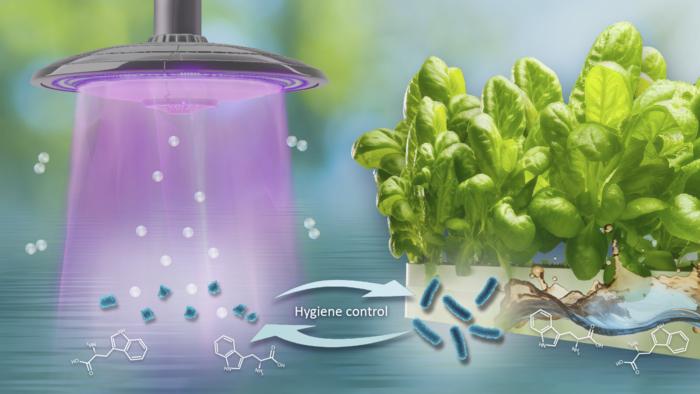
Instead of agrochemicals, the team’s technique performed sterilization using plasma. Plasma is gas with small electric charges, known as ions and electrons, and electrically neutral reactive particles in it. The team created the low-temperature plasma using a plasma generator.
Their method targets the amino acid tryptophan in fertilizer, which is vital for plant growth and development. When the nutrient solution is irradiated with plasma, the electrons of the plasma generate oxygen radicals, highly unstable oxygen particles, that then produce tryptophan radicals.
Although the plant can still use the altered tryptophan in its metabolism, the radicals inactivate the enzymes involved in carbon metabolism in E. coli. Metabolomic analysis revealed the inactivation of the glycolytic and tricarboxylic acid circuits, which are essential for the bacteria’s survival, and inactivation of the key enzyme GAPDH. The result is sterile crops in a shorter period, a major advantage over conventionally used chemical-based techniques.
“We developed a sterilization technology using oxygen radicals, which is promising as a hygiene control technology for nutrient solution in modern hydroponic cultivation,” said lead author, Professor Kenji Ishikawa of the Nagoya University Center for Low-temperature Plasma Sciences. “As the use of chemical pesticides is restricted under the SDGs and the Green Strategy, our innovative technology can be used for sterilization simply by converting the atmosphere containing nitrogen, oxygen, and water vapor into low-temperature plasma based on electrical energy obtained from natural energy. This technology is expected to promote technological development toward the goal of eliminating fossil fuels and reducing greenhouse gases.”
Journal
Environmental Technology & Innovation
DOI
10.1016/j.eti.2023.103496
Article Publication Date
21-Dec-2023