Deep beneath the arid limestone plain of the Nullarbor in southern Australia, scientists have uncovered a family of mites that appear to have quietly adapted to life in the dark. A new study published in the journal Subterranean Biology describes two genera of cave-dwelling mites belonging to the family Neotrombidiidae, including one entirely new genus, Cruralonga, whose members show striking physical traits consistent with long-term underground evolution.
The research emerged from the Yalata Bush Blitz 2021 expedition, a biodiversity survey programme that sent scientists into 14 caves across the eastern Nullarbor karst. Using pitfall traps, ramp traps and desiccating funnels, the team collected a large diversity of cave arthropods, among them mite larvae and adults displaying remarkable extremes in body form that set them apart from all previously known relatives.
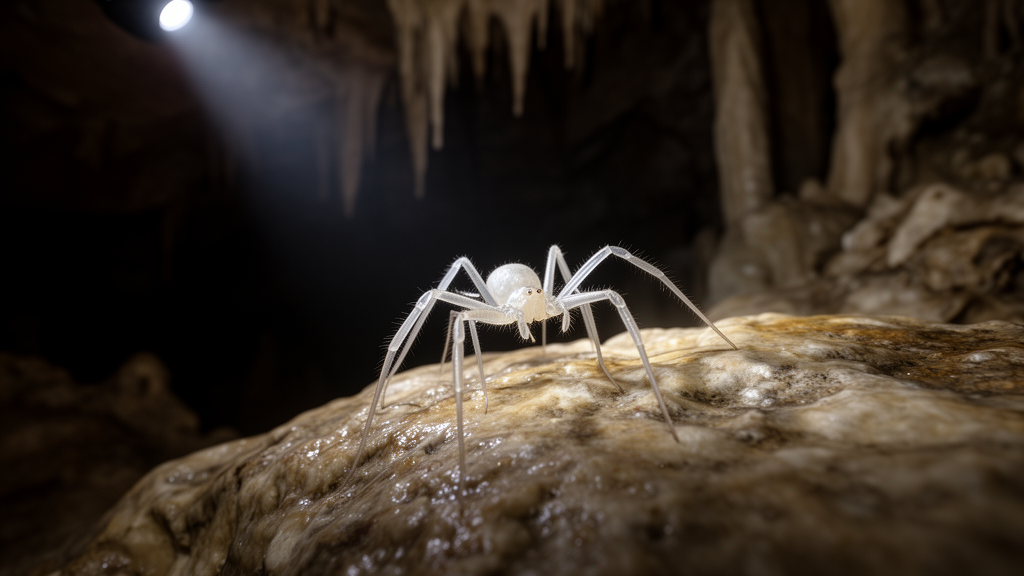
Cruralonga, informally dubbed the Gracile Velvet mite, stands out for its unusually elongate appendages and an unexpectedly large number of leg sensory setae. These fine sensory hairs, which help mites detect their surroundings, are present in far greater quantities than in any other known member of the family. Adult specimens matching the larvae were found widespread across the Nullarbor karst, and they too possess putative troglomorphic features, including longer legs than previously recorded for the family and the complete loss of the posterior pair of eyes.
The second cave-dwelling taxon described in the study presents a compact larval body form with a separate suite of unique characters, such as an expanded anterior region of the scutum and setae on coxa II modified as spurs. Notably, this larva was collected from the folded wings of a troglophilic beetle, marking the first record of a neotrombidiid from a cave beetle host and the only known host for an Australian neotrombidiid.
Neotrombidiidae belong to the diverse mite cohort Parasitengona, which includes familiar velvet mites, water mites and chiggers. These mites have a complex life cycle in which parasitic larvae undergo metamorphosis, moulting to free-living nymph and adult stages. Depending on habitat, different parasitengones tend to be collected either as larvae or as larger free-living postlarvae, creating a legacy of dual taxonomy that has complicated the classification of this small, phylogenetically enigmatic family.
The study’s authors argue that integrative systematics of Australian cave-dwelling Neotrombidiidae could offer a previously unexplored insight into troglomorphic adaptation. Troglomorphism refers to the suite of traits that evolve in organisms living permanently underground, such as elongated limbs, reduced eyes and loss of pigment. Cruralonga exhibits several of these characteristics simultaneously, including increased numbers of sensory setae, elongate sensilla, elongate legs and other appendages, loss of the posterior eye in adults, and possible reduction in pigment.
Quantitative comparisons reinforce the visual impression. The sum of leg lengths, a measure known as the Index pedibus, ranges from 755 to 944 micrometres in seven Neotrombidium species from various continents, and sits at 939 in the cave-inhabiting Monunguis. By contrast, Cruralonga gracilipes reaches 1672 and Cruralonga milnerii up to 2349, roughly two to two and a half times the length found in above-ground relatives. Similar proportions are reflected in adult females, whose legs are proportionally much longer than those of epigean species of comparable body size.
The sensory setae counts are equally striking. Cruralonga milnerii larvae carry femoral sensory setae in a pattern of 4.6.5, compared with 3.2.2 in Monunguis and 2.2.2 in Neotrombidium species. This count of supernumerary sensory setae on proximal leg segments, with two to two and a half times more sensory setae than above-ground Neotrombidium, seems unusual for parasitengone larvae and may represent an adaptation to navigating the complete darkness of cave interiors.
The discovery also carries taxonomic consequences beyond the Nullarbor. Two other species from eastern Australian caves, formerly placed in the genus Neotrombidium, are transferred to Cruralonga in the study. Both were originally described from Fig. Tree Cave in New South Wales by H. Womersley in 1963, one known only from a larva and the other only from an adult, illustrating the dual taxonomy problem that has long hindered the family’s systematics.
The researchers suggest that if observations are replicated across the Nullarbor karst, the largest area of arid limestone karst in the world, this system could prove informative for understanding cave adaptation more broadly. Locating Cruralonga larvae is expected to become easier once their hosts are identified, a prospect that could be combined with direct counts and measures of their exposed sensory organs. Any future advances, the authors note, will depend greatly on the active involvement of First Nations custodians and cavers.
The Nullarbor Plain itself provides an important backdrop for interpreting these findings. Spanning roughly 200,000 square kilometres across southern Australia, it is often cited as the largest continuous limestone karst in the world, and its caves are known for their aridity, deep penetration and sparse but highly specialised fauna. Because the region receives little rainfall and its cave interiors lack light and the plant productivity that fuels most surface food webs, the invertebrate communities found there depend on nutrient inputs from the surface, such as organic material washed in or carried by animals. Mites are among the most frequently encountered arthropods in such systems, yet their taxonomy is so poorly resolved that many cave species remain undescribed, making each documented genus a meaningful addition to subterranean biodiversity knowledge.
The collecting methods used during the Yalata Bush Blitz expedition deserve attention because they illustrate how technique shapes discovery in cave biology. Pitfall traps buried flush with the sediment surface, particularly when baited with sardine, can attract scavenging and predatory arthropods over several days, while ramp traps offer a solution where cave floors are covered in coarse breakdown that cannot be excavated. Desiccating funnels, sometimes called Berlese or Tullgren funnels, work on a different principle altogether: sediment samples are placed above a mesh over a collecting fluid, and drying air from below drives small animals downward as their habitat desiccates. The researchers sieved all trap fluid through a 108 micrometre mesh and examined retained material under magnification up to 630 times, a precaution reflecting how easily minute mites can be overlooked when they blend into similarly coloured sediment. This meticulous approach was credited with uncovering several new and unexpected records during the survey.
Specimen preparation followed established protocols for parasitengone taxonomy. Mites destined for slide mounting were cleared in lactic acid, rinsed and passed through an ethanol ladder before being mounted in Hoyers medium, a traditional mounting medium that allows fine structures such as setae and the scutum to be examined under compound microscopy. Measurements were taken from images captured on a Zeiss AxioImager microscope and processed with stacking software that combines multiple focal planes into a single sharp image, a technique now standard for documenting tiny arthropods. Specimens retained in ethanol had their trap fluid replaced with DNA-safe ethanol and were stored in freezers, preserving material for potential molecular work that could eventually link larval and postlarval stages genetically rather than through rearing alone.
The broader evolutionary context of Neotrombidiidae adds further interest to the Nullarbor discoveries. Parasitengona comprises roughly 7,000 described species, and within this cohort the vertebrate-parasitic chiggers, which include medically significant species numbering up to 3,100, have long posed questions about evolutionary transitions between invertebrate and vertebrate parasitism. Neotrombidiidae larvae parasitise invertebrates, and one neotropical species, Monunguis streblida, is notable as the only consistently hyperparasitic taxon within Parasitengona, feeding on parasitic streblid flies that themselves live on bats. A recent wide-ranging molecular phylogeny placed Neotrombidiidae within a clade of invertebrate-parasitic lineages recognised as the epifamily Trombelloidae, sister to a grouping that includes the vertebrate-parasitic Trombiculoidea, with strong support across multiple analytical schemes. This framework suggests that studying cave-associated neotrombidiids may illuminate steps in the evolution of parasitic strategies within the wider group.
The family’s affinity for caves extends well beyond Australia. Documented cave-dwelling neotrombidiids include a species described from Greece, genera recorded from Central America including Yucatan and the Caribbean, a monobasic Cuban genus known only from distinctive postlarvae found in bat guano, and undescribed material reported from caves in Missouri and Brazil. This scattered global distribution hints that cave association may be an underappreciated trait across the family, and that targeted sampling in karst regions worldwide could reveal many more troglomorphic lineages. The Nullarbor material, with its combination of elongate appendages, supernumerary sensory setae and eye loss, now provides one of the clearest morphological signals of subterranean adaptation yet documented for parasitengone mites, and offers a foundation for future integrative studies combining morphology, ecology and molecular data.
Subject of Research: Zoology
Article Title: Neotrombidiidae ( Acari , Trombidiformes ) from Nullarbor caves, southern Australia including the apparently troglomorphic Cruralonga gen. nov.
Article References: Shaw, M. D. (2025). Neotrombidiidae (Acari, Trombidiformes) from Nullarbor caves, southern Australia including the apparently troglomorphic Cruralonga gen. nov.. Subterranean Biology, 53, 41-71. https://doi.org/10.3897/subtbiol.53.139979
Image Credits: AI Generated
DOI: 10.3897/subtbiol.53.139979
Keywords: mites, Nullarbor, cave biology, troglomorphism, Australia, taxonomy, Neotrombidiidae, Acari, Trombidiformes, caves, southern, including
News Source: Gavin Prescott. (October 18, 2026). Long-legged cave mites from Nullarbor reveal new troglomorphic genus. Scienmag.