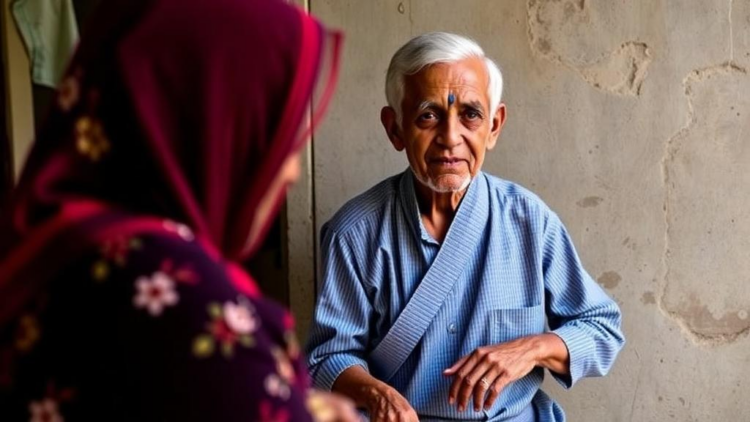
In one of the most ambitious longitudinal investigations of its kind, researchers have traced the entangled trajectories of social isolation and chronic multimorbidity across nearly a decade of aging in China, and the results challenge a widespread assumption about which comes first. Drawing on ten years of data from the China Health and Retirement Longitudinal Study, a team led by Keyi Wang and Weitong Li of Nanjing University of Chinese Medicine followed 7,125 adults aged 60 and older who participated in at least three survey waves between 2011 and 2020. Their findings, published in BMC Geriatrics, suggest that loneliness and accumulating chronic disease do not so much cause each other within individuals as decline together, driven largely by stable differences between people that were present long before the study began.
The question the researchers set out to answer is deceptively simple: does becoming socially isolated make you sicker, or does becoming sicker make you more isolated? Both directions have plausible biological and social mechanisms. Isolation can deprive older adults of practical support, encourage unhealthy behaviors, and sustain chronic stress responses that damage cardiovascular and metabolic systems. Conversely, a growing burden of diseases such as diabetes, heart disease, and arthritis can restrict mobility, shrink social networks, and withdraw people from community life. Disentangling these possibilities requires data that capture the same individuals repeatedly over many years, which is precisely what CHARLS provides.
The methodological core of the study is the random-intercept cross-lagged panel model, or RI-CLPM, a statistical framework that has become the gold standard for separating within-person change from between-person differences. Traditional cross-lagged models often conflate the two, which can make stable personality or socioeconomic differences masquerade as causal effects unfolding over time. The random-intercept version partitions each person’s score into a time-invariant component, reflecting that individual’s enduring standing relative to the sample, and a time-varying deviation that captures genuine fluctuation from wave to wave. Only the deviations are used to test whether a change in one variable predicts a subsequent change in the other, providing a far more conservative and honest test of reciprocal influence.
The model fit the data remarkably well. The comparative fit index reached 0.992 and the Tucker-Lewis index 0.986, both far above conventional thresholds for excellent fit, while the root mean square error of approximation was 0.034 and the standardized root mean square residual just 0.020. Within that well-fitting structure, the strongest signals were the autoregressive effects, meaning each variable’s tendency to predict itself over time. Multimorbidity was especially stable, with standardized autoregressive coefficients ranging from 0.619 to 1.035 across waves, indicating that a person’s disease burden at one survey strongly forecast their burden at the next. Social isolation showed weaker but consistent self-prediction, with coefficients between 0.096 and 0.224.
The cross-lagged effects, the heart of the causal question, were largely non-significant. Across most survey intervals, neither a rise in isolation predicted a subsequent rise in multimorbidity nor the reverse, once stable between-person differences were accounted for. The single exception emerged in the final wave, where multimorbidity showed a small but statistically significant positive effect on later isolation, with a standardized coefficient of 0.055 and a p-value of 0.002. This late-emerging pathway hints that in the oldest participants, accumulating illness may begin to erode social connections, perhaps as functional limitations compound and make social participation increasingly difficult.
Complementing the cross-lagged analysis, the team fitted a parallel latent growth model to capture the overall developmental arcs of both variables. Here the picture was one of synchrony: the trajectories of social isolation and multimorbidity rose together over the decade, with a correlation of 0.102 that was statistically significant at p equals 0.015. In other words, older adults whose disease burden climbed faster than average also tended to become more isolated faster than average, even though the wave-to-wave causal arrows between the two were mostly silent. This pattern is the statistical signature of co-progression without direct reciprocal causation, a distinction with real consequences for how interventions should be designed.
The gender-stratified analyses added a layer of urgency to the findings. Women in the sample started with higher initial levels of both social isolation and multimorbidity and showed faster growth rates in both over the study period. A multi-group structural equation model confirmed that gender significantly moderated the joint developmental process, with a chi-square difference of 68.34 across groups and a p-value below 0.001. The authors interpret this as evidence that the synchronous deterioration of social connection and physical health is not uniform across the aging population but concentrates among women, a group that in China often faces compounded vulnerabilities including widowhood, lower pension coverage, and caregiving burdens that can erode both health and social networks.
What does it mean that the co-occurrence appears primarily driven by stable between-person differences? The researchers suggest that unobserved, time-invariant factors, ranging from early-life socioeconomic conditions and personality traits to baseline health endowments, set people on joint trajectories where poorer health and weaker social connection travel together. If that interpretation holds, then simply encouraging isolated seniors to socialize more, or treating diseases more aggressively in isolated patients, may yield limited returns as standalone strategies. Instead, the findings point toward interventions that target the shared roots: structural supports that simultaneously bolster social integration and health access, deployed early enough to alter the trajectory before the parallel decline becomes entrenched.
The study is not without constraints inherent to its design. The measures of social isolation and multimorbidity derive from self-reported survey instruments, and the CHARLS waves, while spanning a full decade, still leave gaps between assessments that could obscure shorter-term dynamics. The significant lagged effect from multimorbidity to isolation appeared only in the final interval, and the authors are careful to note that within-person cross-lagged effects overall were limited. Residual confounding cannot be fully excluded, and the findings from a rapidly urbanizing Chinese society may not generalize directly to countries with different welfare architectures. Still, the sheer sample size, the ten-year window, and the rigor of the random-intercept framework give the conclusions unusual weight for observational aging research.
For a country where the population aged 60 and above is projected to exceed 400 million within the coming decades, the policy stakes are considerable. The authors argue that targeted interventions attentive to gender differences are needed to promote what public health officials call active aging, and the data give that argument empirical teeth. Women, who begin aging with higher isolation and disease burdens and deteriorate faster on both fronts, emerge as the clearest priority group. More broadly, the study reframes the loneliness-and-health debate: rather than a simple causal chain in which one condition manufactures the other, isolation and multimorbidity in older Chinese adults appear as twin tracks laid down by shared origins, converging as people age. Breaking that convergence, the evidence suggests, will require acting on the common ground beneath both tracks rather than chasing one condition after the other has already taken hold.
Subject of Research: Longitudinal relationship between social isolation and chronic multimorbidity in older Chinese adults
Article Title: The relationship between social isolation and multimorbidity among older people in China: an empirical analysis based on the CHARLS database
Article References: Wang, K., Li, Y., Wang, Y., Xu, G., & Li, W. (2026). The relationship between social isolation and multimorbidity among older people in China: an empirical analysis based on the CHARLS database. BMC Geriatrics. https://doi.org/10.1186/s12877-026-08299-5
Image Credits: AI Generated
DOI: 10.1186/s12877-026-08299-5
Keywords: social isolation, multimorbidity, aging, CHARLS, longitudinal study, gender differences, older adults, RI-CLPM, chronic disease, China, public health, active aging
Cite Scienmag News
APA
MLA
Chicago
Beatrice Stafford. (October 2, 2026). Loneliness and Illness Move Together: A Decade of Data Reveals How Isolation Tracks With Multimorbidity in Aging China. Scienmag. https://scienmag.com/loneliness-and-illness-move-together-a-decade-of-data-reveals-how-isolation-tracks-with-multimorbidity-in-aging-china/
Beatrice Stafford. “Loneliness and Illness Move Together: A Decade of Data Reveals How Isolation Tracks With Multimorbidity in Aging China.” Scienmag, 2 October 2026, https://scienmag.com/loneliness-and-illness-move-together-a-decade-of-data-reveals-how-isolation-tracks-with-multimorbidity-in-aging-china/. Accessed 2 October 2026.
Beatrice Stafford. “Loneliness and Illness Move Together: A Decade of Data Reveals How Isolation Tracks With Multimorbidity in Aging China.” Scienmag. October 2, 2026. https://scienmag.com/loneliness-and-illness-move-together-a-decade-of-data-reveals-how-isolation-tracks-with-multimorbidity-in-aging-china/
Copy citation
Download RIS
Tags: active agingAgingaging and mental healthbidirectional relationship between loneliness and illnessCHARLSChinaChina Health and Retirement Longitudinal Study analysischronic diseasechronic disease and social support in seniorseffects of social isolation on cardiovascular healthgender differenceshealth trajectories in older adultslonelinessLoneliness and chronic disease progression in aging populationslongitudinal studylongitudinal study of multimorbidity in Chinamultimorbidityolder adultsPublic healthRI-CLPMsocial determinants of health in elderlysocial isolationsocial isolation impact on health in older adults