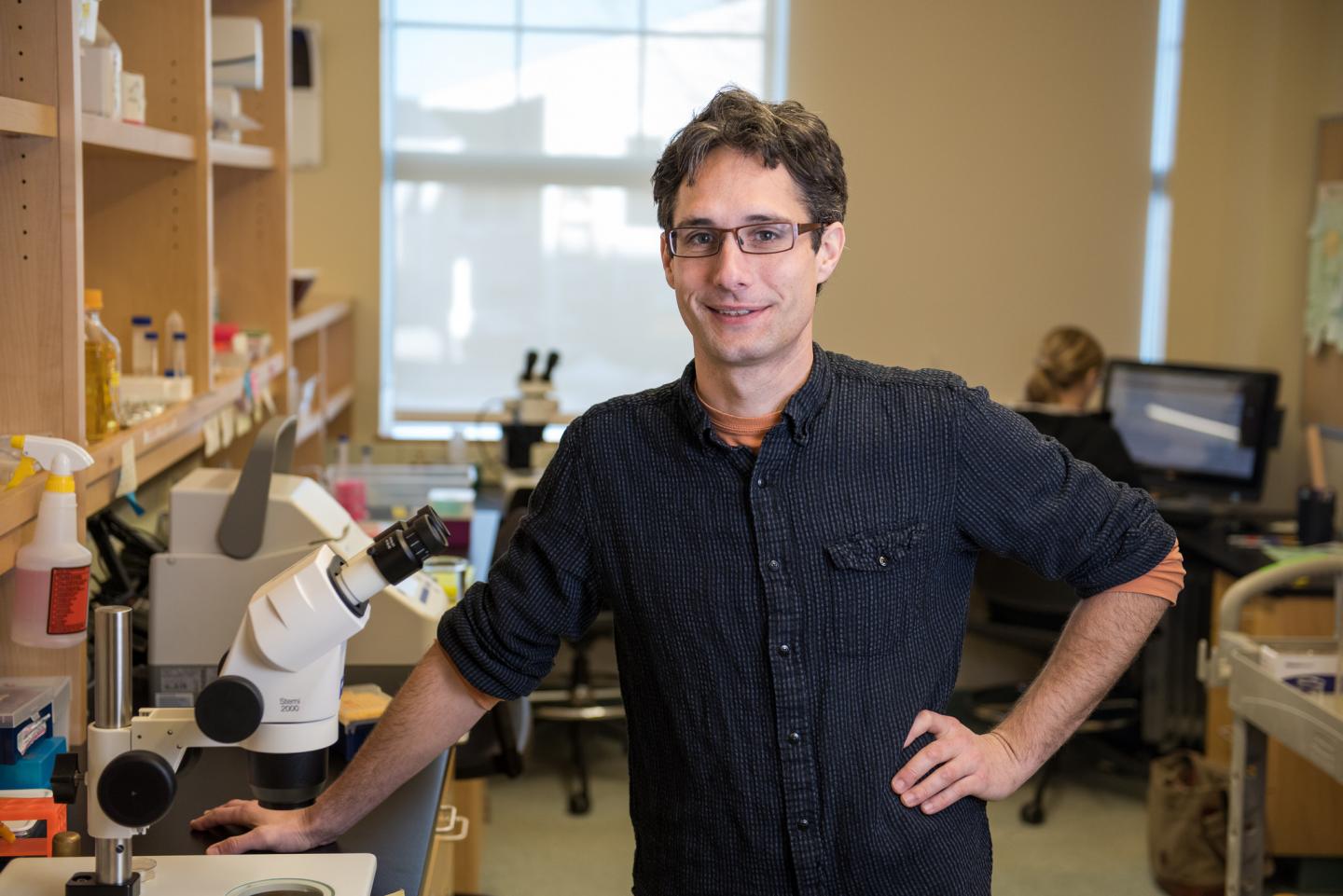
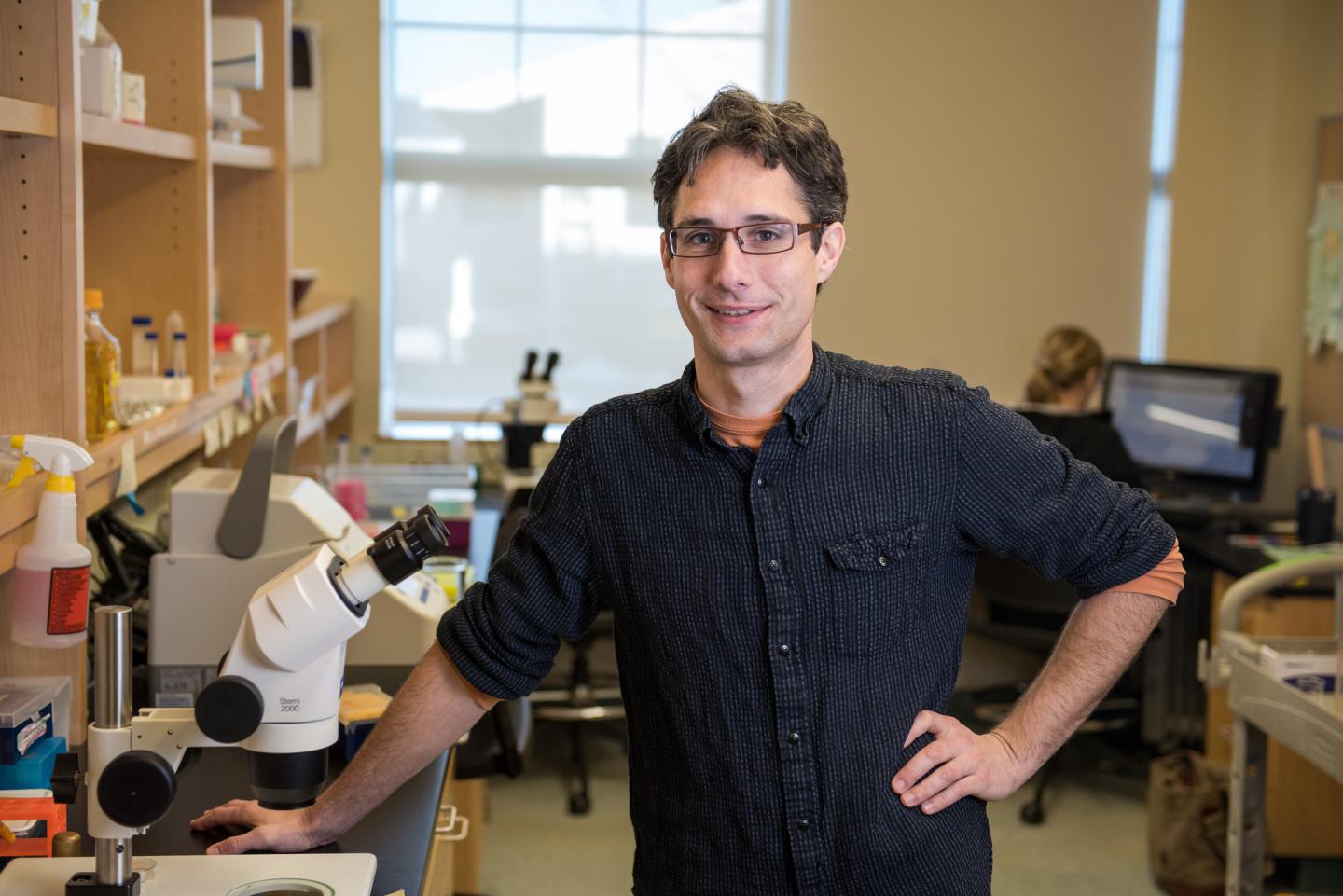
Credit: MDI Biological Laboratory
BAR HARBOR, MAINE – Exactly when does old age begin? Which health markers best predict who will live a long and healthy life versus a life spent in poor health?
Developing metrics to help answer these questions and to understand the tradeoffs between lifespan and health span is the subject of a recent paper by MDI Biological Laboratory scientists in Journals of Gerontology: Biological Sciences, a publication of the Gerontological Society of America.
The authors studied various parameters of health in short-lived strains of the roundworm, C. elegans, with the goal of developing an empirical definition of the onset of old age, and of teasing out which health markers are most predictive of a long and healthy life.
With the development of new genetics tools, scientists are getting closer to developing therapies to extend human lifespan, but the effect of such therapies on health span (the proportion of life spent in good health) is unclear. While it used to be thought that therapies to extend lifespan would also extend health span, new research is showing that may not always be true.
The growing number of anti-aging therapies on the horizon creates a need for the development of new parameters to assess healthy aging. Instead of striving to only to prolong longevity, as has been the case in the past, the use of such tools will allow scientists to focus their efforts on lifespan-enhancing therapies with the greatest positive effects on health.
"All anti-aging interventions aren't created equal," said post-doctoral researcher Jarod Rollins, Ph.D., one of the study's lead investigators. "A recent study in C. elegans found, for instance, that the proportion of life spent in a frail state is longer in long-lived mutants than in wild-type animals. Our research is aimed at developing tools to help scientists assess the effect of lifespan-enhancing interventions on health span."
The molecular mechanisms of aging are a focus of research at the MDI Biological Laboratory, located in Bar Harbor, Maine, which is pioneering new approaches to regenerative medicine focused on the development of drugs to increase healthy lifespan by enhancing the body's innate ability to repair and regenerate lost or damaged tissues and organs.
Rollins works in the laboratory of Aric Rogers, Ph.D., the lead author of the study, in the institution's Kathryn W. Davis Center for Regenerative Biology and Medicine.
C. elegans is a popular model in aging research because its short lifespan of only two to three weeks allows scientists to quickly assess the effects of anti-aging interventions, including genetic manipulation and drug therapies. The tiny, soil-dwelling roundworm also has other advantages for research: it shares many of its genes with humans and its health markers roughly correspond to those in humans.
One marker that the MDI Biological Laboratory scientists found to be predictive of a healthy lifespan in C. elegans was movement speed. Movement speed corresponds to walking speed in humans, which studies have found to be an accurate predictor of longevity. One of the scientists' next steps will be to further develop movement speed as a marker for assessing the effect of anti-aging interventions in C. elegans.
"As science closes in on the mechanisms underlying aging, the tradeoffs between lifespan and health span become a greater cause for concern," said Kevin Strange, Ph.D., president of the MDI Biological Laboratory. "The scientists in the Rogers laboratory are at the forefront of developing metrics to assess the impact of anti-aging interventions on quality of life."
###
In addition to Rollins and Rogers, authors of the study include Amber C. Howard, Sarah K. Dobbins and Elsie H. Washburn.
The research was supported by grants to Rogers from the National Institute on Aging of the National Institutes of Health and the Ellison Medical Foundation, as well as by Institutional Development Awards (IDeA) from the National Institute of General Medical Sciences of the National Institutes of Health.
About the MDI Biological Laboratory
Our scientists are pioneering new approaches to regenerative medicine focused on drugs that activate our natural ability to heal, and that slow age-related degenerative changes. Our unique approach has identified new drugs with the potential to treat major diseases, demonstrating that regeneration could be as simple as taking a pill. As innovators and entrepreneurs, we also teach what we know. Our Maine Center for Biomedical Innovation prepares students for 21st century careers and equips entrepreneurs with the skills and resources to turn great ideas into successful products. For more information, please visit mdibl.org.
Media Contact
Stefanie Matteson
[email protected]
207-288-9880
Original Source
https://mdibl.org/press-release/living-long-and-living-well-is-it-possible-to-do-both/
############
Story Source: Materials provided by Scienmag