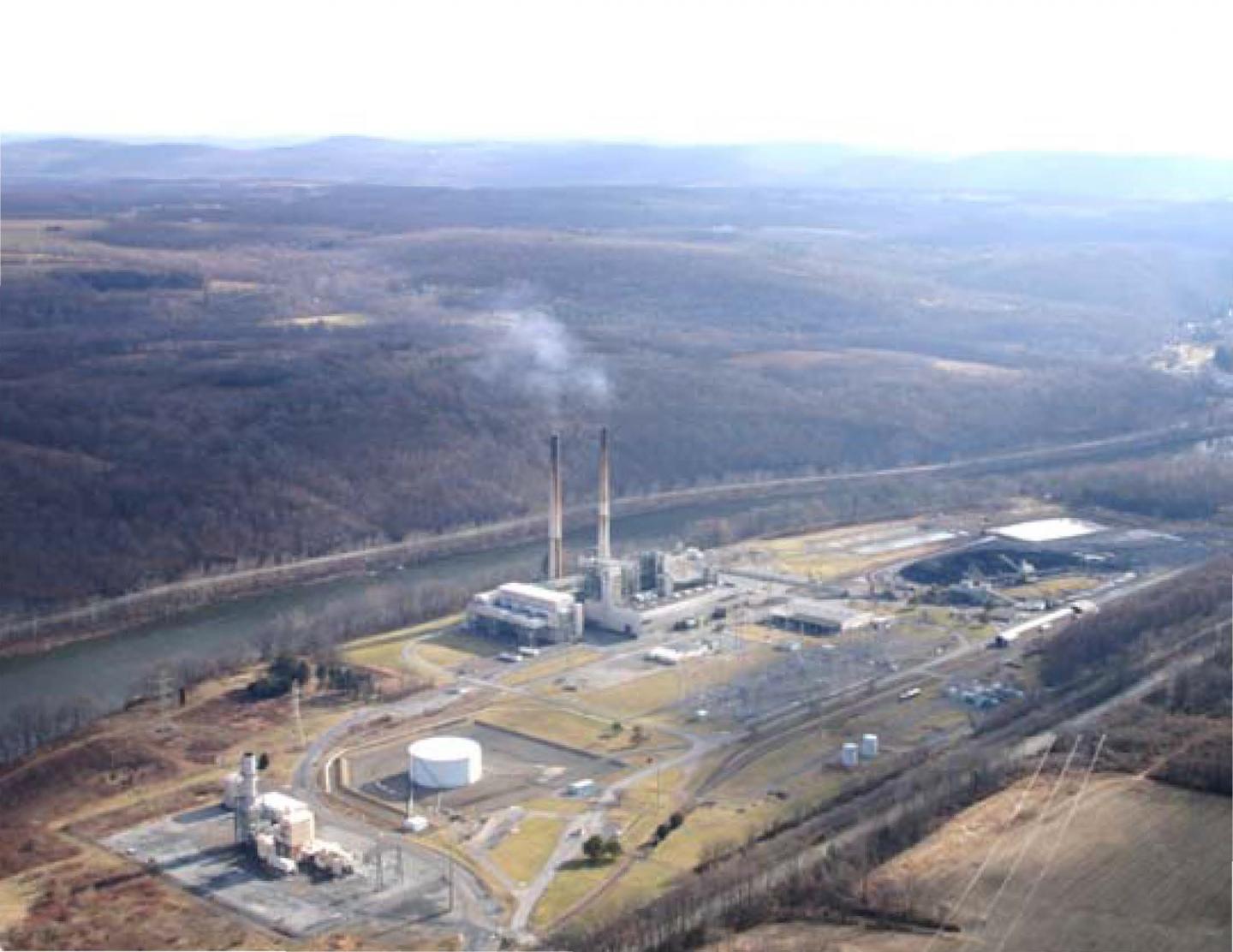
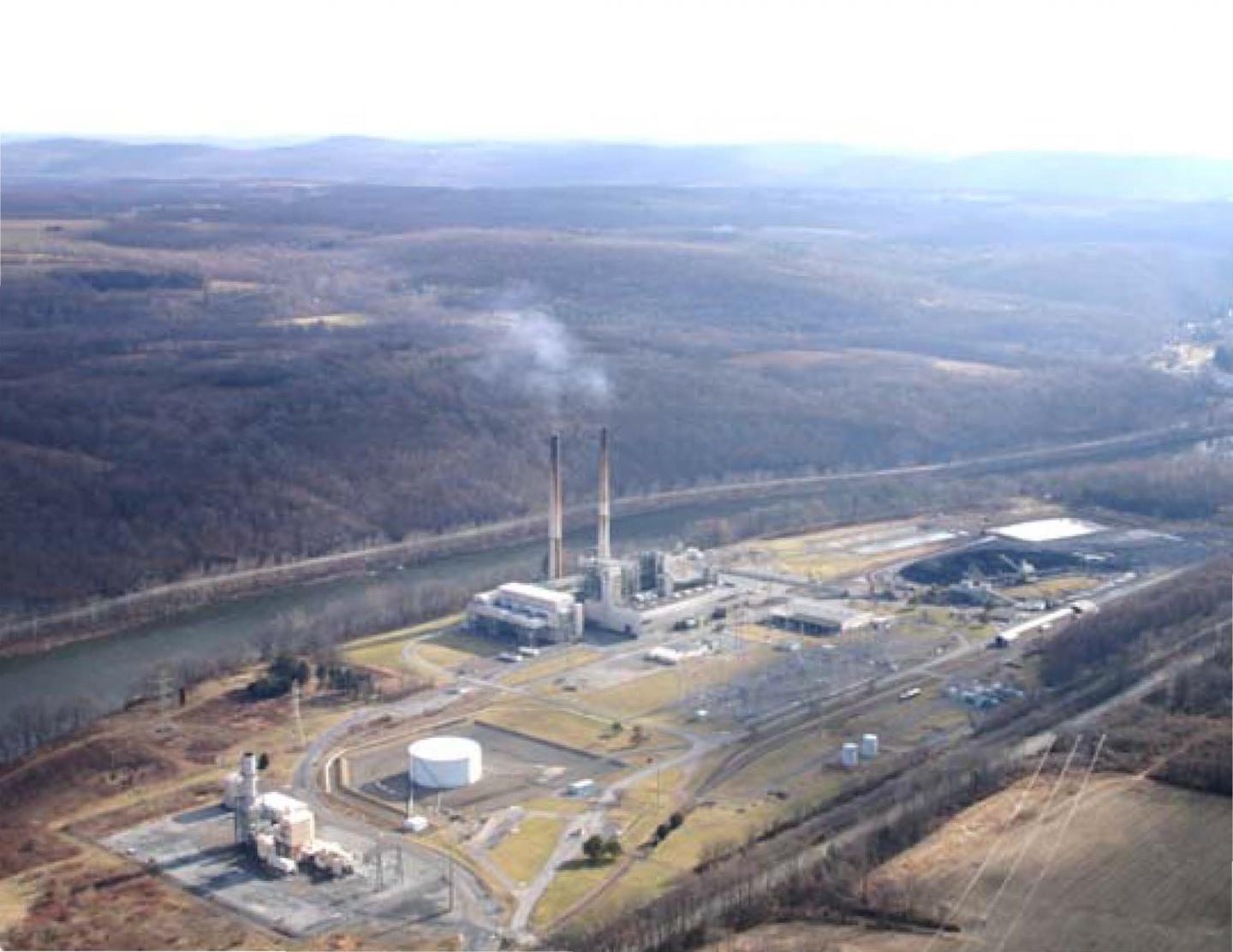
Credit: (Source: http://www.state.nj.us/dep/baqp/petition/Exh%201%20New%20Picture.png).
The U.S. Environmental Protection Agency (EPA) has studied the effects of coal-fired power plant emissions on premature mortality, nonfatal heart attacks, hospital and emergency room visits, acute bronchitis, upper and lower respiratory symptoms, aggravated asthma, and lost work days or school absences.
A new study details the public health benefits of cutting such emissions on a previously unexplored area: fetal health.
The study — led by Muzhe Yang , Associate Professor of Economics at Lehigh University (Bethlehem, PA) — is the first to explore the impacts of prenatal exposure to a uniquely identified large polluter. Drawing on evidence from a Pennsylvania power plant located upwind of New Jersey, the researchers studied live singleton births that occurred from 1990 to 2006 in the area downwind of the plant. Infants born to mothers living as far as 20 to 30 miles downwind from the power plant were 6.5% more likely to be born with a low birth weight (i.e., birth weight below 2,500 grams) and 17.12% more likely to be born with a very low birth weight (i.e., birth weight below 1,500 grams).
The study titled "The Impact of Prenatal Exposure to Power Plant Emissions on Birth Weight: Evidence from a Pennsylvania Power Plant Located Upwind of New Jersey" will be published in a forthcoming issue of the Journal of Policy Analysis and Management and appeared online today. Co-authors include Shin-Yi Chou, Professor of Economics at Lehigh University; Rhea A. Bhatta, Data Analyst at the Department of Pathology and Laboratory Medicine, University of Pennsylvania; and, Cheng-I Hsieh, Associate Professor at the Department of Bioenvironmental Systems Engineering, National Taiwan University.
"Identifying this causal effect is not only necessary for proposing regulatory policies on plant emissions, but also essential for inferring the long-term health impacts of such policies," says Yang. "A robust association has been found in the literature between birth weight and outcomes during adulthood, such as health, educational attainment, and earnings."
In the United States, emissions crossing states' borders complicate the regulation of power plants. While each state has the statutory authority to regulate plants within its own boundaries, regulatory incentives between upwind and downwind states are not necessarily aligned. The results of this study illustrate the impact that transboundary power plant emissions that remain uncontrolled for years can have on public health in the absence of a proper regulatory structure.
The study is based on a unique empirical setting, in which a power plant located on the border between two states has polluted the downwind state for years with its pollution spillovers scientifically proven by the downwind state and also by the federal government. Specifically, two petitions filed by the New Jersey Department of Environmental Protection (NJDEP) with the EPA against a Pennsylvania power plant — the Portland Generating Station (PGS)–show that sulfur dioxide (SO2) emissions from the plant have reached four New Jersey counties as far as 20 to 30 miles away. The EPA eventually ruled that the emissions from this power plant alone caused the violations of the SO2 national ambient air quality standards in the downwind state, New Jersey.
According to a 2007 report by the Environmental Integrity Project, the Portland Generating Station was ranked fifth among the top 50 "dirtiest" power plants by sulfur dioxide emission rate. The researchers say that the first of the two NJDEP's petitions shows that the 30,465 tons of sulfur dioxide emitted by the plant in 2009 was more than double the sulfur dioxide emissions from all power-generating facilities in New Jersey combined. "In addition to identifying the impacts of the emissions from this particular coal-fired power plant on fetal health, the usefulness of this study's identification strategy is its potential application to other studies examining the impact of upwind states' power plant emissions, which have been the target of a series of environmental regulations, such as the EPA's Cross-State Air Pollution Rule," adds Yang.
###
Media Contact
Lori Friedman
[email protected]
610-758-3224
@lehighu
http://www.lehigh.edu