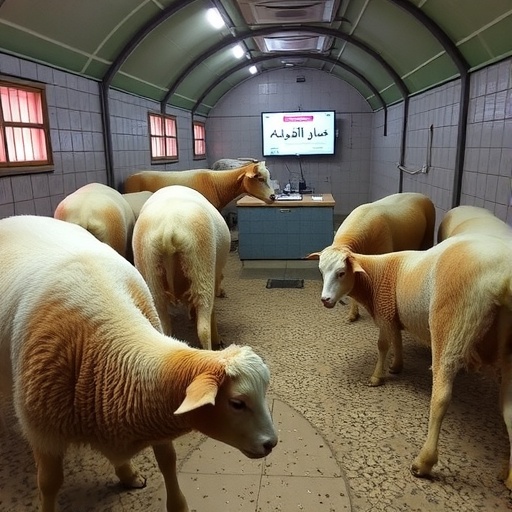
A livestock-associated superbug that was never supposed to thrive inside hospital wards is now firmly established in a tertiary care center in northeastern Iran, according to a new surveillance study that documents the continued co-circulation of two dramatically different methicillin-resistant Staphylococcus aureus lineages under one roof. The research, conducted at Imam Reza Hospital in Bojnurd, the primary referral center for North Khorasan province, confirms that the detection of livestock-associated MRSA sequence type 398, spa type t011, alongside the long-dominant hospital-associated ST239/t037 clone was not a one-off laboratory curiosity. It was the beginning of a sustained epidemiological event, one that raises uncomfortable questions about how an animal-adapted pathogen found its way into a 350-bed hospital serving a population of roughly one million people.
MRSA has long been one of the most formidable adversaries in modern medicine, a bacterium that has accumulated resistance to nearly every beta-lactam antibiotic in the pharmacopoeia and that thrives precisely where the sick and vulnerable are concentrated. For decades, scientists sorted MRSA isolates into two neat categories: healthcare-associated strains, which evolve and spread within hospitals, and community-associated strains, which circulate among otherwise healthy people outside medical settings. That tidy dichotomy began to collapse about twenty years ago with the recognition of a third lineage, one with an ecological origin that nobody expected in a clinical microbiology laboratory: the farm.
Livestock-associated MRSA, or LA-MRSA, emerged primarily in people with direct occupational contact with production animals, particularly swine, cattle, and poultry. Its most successful global ambassador is sequence type 398, a clonal lineage first identified in France in 2003 and subsequently reported across Europe, North America, Asia, and Australia. Genetically, ST398 is typically characterized by the carriage of staphylococcal cassette chromosome mec elements of type IV or V, and it most commonly presents in spa typing schemes as t011, t034, or t108. For years, the strain was dismissed as a relatively benign colonizer of animal hosts, a biological dead end that rarely caused serious disease in humans. That reassurance has aged poorly. ST398 is now implicated in severe human infections ranging from skin and soft tissue infections to necrotizing pneumonia, osteomyelitis, and bloodstream infections, a clinical spectrum that bears little resemblance to its early reputation as a farmyard squatter.
What has alarmed researchers most is not merely the presence of ST398 in human patients but the toxin genes it has been picking up along the way. Chief among these is Panton-Valentine leukocidin, a bicomponent pore-forming toxin that assembles from two secreted proteins, LukS and LukF, on the surface of human immune cells. Once assembled, the toxin punches lethal holes in the membranes of neutrophils and macrophages, the very cells the body deploys to fight infection. PVL has long been associated with devastating necrotizing infections of the skin and lungs, but it was historically rare in classical LA-MRSA strains, which were considered too poorly adapted to human hosts to acquire and maintain such virulence assets. Recent reports from Europe, Asia, and Australia have documented PVL-positive ST398 isolates, a pattern consistent with the horizontal acquisition of PVL-encoding prophages and, more ominously, with an ongoing adaptation of this livestock clone to the human body as a new and permissive host.
Against this global backdrop, the situation in Iran carries a particular irony. The country’s tertiary care hospitals have been dominated for nearly two decades by a healthcare-associated MRSA lineage of almost textbook consistency: ST239, spa type t037, carrying SCCmec type III. This is the pandemic clone sometimes called the Brazilian/Hungarian clone, a lineage notorious for its multidrug resistance. Isolates belonging to ST239 typically resist macrolides, aminoglycosides, and fluoroquinolones, and Iranian strains have shown creeping resistance to the topical agent mupirocin, a last-line decolonization tool, and to rifampicin. In other words, the hospitals of Iran have been living with a known enemy for twenty years, one whose habits and susceptibilities were charted and, to some degree, manageable. The arrival of ST398/t011 upset that equilibrium entirely.
The first signal came earlier in 2025. In a previous publication in the same journal, the research team reported the first documented clinical detection of livestock-associated MRSA ST398/t011 in Iran, recovered from patients at Imam Reza Hospital in Bojnurd during the first half of the year, where it was co-circulating with the entrenched hospital-associated ST239/t037 strain. The finding was unexpected for a second reason beyond the clone’s identity: North Khorasan is an agriculturally intensive province, with extensive cattle feedlots, sheep husbandry, and poultry production, and high rates of close human-animal contact in rural and peri-urban communities. If LA-MRSA was going to surface anywhere in northeastern Iran, the surrounding ecosystem made it plausible. But a single detection in a single half-year could still be explained as a sporadic, self-limited event, a traveler’s souvenir or a contaminated sample that never established transmission. The only way to know was to keep looking.
That is precisely what the new study does. The researchers designed a prospective, cross-sectional surveillance program running from July 1 to December 31, 2025, at Imam Reza Hospital, using identical inclusion criteria, laboratory methods, and analysis protocols to those deployed in the first-half investigation. This methodological continuity matters enormously, because it allows direct, like-for-like comparison between the two halves of the year, turning what could have been isolated snapshots into the beginnings of a genuine time series. Consecutive non-duplicate clinical specimens were collected from patients with clinically suspected infections, defined by objective criteria including fever of 38 degrees Celsius or higher or hypothermia, ensuring that the sampling captured a systematic picture of the infection burden rather than a haphazard assortment of odds and ends.
The study was built around four explicit objectives, each targeting a different layer of the epidemiological puzzle. First, the team sought to determine the prevalence and clonal distribution of MRSA in the second half of 2025, asking whether ST398 was still present and in what proportion relative to ST239. Second, they aimed to characterize the phenotypic and genotypic resistance profiles of the recovered isolates, comparing the drug-resistance repertoires of the two lineages, a comparison with immediate clinical consequences given the formidable multidrug resistance of the ST239 background. Third, they set out to assess virulence gene carriage, with particular attention to PVL, the toxin whose acquisition by livestock-associated clones has been the most worrying development in the field. Fourth, and perhaps most consequentially, they compared the findings directly with their first-half data to evaluate whether the novel lineage had persisted, a test of establishment rather than arrival.
The significance of persistence is difficult to overstate. If a livestock-associated clone is detected repeatedly across consecutive months within a single hospital, the most parsimonious explanations shift from transient introduction toward true local circulation, whether through colonized patients moving between farms and clinics, through healthcare workers with occupational animal exposure, through contaminated environments, or through person-to-person transmission once the clone has gained a foothold. Each of these pathways has different implications for control. Occupational screening of workers in livestock-intensive regions, enhanced decolonization protocols, sharper antibiotic stewardship, and tighter integration of veterinary and human surveillance all become live considerations once a zoonotic clone demonstrates it can survive and spread in a hospital ecosystem that was already fully occupied by a successful human-adapted competitor.
The coexistence of the two lineages in the same institution is itself a natural experiment worth watching. ST239/t037 is a heavyweight of the hospital world, honed by decades of selection under intense antibiotic pressure and crowded ward conditions. ST398/t011 is an interloper, arriving from an agricultural niche with a different resistance profile and, potentially, different virulence equipment. Where these clones overlap, they compete for the same ecological resources: susceptible patients, colonized skin surfaces, and hospital reservoirs. The outcome of that competition, and the possibility of genetic exchange between the two, including the transfer of resistance elements or toxin-encoding phages, represents one of the more unsettling scenarios in contemporary staphylococcal epidemiology.
What the study ultimately delivers is a documented, methodologically rigorous confirmation that an animal-adapted MRSA lineage has established a continued presence in an Iranian referral hospital during the second half of 2025, following its unprecedented first appearance earlier that year. In a province where feedlots, flocks, and farming villages press daily against the edges of the healthcare system, the finding functions as an early warning for a pattern that other agricultural regions of the Middle East and beyond may already be experiencing without knowing it. The authors’ groundwork, spanning six months of consecutive sampling and paired molecular and phenotypic characterization, offers precisely the kind of baseline data that One Health surveillance frameworks demand, linking the human clinic to the livestock reservoir it can no longer pretend is separate. The next question, and it is the question that will follow this work wherever it is cited, is not whether livestock-associated MRSA can reach hospital patients. It is how far it has already traveled.
Subject of Research: Detection and six-month surveillance of livestock-associated MRSA ST398/t011 and hospital-associated MRSA ST239/t037 in a tertiary referral hospital in northeastern Iran
Subject of Research: Medicine
Article Title: Detection of Livestock-Associated MRSA ST398/t011 and Hospital-Associated MRSA ST239/t037 in a Referral Hospital in Northeastern Iran: A Six-Month Cross-Sectional Surveillance Study (July–December 2025)
Article References: Hashemi, S. A., Haghbin, A., Motlagh, A. V., & Azimian, A. (2026). Detection of livestock-associated MRSA ST398/t011 and hospital-associated MRSA ST239/t037 in a referral hospital in northeastern Iran: A six-month cross-sectional surveillance study (July-December 2025). New Microbes and New Infections, 73, Article 101834. https://doi.org/10.1016/j.nmni.2026.101834
Image Credits: AI Generated
DOI: 10.1016/j.nmni.2026.101834
Keywords: Livestock-associated MRSA, LA-MRSA, ST398, spa type t011, Hospital-associated MRSA, ST239, t037, SCCmec, Panton-Valentine leukocidin, PVL, Iran, zoonotic transmission, antimicrobial resistance, One Health, Imam Reza Hospital Bojnurd
Cite Scienmag News
APA MLA Chicago
William Thompson. (September 4, 2026). Livestock- and hospital-associated MRSA strains detected in northeastern Iran referral hospital. Scienmag. https://scienmag.com/livestock-and-hospital-associated-mrsa-strains-detected-in-northeastern-iran-referral-hospital/
William Thompson. “Livestock- and hospital-associated MRSA strains detected in northeastern Iran referral hospital.” Scienmag, 4 September 2026, https://scienmag.com/livestock-and-hospital-associated-mrsa-strains-detected-in-northeastern-iran-referral-hospital/. Accessed 4 September 2026.
William Thompson. “Livestock- and hospital-associated MRSA strains detected in northeastern Iran referral hospital.” Scienmag. September 4, 2026. https://scienmag.com/livestock-and-hospital-associated-mrsa-strains-detected-in-northeastern-iran-referral-hospital/
Copy citation Download RIS
Tags: antimicrobial resistance in MRSA strainsantimicrobial resistance patterns in MRSAco-circulation of hospital and livestock MRSA strainscoexistence of livestock and hospital MRSA strainsemergence of animal-ademergence of livestock-associated superbugs in hospitalsepidemiological surveillance of MRSA in Iranepidemiology of MRSA in Iranhospital-acquired methicillin-resistant Staphylococcus aureushospital-associated MRSA clones in Iraninfection control challenges of livestock-associated MRSAinfection control challenges of zoonotic MRSALivestock-associated MRSA in Iran hospitalLivestock-associated MRSA transmission in hospitalslivestock-associated superbugs in healthcare settingsMethicillin-resistant Staphylococcus aureus epidemiologyMRSA sequence type 398 in healthcare settingsMRSA transmission from animals to humanspublic health implications of livestock-related MRSAST398 and ST239 MRSA lineagessurveillance of MRSA in tertiary hospitalszoonotic transmission of antibiotic-resistant bacteriazoonotic transmission of MRSA