Deep inside the liver, a population of specialized macrophages stands watch over every drop of blood that passes through the body. Kupffer cells, the largest population of tissue-resident macrophages in the body, line the walls of the liver’s slow-flowing sinusoids, where blood from both the portal and systemic circulation converges. A new review published in PLOS Pathogens by Lindsey Orthner, Josefien W. Hommes and Bas G. J. Surewaard of the University of Calgary lays out five concepts that define how these cells protect the bloodstream from systemic infection, and how a determined set of pathogens finds ways around them. The article, published on October 30, 2026, draws together findings that have been established largely in murine infection models, given the constraints of studying bloodstream pathogen capture directly in humans.
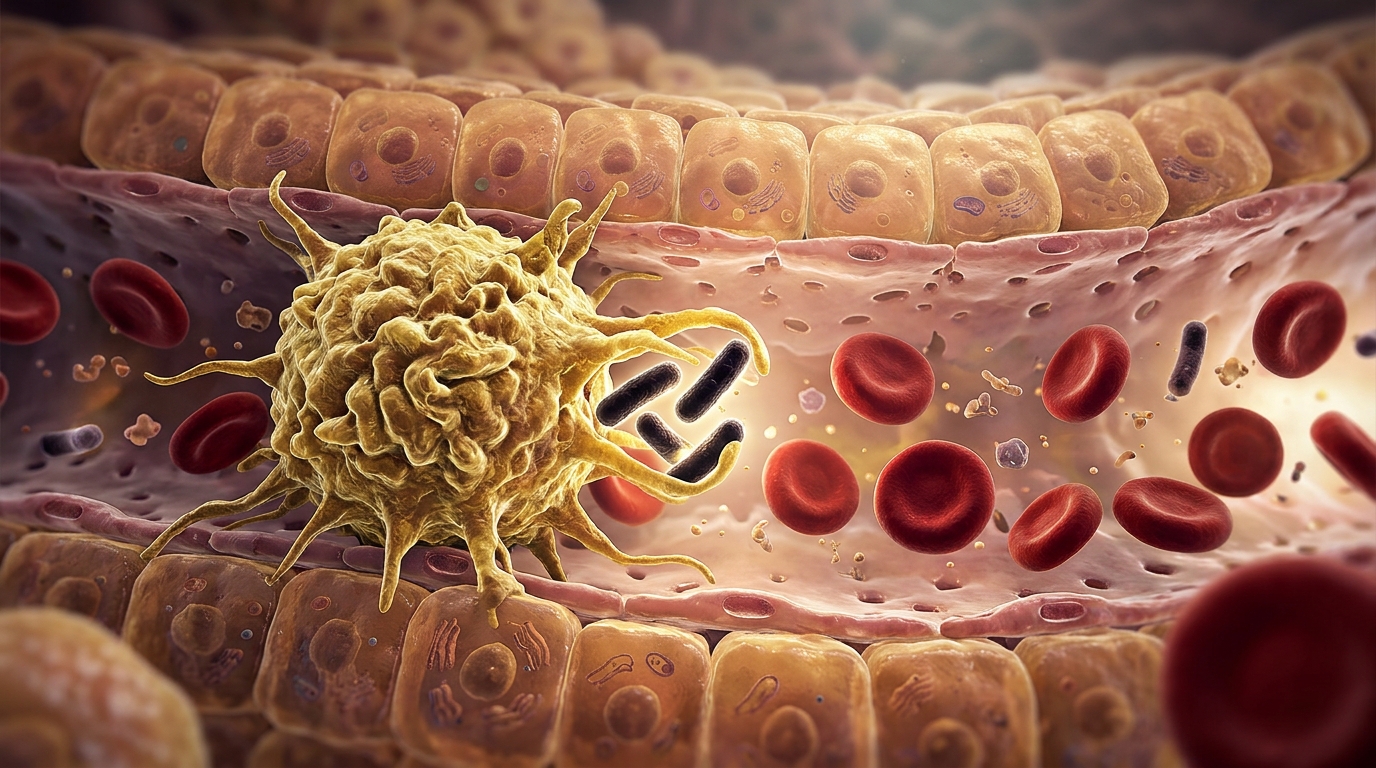
The first concept the authors describe is that Kupffer cells form an intravascular immune firewall. Because they sit directly along the sinusoidal endothelium, exposed to circulating blood, and can extend cellular processes into the sinusoidal lumen, they are exceptionally well placed to intercept microbes moving through the vasculature. The functional importance of this arrangement is demonstrated by experiments in which Kupffer cells are depleted: hepatic trapping drops markedly, pathogens remain in circulation and disseminate to distant organs. This phenotype has been observed across a wide range of pathogens, including Gram-positive and Gram-negative bacteria such as Staphylococcus aureus, Escherichia coli and Klebsiella pneumoniae, as well as fungal and parasitic infections.
These cells are not fixed in their identity or their location. Although Kupffer cells originate predominantly from embryonic progenitors and self-renew during homeostasis, the hepatic niche continuously instructs their phenotype. Signals from liver sinusoidal endothelial cells, stellate cells, hepatocytes and the gut environment shape their identity and antimicrobial function. During niche disruption, including infection or injury, circulating monocytes can enter the liver and acquire Kupffer cell-like features in response to the local niche, TGF-β and BMP signaling, and metabolic cues. The intravascular positioning itself is dynamic as well: during early postnatal development, Kupffer cells acquire their mature luminal localization, which increases their capacity to capture circulating bacteria such as E. coli. During liver injury and fibrosis, the cells can adapt morphologically, forming enlarged or multinucleated cells that may enhance bacterial trapping in altered vascular environments.
Capturing a moving target is the second challenge the review addresses. Pathogen capture in the bloodstream presents a fundamentally different problem from uptake under static conditions, because microbes must first be arrested despite vascular shear forces. The architecture of hepatic sinusoids helps: blood flow there is slow and discontinuous, increasing contact between circulating pathogens and the waiting macrophages, and the distribution of Kupffer cells within the sinusoidal network further favors early interception of microbes entering the liver. Capture mechanisms are strongly pathogen-dependent. Kupffer cells express complement, scavenger and Fcγ receptors, but one receptor stands out: the Complement Receptor of the Immunoglobulin superfamily, known as CRIg or VSIG4. CRIg mediates bacterial binding and uptake under both opsonized and non-opsonized conditions, functioning through complement component C3 in the first case and through direct recognition of lipoteichoic acid on Gram-positive bacteria in the second. It is uniquely capable of supporting capture under the high-flow dynamics of the sinusoidal circulation, a property not shared by other complement receptors.
Gram-negative bacterial capture, by contrast, is more dependent on C3 opsonization, although the relevant complement receptors remain incompletely defined. Natural antibodies, C-reactive protein and lectin pathways such as the Ashwell-Morell receptor further contribute to pathogen recognition in a microbe- and context-dependent manner. Adaptive immunity can reinforce this innate filtration system. Vaccine-induced antibodies directed against bacterial surface structures promote opsonization and complement deposition, thereby increasing Kupffer cell-mediated arrest. The authors suggest this may be particularly important for encapsulated organisms such as Streptococcus pneumoniae or Salmonella species, consistent with vaccine efficacy in humans, for which surface structures can otherwise limit recognition. The efficiency of hepatic filtration thus reflects both the physical properties of the sinusoidal circulation and a pathogen-specific repertoire of innate and antibody-dependent recognition mechanisms.
Capture, however, is only the first step. Once a bacterium is internalized, it is trafficked into a phagosome that rapidly matures through fusion with lysosomes, generating acidic, enzyme-rich compartments called phagolysosomes. Hydrolytic enzymes, phagosomal acidification, reactive oxygen species and reactive nitrogen species together create a hostile intracellular environment that kills microbes. Among these antimicrobial mechanisms, NADPH oxidase-dependent reactive oxygen species production is particularly important for controlling S. aureus. When this pathway is impaired, intracellular bacterial replication within Kupffer cells increases markedly, whereas other antimicrobial pathways appear to play more limited roles. The lesson, the authors write, is that efficient vascular capture alone is insufficient when intracellular killing is compromised. Pattern recognition and inflammatory signaling can further enhance antimicrobial activity by promoting phagosome maturation and cytokine production.
Under homeostatic conditions, the liver is not a constitutively bacteria-containing organ despite its constant exposure to portal blood, which underscores how efficient the hepatic filtration system is at capturing and destroying microbes that reach the circulation. Yet intracellular killing is not uniformly sterilizing. The outcome depends on both the antimicrobial state of the Kupffer cell and the ability of the invading organism to withstand or manipulate the phagolysosomal environment. This is where the review turns to the pathogens that have learned to subvert the system. Some organisms are efficiently captured and destroyed, whereas others avoid initial recognition or survive after phagocytosis. These strategies can be considered two distinct routes around the same defense: remaining invisible to the Kupffer cell, or surviving once inside.
Bacterial surface architecture is a major determinant of capture. Capsules can reduce recognition and phagocytosis; encapsulated S. pneumoniae and K. pneumoniae can evade hepatic capture more effectively than capsule-deficient bacteria. Other surface structures can potentially alter the probability that a circulating bacterium will be arrested in the liver, highlighting that the bloodstream phase of infection is not passive transit. Other pathogens are readily captured but have evolved distinct strategies to resist intracellular killing. S. aureus provides a striking example. Although most circulating bacteria are rapidly sequestered and killed by Kupffer cells, a fraction survives and replicates within acidified, LAMP-1-positive phagolysosomes, establishing an intracellular reservoir. Subsequent Kupffer cell death releases viable bacteria back into the circulation, promoting dissemination to secondary organs such as the kidneys. In contrast, Listeria monocytogenes escapes Kupffer cell capture by using listeriolysin O to perforate the Kupffer cell membrane, allowing it to re-enter the hepatic sinusoids and reach hepatocytes, where it replicates. There, Listeria exploits ActA-dependent host actin polymerization to drive intracellular motility and direct cell-to-cell spread, disseminating between neighboring hepatocytes while minimizing extracellular exposure.
Kupffer cells do more than directly ingest microbes. Once activated, they serve as signaling hubs that recruit and organize additional immune cells within the hepatic vasculature. Kupffer cell-derived chemokines, including CXCL1 and CXCL2, promote rapid neutrophil recruitment to liver sinusoids, bringing highly antimicrobial effector cells into close proximity to captured pathogens. This cooperation is spatially organized: Kupffer cells upregulate ICAM-1 and promote integrin activation on neutrophils, enabling adhesion that allows neutrophils to accumulate around infected Kupffer cells and provide additional antimicrobial capacity when resident macrophages alone are insufficient. Platelets can also accumulate at sites of infection and interact with Kupffer cells, contributing to vascular containment and promoting neutrophil extracellular trap formation. Together, these multicellular interactions transform the hepatic sinusoid from a simple vascular filter into a dynamic immune compartment.
The cells can also coordinate lymphocyte responses. As antigen-presenting cells, Kupffer cells can process and present bacterial antigens, though this capacity is limited under homeostatic conditions, likely contributing to hepatic tolerance toward gut-derived antigens. During infection, however, Kupffer cells become particularly effective at activating invariant killer T cells through CD1d-restricted antigen presentation. During Borrelia burgdorferi infection, for example, Kupffer cells capture circulating spirochetes and recruit iNKT cells, which cluster around infected Kupffer cells and become activated in this CD1d-dependent manner. This amplified immune response requires careful regulation, however: while recruitment of additional effector cells enhances microbial containment, excessive vascular inflammation can contribute to tissue injury. The authors conclude that defining how microbial surface structures, antibodies, the hepatic microenvironment and Kupffer cell antimicrobial programs determine infection outcomes should provide a more complete understanding of bloodstream infection, and may reveal opportunities to strengthen host defense without amplifying damaging inflammation. Future work combining intravital imaging with human liver tissue or organoid models will be important for translating these mechanistic insights into therapies that enhance Kupffer cell-mediated capture or limit intracellular bacterial survival.
Subject of Research: How liver-resident Kupffer cells capture, kill and coordinate immune responses against bloodstream pathogens, and how microbes evade this defense
Article Title: Guardians of the blood: How Kupffer cells control systemic infection
Article References: Orthner, L., Hommes, J. W., & Surewaard, B. G. J. (2026). Guardians of the blood: How Kupffer cells control systemic infection. PLOS Pathogens, 22(10), e1014744. https://doi.org/10.1371/journal.ppat.1014744
Image Credits: AI Generated
DOI: 10.1371/journal.ppat.1014744
Keywords: Kupffer cells, liver immunology, bloodstream infection, sepsis, bacterial clearance, phagolysosome, reactive oxygen species, CRIg receptor, Staphylococcus aureus, Listeria monocytogenes, neutrophil recruitment, murine models
News Source: Kristina Jarvis. (November 4, 2026). Liver sentinels that filter the bloodstream: how Kupffer cells trap and kill circulating pathogens. Scienmag.