


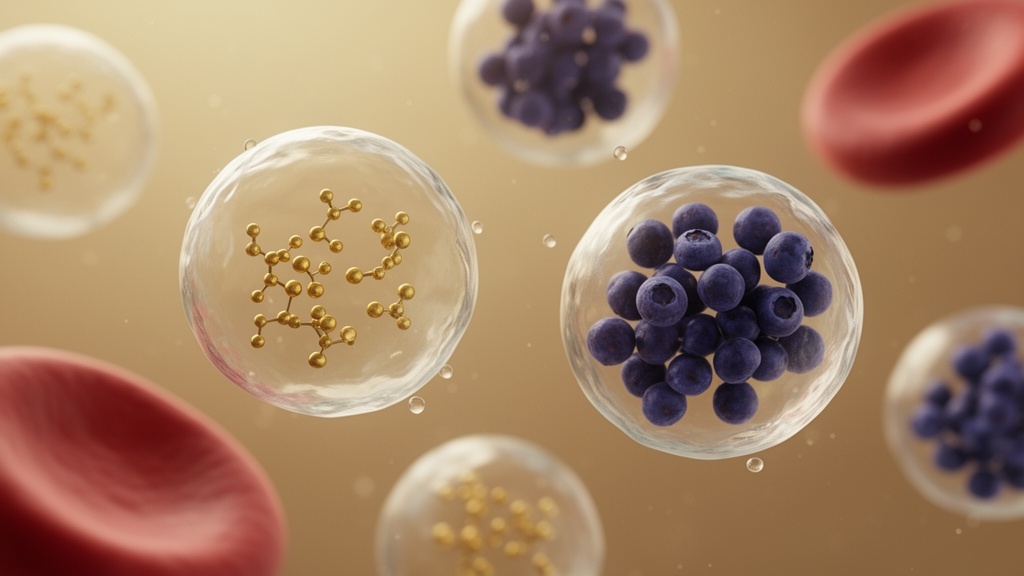
Liposomal nanocarriers designed to carry the loop diuretic furosemide and an anthocyanin-rich blueberry extract have passed a battery of blood compatibility tests using bovine red blood cells, yet the same experiments revealed a critical formulation weakness: the co-encapsulation of furosemide dropped to just 0.8 percent when both compounds were loaded together.
The motivation stems from a persistent problem in dairy farming. Mammary edema, a non-infectious peripartum disorder characterized by lymphatic fluid accumulation in the interstitial spaces of the mammary gland, affects a substantial proportion of dairy cows and causes economic losses through compromised milk yield and increased susceptibility to secondary infections such as mastitis. Furosemide is commonly used in veterinary practice to treat edematous conditions, promoting rapid diuresis and reducing fluid accumulation, but its bioavailability sits at approximately 50 to 70 percent, with 60 to 70 percent of the dose eliminated unchanged primarily through secretion in the proximal tubule. Meanwhile, inflammatory processes associated with tissue edema may promote reactive oxygen species generation, potentially contributing to oxidative stress and tissue damage. Blueberries of the species Vaccinium myrtillus are a rich natural source of flavonoids, and their anthocyanins exert reported antioxidant, anti-inflammatory, and other therapeutic effects.
Liposomes, colloidal spherical structures formed by the self-assembly of amphiphilic lipid molecules such as phospholipids, offer a theoretical solution to the challenge of delivering two compounds with very different physicochemical profiles. Hydrophilic molecules integrate into the internal aqueous core, hydrophobic molecules lodge in the lipid bilayer, and amphiphilic molecules position themselves at the water-lipid interface. Furosemide, with limited aqueous solubility at physiological pH and a short systemic half-life due to rapid renal elimination, could theoretically benefit from bilayer association. Anthocyanins, which are highly hydrophilic and chemically unstable under physiological conditions, susceptible to oxidative degradation, pH-dependent structural transformations, and enzymatic metabolism, could be sheltered in the aqueous compartment. The researchers hypothesized that co-encapsulation might provide a biocompatible formulation combining diuretic and antioxidant functionalities.
To build the carriers, the team used soy phosphatidylcholine as the main structural phospholipid and stearic acid as a co-lipid at a molar ratio of 1:0.25, selected from previous optimization studies. The lipid mixture was dissolved in chloroform at a final concentration of 25 millimolar, dried into a film, and rehydrated either in phosphate-buffered saline at pH 7.4 or in blueberry extract dissolved in PBS at its IC50 concentration of 26.6 milligrams per milliliter. After vortex mixing, sonication in an ultrasonic bath for 30 minutes at 30 degrees Celsius and 40 kilohertz, and filtration through a 0.4-micrometer syringe filter, the vesicles were stored at 4 degrees Celsius. Furosemide was introduced by adding a 20-milligram-per-milliliter methanolic stock to the lipid mixture before the evaporation step.
Characterization of the selected co-loaded formulation, designated L:BE:Fr, revealed a hydrodynamic diameter of 278.5 plus or minus 9.2 nanometers, a polydispersity index of 0.28 plus or minus 0.05, and a negative zeta potential of approximately minus 33 millivolts. Empty liposomes measured 259.3 plus or minus 2.2 nanometers with a PdI of 0.31, while liposomes loaded only with blueberry extract reached 286.0 plus or minus 22.7 nanometers. All formulations displayed negative zeta potentials ranging from roughly minus 33 to minus 46 millivolts, attributed to the lipid composition, particularly soybean phosphatidylcholine and stearic acid. The L:BE formulation showed the most negative value at minus 46.25 millivolts, possibly linked to phenolic compounds interacting at or near the lipid-water interface. Number-percent distributions confirmed monomodal populations correlating with the PdI values, though small aggregate populations at around 10,000 nanometers contributed disproportionately to light-scattering intensity despite representing a negligible fraction of the sample.
Encapsulation efficiency told a more complicated story. In single-compound systems, blueberry extract achieved 74.93 percent loading while furosemide reached a moderate 51.12 percent, consistent with anthocyanins partitioning preferentially into the aqueous core and furosemide distributing between the aqueous phase and the lipid bilayer. But in the co-loaded formulation, furosemide encapsulation collapsed to 0.8 percent and blueberry extract dropped to 28.02 percent. The authors attribute this to partitioning phenomena and limited affinity of furosemide for the selected lipid composition, noting that compounds with different solubility profiles can compete for distinct microenvironments within the vesicle. The reduction in surface charge magnitude in the co-loaded system may also have contributed to the decreased encapsulation efficiency, as changes in interfacial properties affect vesicle formation and stability.
Spectroscopic evidence supported specific interactions between the components and the lipids. UV-visible spectra showed characteristic furosemide peaks at 234, 273, and 343 nanometers, with bathochromic and hypsochromic shifts in the L:Fr formulation suggesting alterations in the electronic environment upon interaction with the liposomal matrix. In both L:BE and L:BE:Fr systems, only the blueberry extract band between 250 and 280 nanometers was observed, which the authors interpret as evidence that the extract promotes furosemide interaction with lipid chains. FT-IR analysis revealed a new peak at 2900 wavenumbers characteristic of methyl and methylene groups in lipids, while the absence of the 1630 wavenumber peak associated with conjugated double bonds in anthocyanin aromatic rings suggested interactions between lipids and anthocyanins. Fluorescence quenching in both L:Fr and L:BE:Fr systems further indicated molecular interactions between furosemide and lipid chains or between furosemide and blueberry extract molecules.
The antioxidant activity of the free blueberry extract was confirmed by the DPPH radical scavenging assay, yielding an IC50 of 26.6 milligrams per milliliter within a linear response range between 3.2 and 25.6 milligrams per milliliter. However, when incorporated into liposomal formulations, no detectable antioxidant activity was observed under the tested conditions. The authors explain this apparent contradiction through several converging factors: the effective concentration of encapsulated extract likely falls below the IC50 threshold given the encapsulation efficiency, the lipid bilayer acts as a diffusion barrier limiting access of the DPPH radical to compartmentalized anthocyanins in the aqueous core, and interactions between anthocyanins and phospholipids may reduce chemical reactivity. The DPPH assay, while suitable for free antioxidants in homogeneous solutions, may be limited for liposomal formulations without considering compound release or accessibility, meaning the absence of measurable activity does not necessarily indicate loss of functionality.
Hemocompatibility testing used bovine red blood cells obtained from animals slaughtered for human consumption, with no live animals used in the study. Blood was collected by carotid puncture within two hours postmortem, anticoagulated with heparin for hemolysis studies or EDTAK3 for rheological work, and processed immediately upon arrival at the laboratory. Erythrocytes were incubated with four serial dilutions of each formulation at 37 degrees Celsius for 24 hours, with hemoglobin release quantified spectrophotometrically at 414 nanometers and normalized to a positive control of erythrocytes treated with 2 percent sodium dodecyl sulfate. Across the entire concentration range, hemolysis remained below 2 percent, well under the 5 percent threshold commonly used to classify materials as non-hemolytic. No statistically significant differences emerged between any treatment and the negative control at the conventional significance level, though a tendency toward lower hemolysis was observed for the most concentrated liposomal samples at a p-value below 0.1, which the authors interpreted as indicative trends rather than significant differences.
Hemorheological evaluation employed a custom-built erythrocyte rheometer based on a patented laser diffraction design, measuring the deformability index, elastic modulus, and surface viscosity of treated erythrocyte membranes. For cells treated with empty liposomes, L:Fr, L:BE:Fr, and free blueberry extract, no significant alterations in viscoelastic parameters emerged compared with the PBS control. The L:BE treatment induced a slight but statistically significant decrease in membrane elastic modulus and an increase in deformability index, indicating reduced stiffness, though the magnitude was less than 2 percent relative to control values. Microscopic examination of cells suspended in autologous plasma at 0.25 percent volume showed no significant morphological alterations compared with controls. The authors conclude that all additives analyzed are hemorheologically compatible with bovine red blood cells, while acknowledging that efficient co-encapsulation of furosemide was not achieved and that further optimization of formulation parameters is needed to enable effective co-delivery in future applications.
Subject of Research: Ex vivo hemocompatibility and hemorheological evaluation of liposomal nanocarriers containing furosemide and blueberry extract using bovine red blood cells
Article Title: Ex vivo hemocompatibility and hemorheological evaluation of liposomal nanocarriers containing furosemide and blueberry extract
Article References: Judurcha, V., Sosa, A. M., Alet, A. I., da Silva, M. V. B., Castellini, H. V., Riquelme, B. D., del V. Alonso, S., & Ybarra, D. E. (2026). Ex vivo hemocompatibility and hemorheological evaluation of liposomal nanocarriers containing furosemide and blueberry extract. Bioscience Nanotechnology, 2(1), Article 12. https://doi.org/10.1186/s44331-026-00018-6
Image Credits: AI Generated
DOI: 10.1186/s44331-026-00018-6
Keywords: liposomes, furosemide, blueberry extract, anthocyanins, bovine red blood cells, hemocompatibility, hemorheology, encapsulation efficiency, nanocarriers, veterinary medicine, mammary edema, DPPH assay
News Source: Gregory Coleman. (October 30, 2026). Liposomes carrying furosemide and blueberry extract pass bovine blood cell tests but fail co-loading. Scienmag.



