Kyoto, Japan – December 2023
Credit: credit: Kalyani B. Karunakaran/WPI-ASHBi
Kyoto, Japan – December 2023
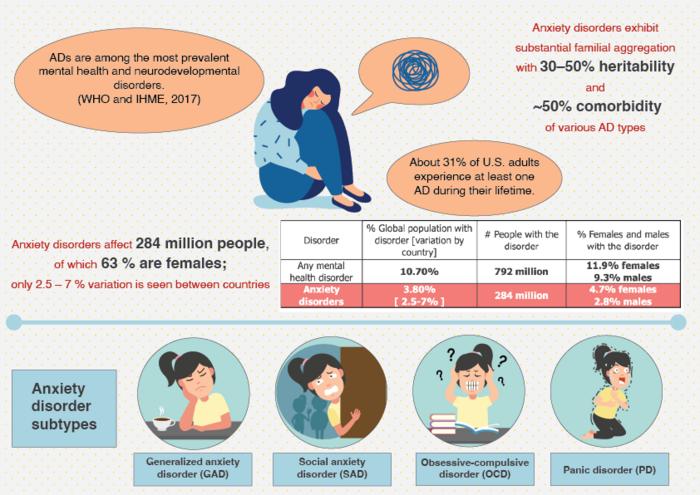
Anxiety disorders (ADs) affect more than 280 million people worldwide, making them one of the most common mental health conditions. ADs have a genetic basis as seen from inheritance in families, and people with one subtype of AD tend to have another subtype, suggesting a shared genetic basis. Although the brain circuitry involved in ADs has been identified, its link with gene expression remains unclear. Two researchers at Kyoto University in Japan set out to uncover this link and found two gene clusters expressed in the brain.
In previous research, targeted gene sequencing and genome-wide association studies (GWAS) have revealed frequently occurring mutations in people with AD or anxiety-associated personality traits. These mutations have been mapped to specific genes in the human genome. Meanwhile, neuroimaging techniques such as functional MRI (fMRI) and PET scans have shown that activity in specific neural circuits can predict anxious temperament in rhesus macaques, and micro-stimulation techniques in these monkeys can demonstrate which neural circuits are involved in the AD symptoms.
The Kyoto University researchers, Ms. Karunakaran and Dr. Amemori, investigated whether AD-associated genes are expressed in the same neural circuits identified by the imaging and micro-stimulation techniques. Specifically, they examined whether the regions where AD-associated genes are expressed could reveal the neurocircuitry of AD by analyzing the spatiotemporal transcriptomic data of more than 200 genes linked to four AD subtypes, generalized anxiety disorder, social anxiety disorder, obsessive-compulsive disorder, and panic disorder, in over 200 brain regions of normal human brains available in the Allen Brain Atlas.
Using statistical tests, the researchers found that AD-associated genes are highly expressed in the cerebral nuclei, the midbrain, and the limbic system. Further analysis of these areas by hierarchical clustering showed two AD gene clusters with distinct spatial expression profiles—one highly expressed in the limbic system and a specific set of cerebral nuclei and the other in the midbrain and a different set of cerebral nuclei; previous physiological research had suggested that these brain structures are involved in regulating AD behaviors. Additional analyses revealed that the two clusters were indeed linked to different behaviors. The two clusters also showed distinct enrichment patterns for subtype-specific genes, establishing a clear link between each cluster and specific AD subtypes.
One cluster was involved in glutamatergic receptor signaling, while the other was associated with serotonergic and dopaminergic signaling, further supporting a dichotomy in the neurophysiology of ADs. Additionally, the two clusters were linked to distinct region-specific gene networks and cell types.
Finally, the researchers examined developmental transcriptome data to track the expression patterns of the AD genes during brain development and found that the two spatial clusters have distinct and negatively correlated identities at specific developmental stages. One cluster is highly expressed during late infancy and adulthood, while the other is expressed during the late prenatal stage and early childhood. Thus, mutations in AD-associated genes might disrupt the normal timing of their expression, potentially impacting the development of signaling pathways and neural circuits, thereby producing the symptoms associated with AD.
In this research, the scientists discovered two gene clusters associated with AD that have distinct spatial and temporal expression patterns and functional profiles within the human brain. Further investigation of these gene clusters might provide new insights into the underlying causes of AD.
Journal
Translational Psychiatry
DOI
10.1038/s41398-023-02693-y
Method of Research
Meta-analysis
Subject of Research
People
Article Title
Spatiotemporal expression patterns of anxiety disorder-associated genes
Article Publication Date
13-Dec-2023