• HOME
  • NEWS
  • EXPLORE
    • CAREER
      • Companies
      • Jobs
    • EVENTS
    • iGEM
      • News
      • Team
    • PHOTOS
    • VIDEO
    • WIKI
  • BLOG
  • COMMUNITY
    • FACEBOOK
    • INSTAGRAM
    • TWITTER
Saturday, May 16, 2026
BIOENGINEER.ORG
No Result
View All Result
  • Login
  • HOME
  • NEWS
  • EXPLORE
    • CAREER
      • Companies
      • Jobs
        • Lecturer
        • PhD Studentship
        • Postdoc
        • Research Assistant
    • EVENTS
    • iGEM
      • News
      • Team
    • PHOTOS
    • VIDEO
    • WIKI
  • BLOG
  • COMMUNITY
    • FACEBOOK
    • INSTAGRAM
    • TWITTER
  • HOME
  • NEWS
  • EXPLORE
    • CAREER
      • Companies
      • Jobs
        • Lecturer
        • PhD Studentship
        • Postdoc
        • Research Assistant
    • EVENTS
    • iGEM
      • News
      • Team
    • PHOTOS
    • VIDEO
    • WIKI
  • BLOG
  • COMMUNITY
    • FACEBOOK
    • INSTAGRAM
    • TWITTER
No Result
View All Result
Bioengineer.org
No Result
View All Result
Home NEWS Science News Health

Link between intensive post-stroke rehabilitation and recovery demonstrated in rats

Bioengineer by Bioengineer
February 11, 2018
in Health
Reading Time: 2 mins read
0
Share on FacebookShare on TwitterShare on LinkedinShare on RedditShare on Telegram
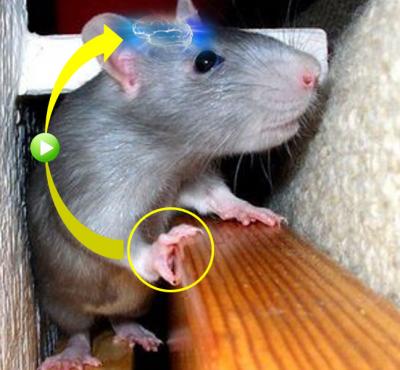
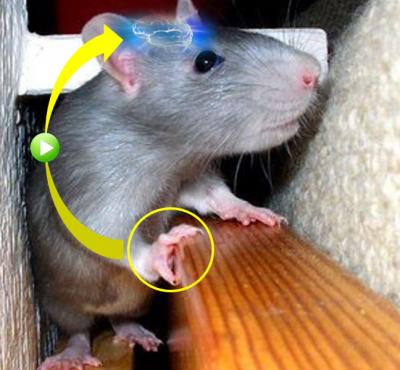
IMAGE

Okazaki, Japan – Each year millions of people worldwide suffer from stroke, which can occur to anyone at any time. While some may recover completely, the majority of survivors will experience some form of impairment that requires a lengthy process toward partial or full recovery of functioning. Therefore, continuous improvement of rehabilitation methods is needed to ensure more positive long-term outcomes among survivors.

Researchers at Japan's National Institute for Physiological Sciences (NIPS) and Nagoya City University (NCU) have identified the increase of the "cortex-to-red nucleus" pathway via post-stroke focused rehabilitation and its connection to the recovery of functioning in intracerebral hemorrhage (ICH) model rats. This crucial finding could pave the way for better rehabilitative methods for humans.

Stroke often causes hemiplegia by lesioning the corticospinal tract, which connects the motor cortex and spinal cord. Intensive rehabilitation is known to be a promising method of promoting functional recovery via the reorganization of lesioned brain circuits. However, the causal relationship between rehabilitation-induced changes of the brain circuits and functional recovery remains unproven.

To validate this relationship, the NIPS-NCU team used an ICH rat model to investigate the mechanisms of the therapeutic effects of intensive rehabilitative training. "We found substantial functional recovery of the paralyzed forelimb when applying forced impaired limb use (or FLU) as rehabilitation," first author Akimasa Ishida explains. "We also uncovered the abundant newly formed connections from the motor cortex to the red nucleus in FLU-treated rats."

To test the contribution of the formation of new cortex-to-red nucleus connections to functional recovery, the researchers selectively blocked the target pathway using a recently developed double-viral infection technique in rats that experienced recovery. After a blockade of the cortex-to-red nucleus connections, deficiency of the forelimb function reappeared in rehabilitated rats.

The results demonstrate that the rehabilitation-induced reorganization of the damaged brain circuits (i.e., robust increase of the cortex-to-red nucleus connections) is responsible for functional recovery. "We provided direct proof of the causal link between the change of the brain circuits and the recovery of functions by rehabilitation," corresponding author Tadashi Isa says. "Further investigation on the finer details of the recovery process induced by FLU will help clinicians, physiotherapists, and patients to combat the devastating effects of stroke."

###

Media Contact

Tadashi Isa
[email protected]

http://www.nins.jp/english/

Share12Tweet8Share2ShareShareShare2

Related Posts

Metabolic Stress Worsens Parkinson’s via Mitochondrial Ferroptosis

May 16, 2026

Four New Hydroxyl Fatty Acids from Bacillus sp.

May 16, 2026

Validating B-IPQ Short Form for Older Colombians

May 16, 2026

New Actinomycin Derivatives Target Malaria More Selectively

May 16, 2026
Please login to join discussion

POPULAR NEWS

  • Research Indicates Potential Connection Between Prenatal Medication Exposure and Elevated Autism Risk

    844 shares
    Share 338 Tweet 211
  • New Study Reveals Plants Can Detect the Sound of Rain

    730 shares
    Share 291 Tweet 182
  • Salmonella Haem Blocks Macrophages, Boosts Infection

    62 shares
    Share 25 Tweet 16
  • Breastmilk Balances E. coli and Beneficial Bacteria in Infant Gut Microbiomes

    58 shares
    Share 23 Tweet 15

About

We bring you the latest biotechnology news from best research centers and universities around the world. Check our website.

Follow us

Recent News

Uncovering C. elegans Immunity via Genetic Screens

Congenital Heart Disease’s Lasting Impact on Brain Health

Metabolic Stress Worsens Parkinson’s via Mitochondrial Ferroptosis

Subscribe to Blog via Email

Enter your email address to subscribe to this blog and receive notifications of new posts by email.

Join 82 other subscribers
  • Contact Us

Bioengineer.org © Copyright 2023 All Rights Reserved.

Welcome Back!

Login to your account below

Forgotten Password?

Retrieve your password

Please enter your username or email address to reset your password.

Log In
No Result
View All Result
  • Homepages
    • Home Page 1
    • Home Page 2
  • News
  • National
  • Business
  • Health
  • Lifestyle
  • Science

Bioengineer.org © Copyright 2023 All Rights Reserved.