Researchers Geeta Sharma, Pooja Chopra, and Mukesh Kumar have developed and evaluated a consensus-based lightweight authentication scheme for blockchain-integrated Internet of Things supply chains, achieving an execution duration of 0.0414 milliseconds. Published in the International Journal of Networked and Distributed Computing, the study addresses critical security vulnerabilities arising from the widespread adoption of smart devices across commercial supply networks. Modern logistics operations rely heavily on connected hardware, including environmental sensors, handheld smart tablets, precision tracking systems, and Quick Response scanners, to collect real-time telemetry and automate distribution procedures. However, existing Internet of Things deployments depend predominantly on centralized client-server architectures, where smart devices authenticate through remote cloud servers and store sensitive data in central repositories. The authors emphasize that this centralized model introduces severe security risks, establishing a single point of failure that can compromise the broader network while imposing architectural bottlenecks that cannot accommodate the scaling requirements of rapidly expanding industrial sensor deployments.
In conventional supply chain management, operational execution requires coordination among multiple commercial entities, including raw material suppliers, manufacturing plants, distributors, retailers, and end customers. Delivering commercial products demands structured workflows encompassing raw material procurement, processing, transportation, and retail handoffs. Although deploying smart sensors provides real-time tracking and operational visibility, traditional management systems suffer from restricted information exchange, inconsistent recordkeeping, and an absence of systemic transparency across independent participants. Storing operational records in centralized cloud databases exposes sensitive commercial information to external intruders and manipulation by commercial intermediaries. Furthermore, globalized supply chains face widespread counterfeiting risks, where bad actors modify packaging tags, alter expiration dates, or duplicate tracking labels to introduce unauthorized items into circulation. These systemic vulnerabilities undermine mutual trust among commercial partners and demonstrate the acute necessity of implementing verifiable data integrity, decentralized management, and robust mutual authentication across all involved commercial nodes.
To resolve the vulnerabilities of centralized systems, the authors designed a decentralized framework utilizing blockchain technology and distributed ledgers. In this environment, transaction records are stored in timestamped, chronologically linked blocks forming an immutable, tamper-resistant digital ledger shared across all participating network entities. Each block contains a unique cryptographic hash, a reference hash linking to the preceding block, validated transaction records, and a random nonce. This structure guarantees that any unauthorized alteration of recorded data modifies the resulting cryptographic hash, immediately exposing tampering attempts across the network. Because conventional consensus mechanisms like Proof of Work require high computing power and massive electrical energy, rendering them impractical for resource-constrained Internet of Things hardware, the proposed framework employs Practical Byzantine Fault Tolerance. Operating within a permissioned blockchain, Practical Byzantine Fault Tolerance achieves distributed agreement through inter-node voting rather than cryptographic puzzle solving, providing rapid transaction finality, low energy consumption, and resilience against up to one-third of network nodes acting maliciously or failing.
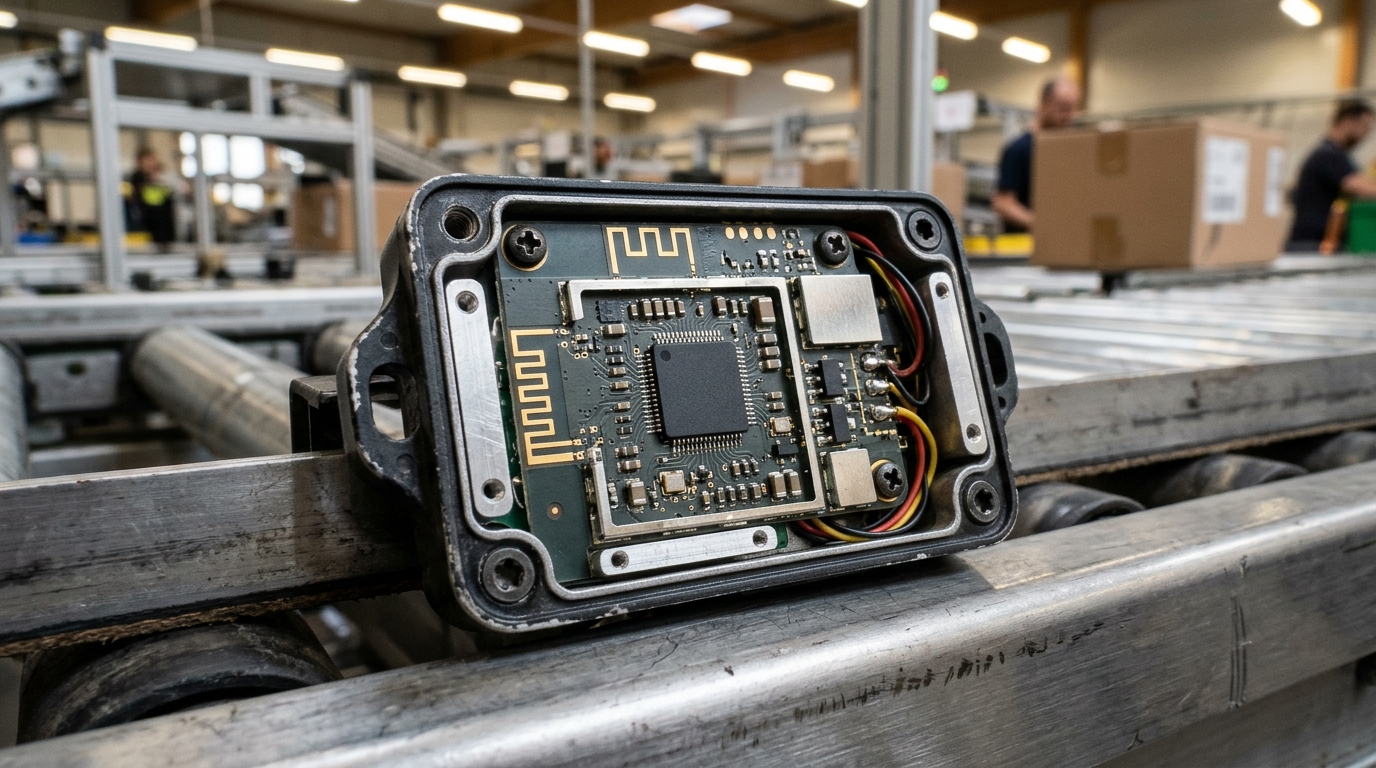
A central architectural strength of the proposed system model is the computational separation between resource-constrained edge devices and the underlying consensus mechanism. In this architecture, primary supply chain entities—including manufacturers, distributors, retailers, and service providers—host permissioned blockchain nodes operating Practical Byzantine Fault Tolerance consensus. In contrast, peripheral Internet of Things devices, such as Quick Response scanners and environmental sensors, connect directly to their sponsoring entity’s blockchain node through local interfaces. Consequently, edge devices do not interact directly with the decentralized blockchain or execute consensus voting procedures. When an edge device initiates an action, such as scanning an item’s Quick Response code, it transmits an authentication request to its local entity node using lightweight operations restricted to one-way hash functions and bitwise exclusive-OR calculations. Once mutual authentication is confirmed, the entity node constructs a transaction and submits it to the blockchain network, where Practical Byzantine Fault Tolerance validates the record before committing it to the ledger.
Operational transactions across the supply chain are governed by automated smart contracts deployed on the blockchain ledger. These self-executing software programs enforce conditional business logic, regulatory rules, and commercial agreements without reliance on central intermediaries. By integrating continuous telemetry from Internet of Things devices, smart contracts automatically execute predefined actions whenever monitored parameters deviate from required thresholds. For instance, if an onboard sensor detects temperature fluctuations exceeding acceptable safety limits during refrigerated transit, the smart contract can autonomously trigger remedial responses, such as modifying storage conditions, redirecting shipments to inspection facilities, or initiating formal quality audits. Beyond immediate process automation, smart contracts maintain immutable operational records that foster trust among stakeholders, lower transaction expenses by reducing intermediary overhead, accelerate dispute resolution through transparent audit trails, and enforce automated adherence to regulatory standards across multi-stakeholder distribution ecosystems.
The authentication mechanics begin with an offline mathematical initialization executed by the designated service provider, followed by an entity registration phase. During initialization, the service provider computes a private key and announces a public key governed by modular arithmetic constraints, keeping the private key secret. During registration, an entity such as a manufacturer generates a unique identity, a password, and a random nonce, calculating a masked password and an intermediate verification parameter using one-way hashing and exclusive-OR operations before transmitting them to the service provider over a secure channel. The service provider verifies credential uniqueness in the blockchain via smart contract logic, computes trust tokens incorporating a temporal timestamp and its private key, and stores these cryptographic parameters within a physical smart card issued to the entity. To complete registration, the user registers their biometric reading at a local sensor, allowing the smart card to compute and store internal biometric masking parameters without exposing raw biometric templates in unencrypted memory.
Following registration, operational device authentication and login proceed through an iterative ten-step exchange between the user’s smart card reader and the service provider. During login, the user inserts the smart card and enters their identity, password, and biometric imprint, prompting the card processor to verify credentials locally before transmitting data across the network. Once validated locally, the smart card generates a fresh random nonce, computes initial authentication tokens, and forwards a login request to the service provider. The service provider queries the blockchain to confirm identity registration, extracts the session nonce using its private key, and validates the request tokens. Upon successful validation, the service provider generates a second random nonce, computes a shared session key derived from both nonces and entity identities, and transmits an authentication challenge back to the smart card. The card independently computes the identical session key, verifies the provider’s challenge, and returns a confirmation token, thereby establishing mutual authentication and enabling session-key encryption for all subsequent supply chain communications.
To assess theoretical resilience, the authors conducted an informal security analysis against a comprehensive threat model encompassing major attack vectors targeting unattended Internet of Things deployments. The analysis demonstrated that the protocol resists password guessing and privileged insider attacks, because sensitive credentials, including user passwords and biometric data, are never transmitted in plaintext or stored unencrypted on hardware tokens. Replay attacks and server spoofing are prevented through the rigorous use of fresh, session-unique random nonces within every transmitted parameter, preventing adversaries from replaying intercepted messages. Furthermore, the architecture withstands stolen smart card attacks; even if an attacker acquires physical possession of a smart card, they cannot generate valid login requests because the card does not store raw identity or credential strings, and synthesizing tokens requires knowledge of unrecorded passwords and biometrics. Finally, denial-of-service threats are mitigated because edge operations require minimal computing resources, credential checks occur locally before network transmission, and blockchain nodes reject unauthorized transactions via Practical Byzantine Fault Tolerance consensus.
The authors validated protocol robustness through formal automated security verification using the Automated Validation of Internet Security Protocols and Applications toolset and the Scyther analyzer. Simulation within the Automated Validation of Internet Security Protocols and Applications platform used version 1.1 with the Security Protocol Animator version 1.6 on Ubuntu 16.04 LTS powered by an Intel Core i7-6500U processor at 2.50 gigahertz with eight gigabytes of random access memory. Communications between manufacturers, distributors, and service providers were modeled in High Level Protocol Specification Language under the hostile Dolev-Yao intruder model. Verification using both the On-the-Fly Model-Checker and Constraint-Logic based Attack Searcher backends confirmed that the protocol is safe against active and passive network attacks. To verify security across infinite execution traces without relying on bounded data, the authors conducted complementary analysis in Scyther version 1.1, evaluating protocol execution against standard claim events encompassing liveliness, non-injective synchronization, secrecy, and commitment. The Scyther analysis proved that all security claims were satisfied without exposing protocol vulnerabilities.
Performance benchmarking focused on computational execution costs, utilizing the Crypto++ library on an evaluation laptop equipped with an Intel Core i5-8250U processor operating at 1.60 gigahertz, eight gigabytes of random access memory, and Ubuntu 18.04 LTS. The evaluation demonstrated that the authentication scheme requires a processing time of 0.0414 milliseconds, outperforming comparative cryptographic schemes by relying exclusively on efficient one-way hash functions and bitwise exclusive-OR operations, while treating exclusive-OR execution time as negligible. Despite these computational advantages, the authors noted specific operational limitations in the proposed framework. The scheme requires physical smart card readers across all participating supply chain nodes, presenting deployment hurdles. Furthermore, formal verification tools were limited to pairwise interactions between single entities rather than large-scale concurrent network stress testing. Future research will evaluate transactional throughput and latency under high-concurrency conditions using Ethereum simulation tools, test deployments across physical Raspberry Pi hardware testbeds, and investigate smart card-free architectures using software-based trusted execution environments such as ARM TrustZone and Intel Software Guard Extensions.
Subject of Research: Decentralized lightweight authentication and blockchain consensus for Internet of Things supply chain management
Article Title: Consensus-Based Lightweight Authentication for Blockchain-Integrated Iot Supply Chains Management
Article References: Sharma, G., Chopra, P., & Kumar, M. (2026). Consensus-Based Lightweight Authentication for Blockchain-Integrated Iot Supply Chains Management. International Journal of Networked and Distributed Computing, 14(2), Article 37. https://doi.org/10.1007/s44227-026-00108-0
Image Credits: AI Generated
DOI: 10.1007/s44227-026-00108-0
Keywords: Internet of Things, supply chain management, blockchain technology, lightweight authentication, Practical Byzantine Fault Tolerance, smart contracts, session key establishment, cryptographic hash functions, mutual authentication, AVISPA, Scyther tool, Dolev-Yao model, smart card security, Quick Response scanners, decentralized ledgers, Crypto++ library, denial of service mitigation
News Source: Denise Maddox. (November 18, 2026). Lightweight Blockchain Protocol Authenticates Supply Chain Internet Devices in 0.0414 Milliseconds. Scienmag.