• HOME
  • NEWS
  • EXPLORE
    • CAREER
      • Companies
      • Jobs
    • EVENTS
    • iGEM
      • News
      • Team
    • PHOTOS
    • VIDEO
    • WIKI
  • BLOG
  • COMMUNITY
    • FACEBOOK
    • INSTAGRAM
    • TWITTER
Thursday, April 16, 2026
BIOENGINEER.ORG
No Result
View All Result
  • Login
  • HOME
  • NEWS
  • EXPLORE
    • CAREER
      • Companies
      • Jobs
        • Lecturer
        • PhD Studentship
        • Postdoc
        • Research Assistant
    • EVENTS
    • iGEM
      • News
      • Team
    • PHOTOS
    • VIDEO
    • WIKI
  • BLOG
  • COMMUNITY
    • FACEBOOK
    • INSTAGRAM
    • TWITTER
  • HOME
  • NEWS
  • EXPLORE
    • CAREER
      • Companies
      • Jobs
        • Lecturer
        • PhD Studentship
        • Postdoc
        • Research Assistant
    • EVENTS
    • iGEM
      • News
      • Team
    • PHOTOS
    • VIDEO
    • WIKI
  • BLOG
  • COMMUNITY
    • FACEBOOK
    • INSTAGRAM
    • TWITTER
No Result
View All Result
Bioengineer.org
No Result
View All Result
Home NEWS Science News Biology

Light pollution may be increasing West Nile virus spillover from wild birds

Bioengineer by Bioengineer
July 24, 2019
in Biology
Reading Time: 2 mins read
0
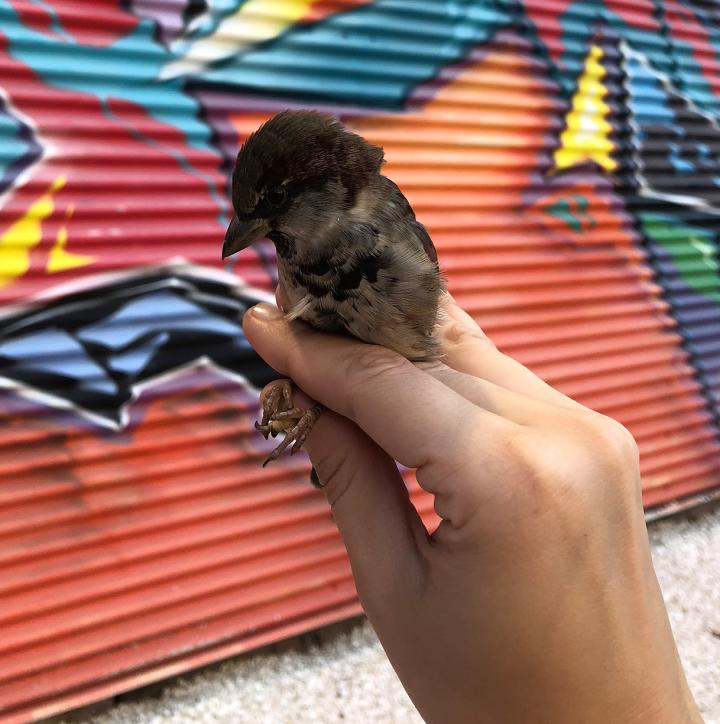
IMAGE
Share on FacebookShare on TwitterShare on LinkedinShare on RedditShare on Telegram

IMAGE

Credit: University of South Florida

TAMPA, Fla. (July 24, 2019)- We’re in the midst of summertime mosquito bite season and cities across the country are reporting a heightened number of West Nile Virus (WNV) cases. The house sparrow is one of the most common carriers of WNV in urban areas. Mosquitos feed off the infected birds and spread the virus to humans. New research finds house sparrows exposed to artificial light at night, such as what’s used in parking lots, maintain higher burdens of WNV for longer than those who spend their nights in the dark.

The study published in Proceedings of the Royal Society B concludes infected house sparrows living in light polluted conditions remain infectious for two days longer than those who do not, enhancing their host competence, or propensity to generate infection in other hosts or vectors. In turn, mathematical models show this likely increases the potential for a WNV outbreak by about 41 percent.

“The findings may be the first indication that light pollution can affect the spread of zoonotic diseases,” said lead author Meredith Kernbach, PhD student in the University of South Florida College of Public Health. “Many hosts and vectors use light cues to coordinate daily and seasonal rhythms, which is among the most reliable environmental cues, and disruption of these rhythms by light exposure at night could affect immune responses, generating the effects we see here.”

Researchers studied 45 house sparrows, exposing half to artificial light at night. Following 7-25 days in captivity, the team exposed the birds to WNV and took blood samples 2, 4, 6, and 10 days post-exposure. Researchers found all birds were infected within 2-4 days, however after that, birds exposed to light at night maintained transmissible burdens of WNV.

Kernbach says they picked the little brown birds since they live in close proximity to humans in urban areas, play host to a number of parasites and diseases, and are frequent carriers of WNV. While birds exposed to light pollution remain infected for a longer period of time, this did not increase mortality rates.

These results follow a previous study led by the University of South Florida that found zebra finches that have the avian stress hormone corticosterone (CORT) are more susceptible to mosquito bites. Such stress is known to be caused by a number of factors such as road noise, pesticides and light pollution. Researchers suggest new lighting technologies be created that are detectable to humans, but not for wildlife.

###

Media Contact
Tina Meketa
[email protected]

Related Journal Article

http://dx.doi.org/10.1098/rspb.2019.1051

Tags: Biology
Share12Tweet8Share2ShareShareShare2

Related Posts

Genome Mapping Uncovers Wheat Pathogen Host Genes

Genome Mapping Uncovers Wheat Pathogen Host Genes

April 16, 2026
A Fresh Perspective on Aging: How the Immune System Alters the Pace of Aging

A Fresh Perspective on Aging: How the Immune System Alters the Pace of Aging

April 15, 2026

New Functions of Non-m6A mRNA Modifications in Plants

April 15, 2026

Protein Aids Cellular Stress Management, Study Finds

April 15, 2026
Please login to join discussion

POPULAR NEWS

  • Scientists Investigate Possible Connection Between COVID-19 and Increased Lung Cancer Risk

    61 shares
    Share 24 Tweet 15
  • Boosting Breast Cancer Risk Prediction with Genetics

    47 shares
    Share 19 Tweet 12
  • Popular Anti-Aging Compound Linked to Damage in Corpus Callosum, Study Finds

    45 shares
    Share 18 Tweet 11
  • Revolutionary Theory Transforms Quantum Perspective on the Big Bang

    41 shares
    Share 16 Tweet 10

About

We bring you the latest biotechnology news from best research centers and universities around the world. Check our website.

Follow us

Recent News

Pink-1 Mutation Sparks Gut, Brain Cell Damage

Ultra-Stretchable, Anti-Freezing Hydrogel Electrolytes Cross-Linked with Liquid Metal Particle Initiators for Advanced Soft Energy Storage Devices

Amplifying Voices: Advances in Vocal Fold Regeneration

Subscribe to Blog via Email

Enter your email address to subscribe to this blog and receive notifications of new posts by email.

Join 79 other subscribers
  • Contact Us

Bioengineer.org © Copyright 2023 All Rights Reserved.

Welcome Back!

Login to your account below

Forgotten Password?

Retrieve your password

Please enter your username or email address to reset your password.

Log In
No Result
View All Result
  • Homepages
    • Home Page 1
    • Home Page 2
  • News
  • National
  • Business
  • Health
  • Lifestyle
  • Science

Bioengineer.org © Copyright 2023 All Rights Reserved.