Researchers at Yokohama National University have demonstrated that precise application of light to a gelatin-based hydrogel allows for exact directional and morphological control of cellular growth. This experimental study, published in ACS Biomaterials Science & Engineering, introduces a method for dynamically altering the structure of engineered tissue scaffolds to mimic the complex behaviors of natural biological tissues. The team led by Kazuhiro Iijima, an associate professor in the Faculty of Engineering at Yokohama National University, developed a system that responds to specific light wavelengths to change the physical properties of the scaffold, thereby guiding how cells within it grow and shape themselves.
Soft, flexible hydrogels have traditionally been used in tissue engineering because they mimic the natural scaffolding that provides structure and support to cells. However, existing engineered hydrogels lack the dynamic ability to change their structure or support in response to the specific needs of the biological tissue they are meant to replicate. The research team addressed this limitation by incorporating a photoreactive molecule into a gelatin network, creating a material they termed photodegradable acrylate-modified gelatin, or Gelatin-PDA. This modification allows the hydrogel to undergo structural changes when exposed to light, offering a level of control not previously achievable with static scaffolds.
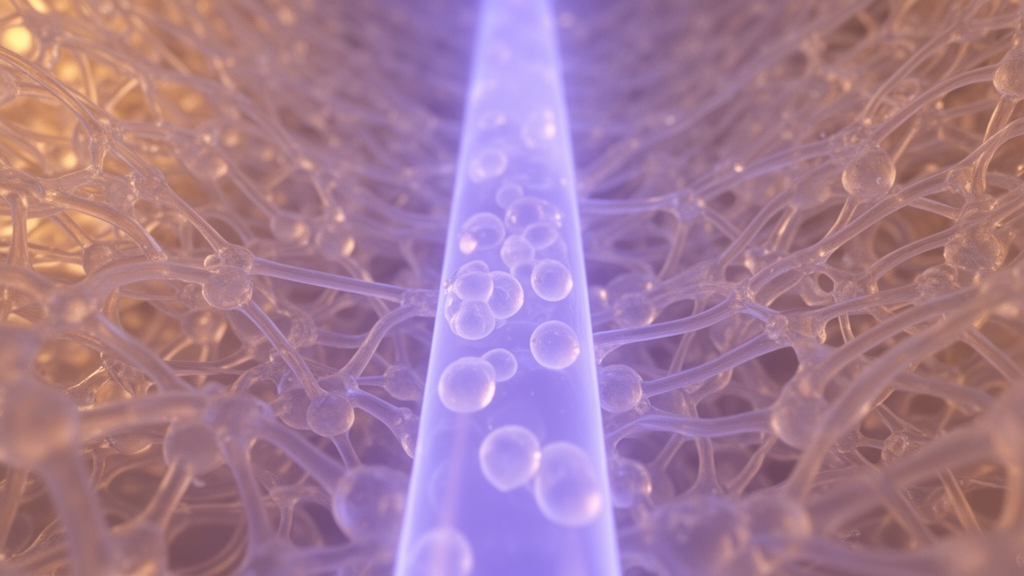
The mechanism behind this control relies on the interaction between light and the chemical crosslinks within the Gelatin-PDA network. When initially developed, the Gelatin-PDA hydrogel adds crosslinks to the gelatin network, which strengthens the material. However, when the Gelatin-PDA is irradiated with two photons, which are individual particles of light, these crosslinks degrade, effectively loosening the network. Further exposure to ultraviolet light can degrade the hydrogel even more significantly. This dual-response capability enables researchers to alter the shape of the gel with high precision, both on the surface and in the interior of the material.
In experimental tests, the team utilized advanced two-photon excitation technology to precisely irradiate specific areas of the Gelatin-PDA hydrogel. They found that by controlling where and how the light was applied, they could direct the growth direction and shape of nearby cells. Specifically, the researchers observed that they could control the directional growth of stem cells derived from human bone marrow. Additionally, they demonstrated the ability to elongate the naturally spherical shape of mouse cells, showcasing the system’s capacity for three-dimensional control over cell morphology.
Kazuhiro Iijima noted that the ability to control the morphology of pre-encapsulated cells on demand is particularly useful for mimicking tissues such as blood vessels and nerves. These tissues naturally change their growth direction according to their environment, a dynamic process that static scaffolds cannot replicate. The study suggests that this light-based approach could significantly contribute to the mimicry of complex and dynamic biological tissues, potentially paving the way for advances in regenerative medicine by providing a more realistic environment for cell development.
Beyond regenerative medicine, the researchers highlighted potential applications in cancer research. Iijima explained that the approach may be applied to create anisotropic metastasis models for cancer and tumor cells. Such models could help elucidate how the composition of the cellular environment’s natural scaffolding, known as the extracellular matrix, and vascular systems guide how cancer cells develop and spread in the body. By manipulating the scaffold’s structure with light, researchers might be able to simulate the directional cues that influence tumor migration, offering new insights into the mechanisms of cancer progression.
The study was conducted by a collaborative team including Chisato Handa, Shoma Miura, Noemi Bata Hikuma, Reira Ishige, Taichi Urasakit, Shogo Oishi, and Yuki Hatta from the Graduate School of Engineering at Yokohama National University. Additional co-authors included Shoji Maruo from the Faculty of Engineering at Yokohama National University, Hiroki Miyajima from the Department of Frontier Fiber Technology and Sciences at the University of Fukui, and Masaru Mukai from the Department of Applied Chemistry at Tokyo University of Science. The research was funded by the Japan Society for the Promotion of Science and the Japan Science and Technology Agency, supporting the development of this novel biomaterial and its associated optical control techniques.
The findings were published on September 2, 2026, in the journal ACS Biomaterials Science & Engineering, under the title “Three-Dimensional Gelatin-Based Hydrogel Degradation and Cell Control by Two-Photon Excitation.” This work represents a significant step forward in the field of tissue engineering by introducing a dynamic, light-responsive element to hydrogel scaffolds. By combining photodegradable materials with precise optical technologies, the team has created a platform that allows for real-time adjustment of the cellular microenvironment, addressing a key limitation in current tissue engineering practices.
Subject of Research: Light-controlled degradation of gelatin-based hydrogels for directional cell growth and tissue mimicry
Article Title: Light enables precise control of engineered tissue scaffolding
Article References: Light enables precise control of engineered tissue scaffolding. Original publication (Bibliographic details unavailable.)
Image Credits: AI Generated
DOI: Not provided
Keywords: Yokohama National University, ACS Biomaterials Science & Engineering, gelatin-based hydrogel, photodegradable acrylate-modified gelatin, two-photon excitation, cellular morphology control, tissue engineering, regenerative medicine, extracellular matrix, cancer metastasis models, human bone marrow stem cells, Kazuhiro Iijima, Japan Society for the Promotion of Science, Japan Science and Technology Agency, 3D cell scaffold, photoreactive molecule, anisotropic metastasis, biological tissue mimicry, ultraviolet light degradation, crosslink degradation
News Source: Nathaniel Bowman. (November 13, 2026). Light Controls Cell Growth in 3D Hydrogel Scaffolds. Scienmag.