• HOME
  • NEWS
  • EXPLORE
    • CAREER
      • Companies
      • Jobs
    • EVENTS
    • iGEM
      • News
      • Team
    • PHOTOS
    • VIDEO
    • WIKI
  • BLOG
  • COMMUNITY
    • FACEBOOK
    • INSTAGRAM
    • TWITTER
Tuesday, December 23, 2025
BIOENGINEER.ORG
No Result
View All Result
  • Login
  • HOME
  • NEWS
  • EXPLORE
    • CAREER
      • Companies
      • Jobs
        • Lecturer
        • PhD Studentship
        • Postdoc
        • Research Assistant
    • EVENTS
    • iGEM
      • News
      • Team
    • PHOTOS
    • VIDEO
    • WIKI
  • BLOG
  • COMMUNITY
    • FACEBOOK
    • INSTAGRAM
    • TWITTER
  • HOME
  • NEWS
  • EXPLORE
    • CAREER
      • Companies
      • Jobs
        • Lecturer
        • PhD Studentship
        • Postdoc
        • Research Assistant
    • EVENTS
    • iGEM
      • News
      • Team
    • PHOTOS
    • VIDEO
    • WIKI
  • BLOG
  • COMMUNITY
    • FACEBOOK
    • INSTAGRAM
    • TWITTER
No Result
View All Result
Bioengineer.org
No Result
View All Result
Home BIOENGINEERING

Liberian malaria cases declined following mass drug administration during Ebola outbreak

Bioengineer by Bioengineer
February 9, 2018
in BIOENGINEERING
Reading Time: 2 mins read
0
Share on FacebookShare on TwitterShare on LinkedinShare on RedditShare on Telegram
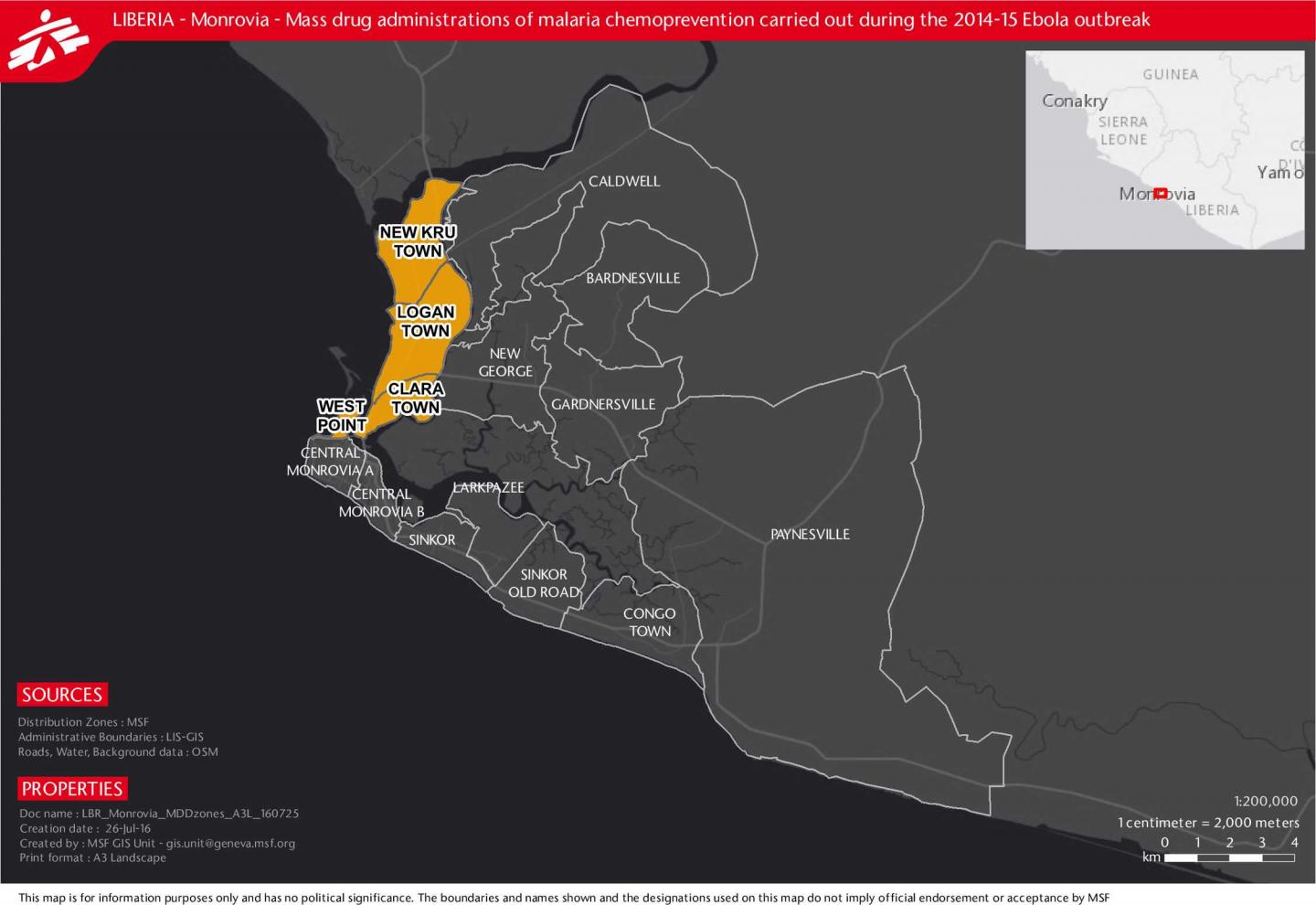
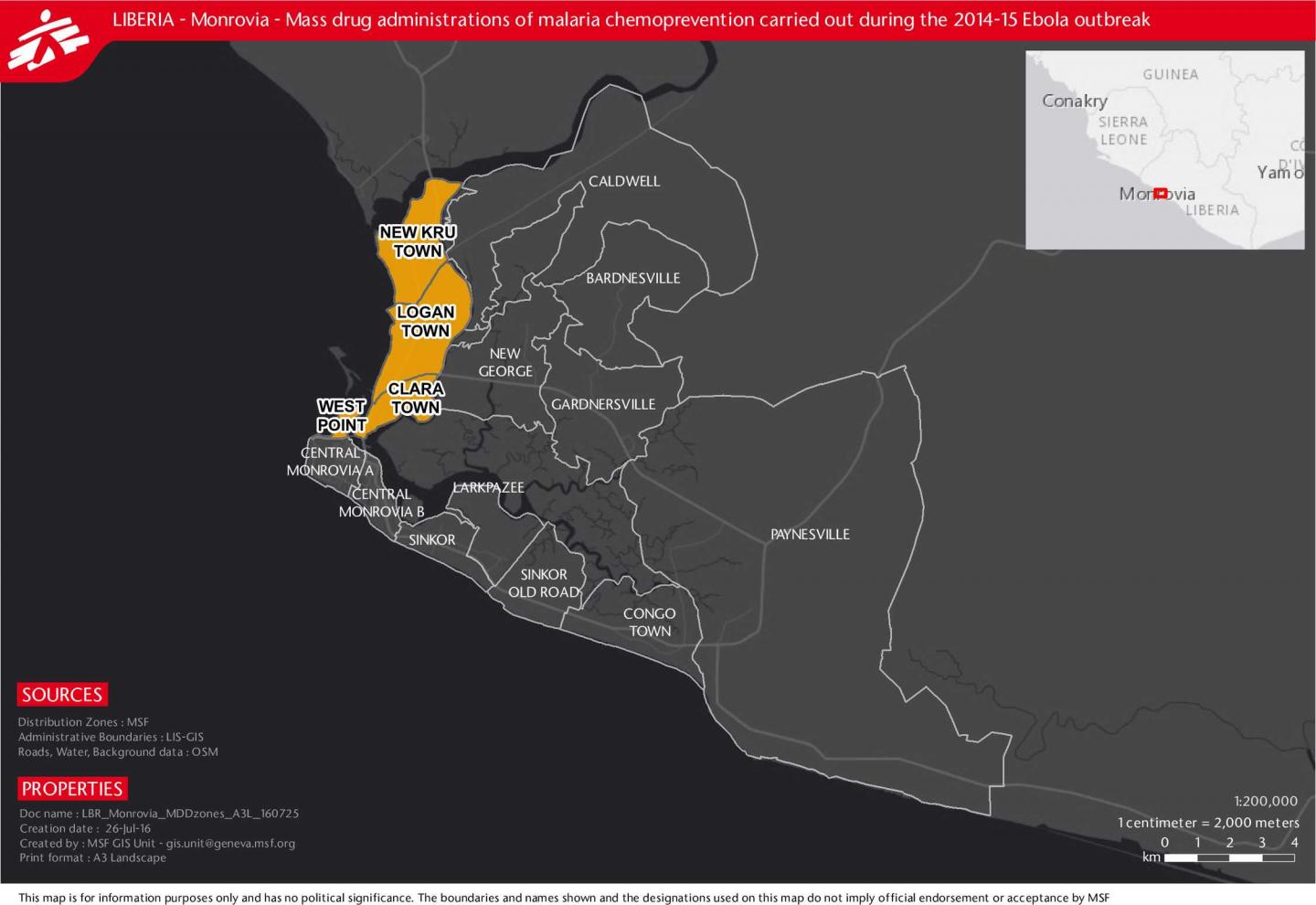
IMAGE

Credit: Kuehne et al. (2016)

Mass drug administration may have reduced malarial incidence during the 2014 Ebola outbreak in Liberia, according to a study published August 31, 2016 in the open-access journal PLOS ONE by Anna Kuehne from Epicentre, France, and colleagues.

Malaria is endemic in Liberia and transmission continued throughout the Ebola outbreak in the fall of 2014, which caused severe disruption of healthcare services. Unfortunately, the similar clinical presentation of Ebola and malaria cases meant that an unknown number of malaria patients were admitted as suspect Ebola cases, putting them at risk of exposure to Ebola and adding further strain to treatment units. During the outbreak, Médecins Sans Frontières implemented an antimalarial mass drug administration (MDA) program in Liberia's capital city, Monrovia, administering two rounds of preventative combination therapy. To evaluate the intervention's success, the authors of the present study interviewed 222 participating households.

The authors found that the monthly incidence of malaria fever cases declined from 4.3% prior to the intervention to 1.5% just after. While 96% of households attended both rounds of drug administration, actual treatment compliance was low: 52% of households used the drugs in round one, and just 22% used them in round two. Many respondents said they had instead saved the drugs for use in future malaria episodes, and the authors speculate that misconceptions about health interventions may also have affected uptake.

Mass drug administrations have rarely been carried out on such a large scale, and this study reports the first to occur during an Ebola outbreak. The authors suggest that MDA may be effective in reducing malaria, but note that longer term improvements in healthcare access could reduce malarial incidence further and reduce the need for respondents to save drugs to treat future malaria episodes.

###

In your coverage please use this URL to provide access to the freely available paper: http://dx.plos.org/10.1371/journal.pone.0161311

Citation: Kuehne A, Tiffany A, Lasry E, Janssens M, Besse C, Okonta C, et al. (2016) Impact and Lessons Learned from Mass Drug Administrations of Malaria Chemoprevention during the Ebola Outbreak in Monrovia, Liberia, 2014. PLoS ONE 11(8): e0161311. doi:10.1371/journal.pone.0161311

Funding: Epicentre (AT, KP) received core funding from Medecins sans Frontieres to conduct this research.

Competing Interests: The authors have declared that no competing interests exist.

Media Contact

Beth Jones
[email protected]
Home

Share12Tweet7Share2ShareShareShare1

Related Posts

IMAGE

Ferrets, cats and civets most susceptible to coronavirus infection after humans

December 10, 2020
IMAGE

Deep Longevity publishes an epigenetic aging clock of unprecedented accuracy

December 8, 2020

How poor oral hygiene may result in metabolic syndrome

December 8, 2020

New findings shed light on the repair of UV-induced DNA damage

December 8, 2020
Please login to join discussion

POPULAR NEWS

  • Nurses’ Views on Online Learning: Effects on Performance

    Nurses’ Views on Online Learning: Effects on Performance

    70 shares
    Share 28 Tweet 18
  • NSF funds machine-learning research at UNO and UNL to study energy requirements of walking in older adults

    71 shares
    Share 28 Tweet 18
  • Unraveling Levofloxacin’s Impact on Brain Function

    54 shares
    Share 22 Tweet 14
  • Exploring Audiology Accessibility in Johannesburg, South Africa

    51 shares
    Share 20 Tweet 13

About

We bring you the latest biotechnology news from best research centers and universities around the world. Check our website.

Follow us

Recent News

Sustainable Farming Solutions Amid Climate Change Challenges

Unraveling Naringin’s Toxic Effects on Liver Injury

Rapid Opioid Tapering Linked to Polydrug Overdoses

Subscribe to Blog via Email

Enter your email address to subscribe to this blog and receive notifications of new posts by email.

Join 70 other subscribers
  • Contact Us

Bioengineer.org © Copyright 2023 All Rights Reserved.

Welcome Back!

Login to your account below

Forgotten Password?

Retrieve your password

Please enter your username or email address to reset your password.

Log In
No Result
View All Result
  • Homepages
    • Home Page 1
    • Home Page 2
  • News
  • National
  • Business
  • Health
  • Lifestyle
  • Science

Bioengineer.org © Copyright 2023 All Rights Reserved.