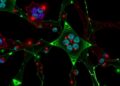
Letting go of an extra weight to control sleeping sickness

Credit: Gonçalo Ribeiro
Letting go of an extra weight to control sleeping sickness
A new study led by Luísa Figueiredo, group leader at the Instituto de Medicina Molecular João Lobo Antunes (iMM; Portugal), and published today in the scientific journal Nature Microbiology* found a new strategy by the host to cope with Trypanosoma brucei infection. Trypanosoma brucei is the parasite that causes sleeping sickness in humans, and nagana in cattle, which remain a public health concern and a major economic burden in Sub-Saharan Africa. Understanding the response of the infected organism during disease progression paves the way for the development of new treatment strategies.
Upon the bite of an infected tsetse fly, the parasites colonise intersticial spaces in the mammalian hosts, leading to death if the infection is left untreated. “Some years ago, our laboratory found that the parasite that causes sleeping sickness, Trypanosoma brucei, accumulates in disproportionately high numbers in the adipose tissue. We found this very intriguing, and directed our research to the understanding of how adipose tissue colonisation affects disease progression”, introduces Luísa Figueiredo, leader of the lab where the study was carried out. “The accumulation of the parasites in these tissues is accompanied by weight loss. Now, we found that the weight loss is largely due to the loss of adipose tissue by lipolysis, a metabolic process that breaks triacylglycerols into their constituent molecules, including free fatty acids”, continues Luísa Figueiredo. The loss of adipose tissue can occur due to many different signals. “We found that in this case, the lipolysis is in large part induced by the host immune response to the infection”, says Henrique Machado, first author of the study, explaining: “We infected immunocompromised mice and mice with impaired lipolysis, and saw that, in both cases, there is less loss of body weight despite having higher number of parasites”.
Then, the authors set out to understand if the lipolysis contributes to the progression of the disease. “We saw that the loss of adipose tissue through lipolysis prolongs the life of the infected mice. This, adding to the fact that the lipolysis exerts a control on the number of parasites, indicates that this response has a protective effect, somehow. Interestingly, we discovered that this protective effect is due to the release of the free fatty acids, during lipolysis, that are toxic for the parasites and lead to parasite death”, explains Luísa Figueiredo, saying: “It’s as if the host body sacrifices itself, by losing fat mass, to kill the parasites”.
These findings can open a completely new line of treatments for sleeping sickness and nagana targeting the infection in the adipose tissue, since the relevance of this tissue was previously unknown.
*Henrique Machado, Peter Hofer, Rudolf Zechner, Terry K. Smith, Luísa M. Figueiredo. 2023. Adipocyte lipolysis protects the host against Trypanosoma brucei infection. Nature Microbiology. DOI: 10.1038/s41564-023-01496-7.
This work was developed at iMM in collaboration with the University of Graz, Austria, the BioTechMed-Graz, Austria, and the University of St Andrews, United Kingdom. This work was supported by the European Research Council, the Portuguese Foundation for Science and Technology, the Austrian Fonds zur Förderung der Wissenschaftlichen Forschung, and the Foundation Loius Jeantet.
Journal
Nature Microbiology
DOI
10.1038/s41564-023-01496-7
Method of Research
Experimental study
Subject of Research
Animals
Article Title
Adipocyte lipolysis protects the host against Trypanosoma brucei infection.
Article Publication Date
12-Oct-2023
COI Statement
n/a