• HOME
  • NEWS
  • EXPLORE
    • CAREER
      • Companies
      • Jobs
    • EVENTS
    • iGEM
      • News
      • Team
    • PHOTOS
    • VIDEO
    • WIKI
  • BLOG
  • COMMUNITY
    • FACEBOOK
    • INSTAGRAM
    • TWITTER
Tuesday, May 19, 2026
BIOENGINEER.ORG
No Result
View All Result
  • Login
  • HOME
  • NEWS
  • EXPLORE
    • CAREER
      • Companies
      • Jobs
        • Lecturer
        • PhD Studentship
        • Postdoc
        • Research Assistant
    • EVENTS
    • iGEM
      • News
      • Team
    • PHOTOS
    • VIDEO
    • WIKI
  • BLOG
  • COMMUNITY
    • FACEBOOK
    • INSTAGRAM
    • TWITTER
  • HOME
  • NEWS
  • EXPLORE
    • CAREER
      • Companies
      • Jobs
        • Lecturer
        • PhD Studentship
        • Postdoc
        • Research Assistant
    • EVENTS
    • iGEM
      • News
      • Team
    • PHOTOS
    • VIDEO
    • WIKI
  • BLOG
  • COMMUNITY
    • FACEBOOK
    • INSTAGRAM
    • TWITTER
No Result
View All Result
Bioengineer.org
No Result
View All Result
Home NEWS Science News Chemistry

Let the sunshine in: self-cleaning membrane under visible light treatment

Bioengineer by Bioengineer
December 9, 2020
in Chemistry
Reading Time: 2 mins read
0
IMAGE
Share on FacebookShare on TwitterShare on LinkedinShare on RedditShare on Telegram

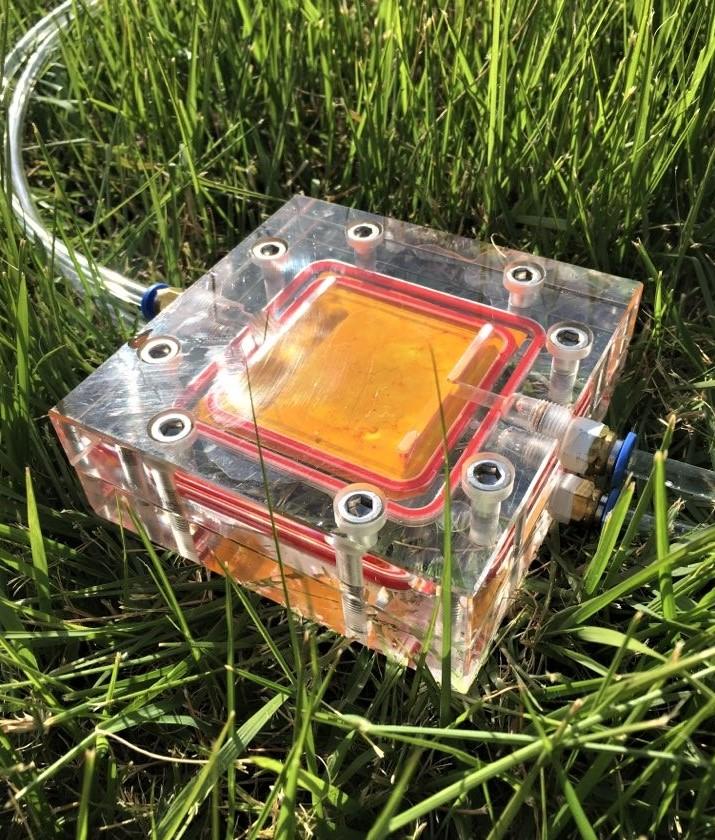
Complete removal of microbial contaminant layer accumulated on the membrane surface by sunlight irradiation. Providing a foundation for the development of new membrane materials on the convergence between water treatment and photocatalyst technologies
IMAGE

Credit: Korea Institute of Science and Technology(KIST)

Membrane technology is widely used in various water treatment processes such as water desalination, sewage treatment, and advanced water treatment for producing clean tap water. The membrane filtration technology is a method that can significantly improve water quality and has been suggested as an alternative that can radically prevent larvae in the tap water that has become a widespread issue in Korea recently. However, the current membrane technology suffers from a rapid performance reduction due to the accumulation of bacterial adhesion on the membrane surface and the growth of microbial cells, leading to high maintenance costs.

The Korea Institute of Science and Technology (KIST) reported that the research team led by Dr. Jeehye Byun and Director Seok Won Hong from Water Cycle Research Center developed a membrane material that self-cleans biological contaminants through irradiation of sunlight. According to the team, the newly developed membrane material is expected to significantly reduce the cost of membrane management as the membrane can be reused after just 10 minutes of sunlight irradiation.

Water treatment membranes require periodic cleaning as the contaminants are accumulated on the membrane surface after water filtration. Currently, used membranes require to be cleaned with harsh chemicals for more than six hours at least once a week, which results in fairly high operating cost and damages the membranes due to the chemicals.

As a way to address these issues, the researchers at KIST firmly conjugated a visible-light-responsive photocatalyst to the water treatment membrane surface. This surface-modified photocatalytic membrane can fully decompose contaminants accumulated on the surface when irradiated with visible light, thereby easily cleaning the membrane. In particular, it displayed outstanding performance by removing 99.9% of bacteria, such as Escherichia coli and Staphylococcus aureus, and viruses, such as MS2 bacteriophage, accumulated on the membrane surface in less than an hour of light treatment. According to the team, the developed membrane can treat not only microbial cells but also organic contaminants such as dye solutions and heavy metals. Further, it showed the advantage of maintaining performance even after repeating the tests more than 10 times.

“Our research revealed that the efficiency of the water treatment processes can be improved by conjugating the photocatalytic technology and the water treatment membrane technology,” Dr. Jeehye Byun from KIST said. “Based on these research results, we will endeavor to develop next-generation membranes that can lead the water treatment membrane market.”

###

This study was carried out with a grant from the Ministry of Science and ICT (MSIT), as part of the Institutional R&D Program of KIST. The findings were reported in the latest edition of the international journal, Applied Catalysis B:Environmental (IF: 16.683, Top 0.943% in the field of JCR).

Media Contact
Do-Hyun Kim
[email protected]

Related Journal Article

http://dx.doi.org/10.1016/j.apcatb.2020.119587

Tags: Chemistry/Physics/Materials SciencesTechnology/Engineering/Computer Science
Share12Tweet8Share2ShareShareShare2

Related Posts

TransEuroOGS Project to Connect Optical Ground Stations Across Europe — Chemistry

TransEuroOGS Project to Connect Optical Ground Stations Across Europe

May 19, 2026
Decarbonizing the Grid: The Essential First Step to Capturing Carbon from the Environment — Chemistry

Decarbonizing the Grid: The Essential First Step to Capturing Carbon from the Environment

May 19, 2026

Overcoming Mid-Infrared Interconnection Challenges: Durable Bonding Technique for High-Power Optics Using Liquid-Like Chalcogenide Glass

May 19, 2026

Solar Energy Breakthrough Enables Production of ‘Clean’ Chemicals, Plastics, and Food

May 19, 2026
Please login to join discussion

POPULAR NEWS

  • Research Indicates Potential Connection Between Prenatal Medication Exposure and Elevated Autism Risk

    845 shares
    Share 338 Tweet 211
  • New Study Reveals Plants Can Detect the Sound of Rain

    732 shares
    Share 292 Tweet 183
  • Salmonella Haem Blocks Macrophages, Boosts Infection

    62 shares
    Share 25 Tweet 16
  • Breastmilk Balances E. coli and Beneficial Bacteria in Infant Gut Microbiomes

    58 shares
    Share 23 Tweet 15

About

We bring you the latest biotechnology news from best research centers and universities around the world. Check our website.

Follow us

Recent News

Semaglutide Slows Epigenetic Aging in HIV Study

Climate Change Worsens NYC Energy Resilience Gaps

Genetic Drivers of Staph Adhesion Influence Virulence

Subscribe to Blog via Email

Success! An email was just sent to confirm your subscription. Please find the email now and click 'Confirm' to start subscribing.

Join 82 other subscribers
  • Contact Us

Bioengineer.org © Copyright 2023 All Rights Reserved.

Welcome Back!

Login to your account below

Forgotten Password?

Retrieve your password

Please enter your username or email address to reset your password.

Log In
No Result
View All Result
  • Homepages
    • Home Page 1
    • Home Page 2
  • News
  • National
  • Business
  • Health
  • Lifestyle
  • Science

Bioengineer.org © Copyright 2023 All Rights Reserved.