• HOME
  • NEWS
  • EXPLORE
    • CAREER
      • Companies
      • Jobs
    • EVENTS
    • iGEM
      • News
      • Team
    • PHOTOS
    • VIDEO
    • WIKI
  • BLOG
  • COMMUNITY
    • FACEBOOK
    • INSTAGRAM
    • TWITTER
Wednesday, July 8, 2026
BIOENGINEER.ORG
No Result
View All Result
  • Login
  • HOME
  • NEWS
  • EXPLORE
    • CAREER
      • Companies
      • Jobs
        • Lecturer
        • PhD Studentship
        • Postdoc
        • Research Assistant
    • EVENTS
    • iGEM
      • News
      • Team
    • PHOTOS
    • VIDEO
    • WIKI
  • BLOG
  • COMMUNITY
    • FACEBOOK
    • INSTAGRAM
    • TWITTER
  • HOME
  • NEWS
  • EXPLORE
    • CAREER
      • Companies
      • Jobs
        • Lecturer
        • PhD Studentship
        • Postdoc
        • Research Assistant
    • EVENTS
    • iGEM
      • News
      • Team
    • PHOTOS
    • VIDEO
    • WIKI
  • BLOG
  • COMMUNITY
    • FACEBOOK
    • INSTAGRAM
    • TWITTER
No Result
View All Result
Bioengineer.org
No Result
View All Result
Home NEWS Science News Biology

Leaf beetles: Even a tiny dose of pesticide will impair reproduction

Bioengineer by Bioengineer
July 31, 2017
in Biology
Reading Time: 2 mins read
0
Share on FacebookShare on TwitterShare on LinkedinShare on RedditShare on Telegram
IMAGE

Credit: Photo: Bielefeld University

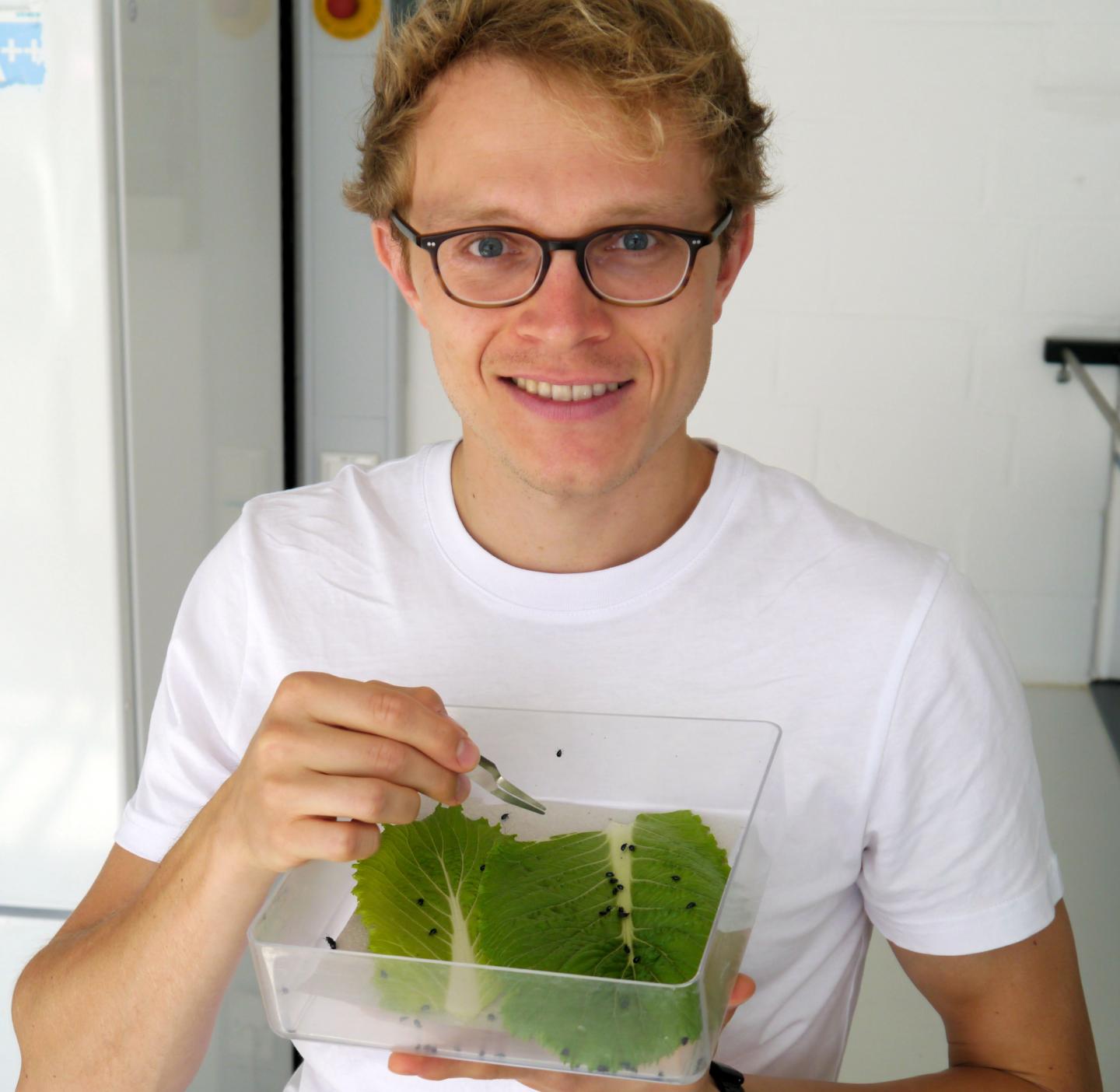
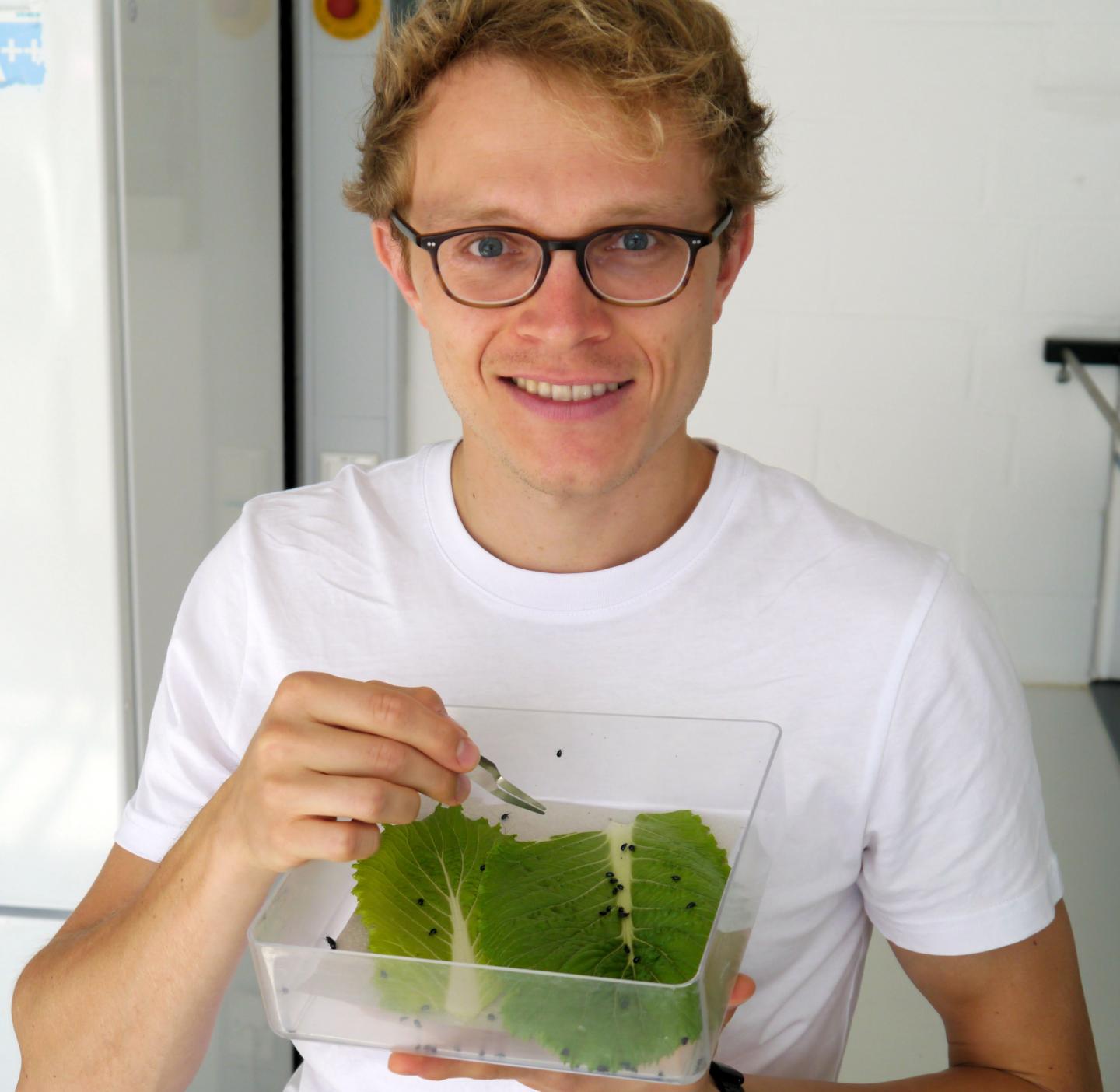
One finding is that leaf beetles lay roughly 35 per cent fewer eggs after coming into contact with traces of a frequently used pesticide: a pyrethroid. The researchers also showed that female offspring develop malformations through the poison. The biologists have published their study in the journal Environmental Pollution.

According to the Federal Ministry for the Environment, in some parts of Germany the insect population has declined by 80 per cent since 1982. In North Rhine-Westphalia, the Regional Office for Nature, Environment, and Consumer Protection (LANUV) reports a decline of 75 per cent between 1989 and 2013.

'Recent years have seen a continuous increase in the use of herbicides,' says Professor Dr. Caroline Müller, head of the Department of Chemical Ecology. One problem is that up to now, little was known about how pesticides affect insects outside the cultivated fields. What are the consequences for organisms randomly exposed to traces of pesticides?' asks the ecologist. When the chemicals are sprayed, they can spread to neighbouring areas and contaminate adjacent plants. 'The wind also potentially carries them to ecologically-cultivated fields that are meant to be managed without poisons,' says Caroline Müller.

The new study shows that pesticides can interfere with communication between insects. When choosing their mating partners, mustard leaf beetles (Phaedon cochleariae Fabricius) rely on chemical stimuli, which enable them to recognize potential mates. Hydrocarbons on the surface of the beetle body act as a type of scent that serves as an identity mark.

'For the first time, we have been able to show that contact with pesticides changes this chemical signature on the body surface,' says Dr. Thorben Müller, the main author of the study. 'As a consequence, beetles may fail to recognize suitable mating partners for reproduction. This alone may already reduce the number of offspring.'

In addition, when parents come into contact with pesticides, this can have negative effects on the subsequent beetle generation "even when these do not come into direct contact with the substance themselves. 'The offspring of beetles that have eaten leaves contaminated with pesticides develop more slowly than the offspring of beetles that have fed on untreated leaves,' says Thorben Müller. However, it is not just the development of offspring that is delayed. 'Female leaf beetles whose parents had contact with such chemicals develop antennae of different length. This malformation can impair partner choice and the choice of egg laying places.'

The results of this research may also be transferred to other insects. 'Bees and wasps communicate in a similar way to beetles by using chemical signals', says Professor Dr. Caroline Müller. 'If they incidentally come into contact with traces of pesticides, this could also influence their mate selection and lead to a decline in offspring.' From the present findings, she concludes that 'herbicides should be authorized only when it is certain that they will not damage the development and reproduction of untargeted organisms in the long term.'

###

Media Contact

Dr. Thorben Müller
[email protected]
49-052-110-667-317
@uniaktuell

http://www.uni-bielefeld.de/

Related Journal Article

http://dx.doi.org/10.1016/2017.07.018
Share12Tweet8Share2ShareShareShare2

Related Posts

Here are a few rewritten headlines for a science magazine post, each with a slightly different tone: Intriguing & poetic: How do organs sculpt themselves? Sea stars hold the secret Direct & research-focused: Sea stars reveal the hidden rules of organ formation Metaphorical & inviting: Tiny architects beneath the waves: What sea stars teach us about building organs Short & punchy: Star-shaped clues to how our organs take shape Question-led: Could a sea star show us how organs form? Elegant & feature-style: The body’s blueprint, glimpsed in a sea star’s arm

July 6, 2026
Bacteria evolve faster with unconventional gene copies — Biology

Bacteria evolve faster with unconventional gene copies

July 6, 2026

Neighbours rewire soil feedback via root microbiome shifts

July 6, 2026

Evolution-Inspired Biosensors Revolutionize Lipid Tracking in Real Time

July 2, 2026
Please login to join discussion

POPULAR NEWS

  • Detection of EDCs in Breast Milk and Infant Urine Up to Six Months Highlights Early Exposure Risks

    77 shares
    Share 31 Tweet 19
  • New Drug Candidate Developed at McMaster Shows Potential for Treating Brain Cancer

    58 shares
    Share 23 Tweet 15
  • Saying Goodbye to PGY-6: Pediatric Fellowship Realities

    103 shares
    Share 41 Tweet 26
  • KTU Researchers Explore Ultrasound’s Role in Enhancing Blood Flow Beyond Diagnostics

    53 shares
    Share 21 Tweet 13

About

We bring you the latest biotechnology news from best research centers and universities around the world. Check our website.

Follow us

Recent News

Flame retardant BDE-209 targets molecularly linked to ulcerative colitis

Ultra-high frequency particle impacts mimic rockbursts to shatter hard rock

Kidney transplant outcomes in older adults studied by German researchers

Subscribe to Blog via Email

Success! An email was just sent to confirm your subscription. Please find the email now and click 'Confirm' to start subscribing.

Join 83 other subscribers
  • Contact Us

Bioengineer.org © Copyright 2023 All Rights Reserved.

Welcome Back!

Login to your account below

Forgotten Password?

Retrieve your password

Please enter your username or email address to reset your password.

Log In
No Result
View All Result
  • Homepages
    • Home Page 1
    • Home Page 2
  • News
  • National
  • Business
  • Health
  • Lifestyle
  • Science

Bioengineer.org © Copyright 2023 All Rights Reserved.