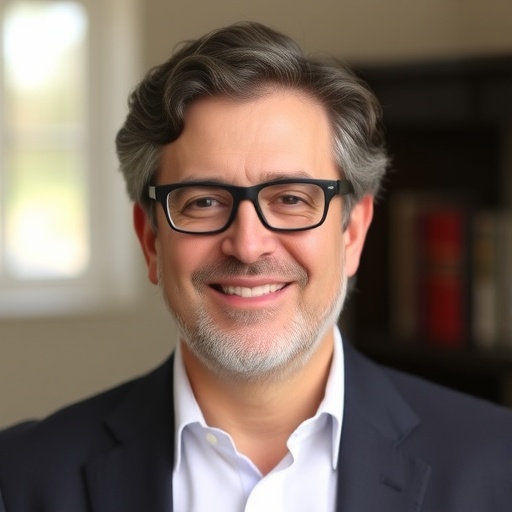
The Salk Institute has announced a major addition to its world-leading cancer research faculty with the appointment of Dr. Thales “PapaG” Papagiannakopoulos, a distinguished scientist specializing in cancer metabolism, immunology, and tumor-host communication. Dr. Papagiannakopoulos, who will join the Institute as a professor starting September 2026, comes from NYU Grossman School of Medicine, where he has established himself as an innovative researcher and tenured associate professor in the Department of Pathology and the Perlmutter Cancer Center. His recruitment marks a strategic expansion of the Salk Institute’s National Cancer Institute (NCI) Designated Cancer Center, enhancing its collaborative capabilities across multiple disciplines tackling cancer’s complexity.
Dr. Papagiannakopoulos’s research is pioneering in its examination of how cancer cells adapt metabolically to stressful environments, rewiring nutrient and energy utilization pathways to survive and evade immune destruction. His laboratory employs sophisticated genome editing tools and functional genetic screens in living models, an approach that allows precise dissection of the molecular drivers of tumor progression. This methodology is crucial in distinguishing which genetic aberrations are cancer’s true vulnerabilities, offering promising avenues for the development of targeted therapies.
What sets Dr. Papagiannakopoulos apart is his integrative focus that spans metabolism and immunology, fields traditionally studied in isolation. His work elucidates how metabolic rewiring in tumor cells not only supports survival but actively shapes the immune milieu within and beyond the tumor microenvironment. By understanding these dynamic interactions, his research opens the door to manipulating tumor metabolism and immune responses concurrently, a strategy that could revolutionize anti-cancer treatments.
A novel dimension of his research investigates the crosstalk between tumors and the nervous system. Dr. Papagiannakopoulos and his team explore how cancer cells influence brain and peripheral nerve functions to modulate tumor growth, metabolic pathways, and immune system behavior. These interactions have significant clinical implications as they contribute to the cachexia syndrome frequently observed in cancer patients—manifesting as fatigue, anorexia, and severe weight loss—and currently represent a major therapeutic challenge.
Dr. Papagiannakopoulos’s involvement in the InteroCANCEption project, backed by a prestigious Cancer Grand Challenges grant, aims to decode the mechanisms by which the nervous system senses and responds to cancer throughout the body. This systemic approach to cancer biology underscores the emerging paradigm that cancer should be understood not only as a cellular and genetic disease but also as a complex disorder modulated by whole-body physiological networks.
Commenting on the appointment, Salk Institute President Gerald Joyce highlighted Dr. Papagiannakopoulos’s talent for bridging fundamental cancer biology with innovative, interdisciplinary strategies. Joyce emphasized that this alignment with Salk’s culture of curiosity-driven research and collaboration exemplifies the Institute’s mission to pioneer foundational science with the potential to yield transformative clinical breakthroughs.
Dr. Papagiannakopoulos expressed enthusiasm about joining the Salk Institute, citing its unique environment where high-risk, high-reward science thrives. He underscored the significance of integrating his expertise with the existing strengths in cancer immunobiology, metabolism, and neurobiology at Salk, particularly collaboration opportunities with the NOMIS Center and neuroscientists focusing on how cancer intersects with systemic physiology.
Among his groundbreaking contributions, Dr. Papagiannakopoulos’s recent publications in Nature unveiled therapeutic potentials by targeting proteins involved in ferroptosis resistance and immune evasion in lung and pancreatic cancer models. Ferroptosis, a regulated form of cell death driven by iron-dependent lipid peroxidation, represents an Achilles’ heel for certain tumors—disabling mechanisms that prevent ferroptosis can trigger cancer cell death. Similarly, inhibiting proteins that suppress anti-tumor immune responses unveils new immunotherapeutic strategies that could complement existing treatments, broadening the arsenal against aggressive cancers.
Dr. Papagiannakopoulos’s academic journey is distinguished by rigorous training, beginning with a Bachelor’s degree in Molecular Genetics from the University of Sussex, followed by a PhD in Molecular and Cellular Biology at the University of California, Santa Barbara. His postdoctoral work at MIT sharpened his expertise in genome engineering techniques and in vivo cancer modeling. Throughout his career, his innovative research has attracted significant funding from federal and philanthropic sources, including the National Institutes of Health and the American Cancer Society.
At the Salk Institute, Dr. Papagiannakopoulos aims to establish a multidisciplinary research program that emphasizes integrative cancer biology, emphasizing the complex interplay between genetic mutations, cellular metabolism, immune surveillance, and neural regulation. His work will further energize Salk’s Conquering Cancer Initiative, which coordinates researchers across diverse fields to develop innovative strategies targeting lethal cancers, with a focus on lung cancer among others.
Reuben Shaw, PhD, director of Salk’s NCI-Designated Cancer Center, praised Dr. Papagiannakopoulos’s rare blend of experimental prowess and biological insight. Shaw highlighted how his innovative use of in vivo genetic modeling combined with deep knowledge of tumor metabolism and immune responses, along with a novel focus on cancer’s brain-body interactions, will greatly enhance the Center’s mission to identify new cancer vulnerabilities. Beyond research, Papagiannakopoulos is also recognized as a dedicated mentor, poised to inspire the next generation of cancer scientists at Salk.
This appointment signals a bold expansion of Salk’s cancer research capabilities, poised to unravel the multifaceted nature of cancer biology. By converging metabolism, immunology, and neurobiology, Dr. Papagiannakopoulos’s interdisciplinary vision promises not only to accelerate basic scientific understanding but also to accelerate the translation of discoveries into novel, effective therapies, potentially transforming cancer treatment paradigms.
The Salk Institute itself, founded in 1960 by Jonas Salk—the developer of the first safe polio vaccine—continues its mission of pioneering foundational and high-impact biological research. Its commitment to risk-taking, curiosity-driven science remains a beacon for innovation, addressing some of society’s most urgent health challenges, including cancer. Dr. Papagiannakopoulos’s recruitment exemplifies the Institute’s ongoing leadership in marrying foundational science with translational prospects that can change medicine globally.
As Dr. Papagiannakopoulos embarks on this next chapter at Salk, the scientific community eagerly anticipates the groundbreaking discoveries that will emerge from his integrative and visionary approach to cancer biology. These efforts not only deepen our molecular understanding of cancer but also pave pathways toward innovative therapeutic interventions that may one day cure or effectively manage certain cancers that currently pose formidable clinical challenges.
Subject of Research: Cancer biology, tumor metabolism, cancer immunology, tumor-host interactions, cancer neuroscience
Article Title: Salk Institute Welcomes Dr. Thales Papagiannakopoulos to Advance Cancer Research Frontier
News Publication Date: April 2, 2026
Web References:
Salk Institute: www.salk.edu
InteroCANCEption Project: Cancer Grand Challenges
References:
Papagiannakopoulos et al., Nature, recent studies on ferroptosis and anti-tumor immunity (specific citations not provided in source text)
Image Credits: Sim Singh
Keywords: Cancer metabolism, immunology, tumor microenvironment, ferroptosis, genome engineering, nervous system and cancer, tumor-host interactions, Salk Institute, lung cancer, pancreatic cancer, cancer neuroscience, cancer therapy
Tags: cancer cell nutrient pathwayscancer immunology advancementscancer metabolism researchcancer survival mechanismsfunctional genetic screens for tumorsgenome editing in cancer researchinnovative cancer scientist appointmentsinterdisciplinary cancer researchmetabolic adaptation in cancer cellsNational Cancer Institute-designated cancer centerstargeted cancer therapy developmenttumor-host communication studies