• HOME
  • NEWS
  • EXPLORE
    • CAREER
      • Companies
      • Jobs
    • EVENTS
    • iGEM
      • News
      • Team
    • PHOTOS
    • VIDEO
    • WIKI
  • BLOG
  • COMMUNITY
    • FACEBOOK
    • INSTAGRAM
    • TWITTER
Sunday, May 10, 2026
BIOENGINEER.ORG
No Result
View All Result
  • Login
  • HOME
  • NEWS
  • EXPLORE
    • CAREER
      • Companies
      • Jobs
        • Lecturer
        • PhD Studentship
        • Postdoc
        • Research Assistant
    • EVENTS
    • iGEM
      • News
      • Team
    • PHOTOS
    • VIDEO
    • WIKI
  • BLOG
  • COMMUNITY
    • FACEBOOK
    • INSTAGRAM
    • TWITTER
  • HOME
  • NEWS
  • EXPLORE
    • CAREER
      • Companies
      • Jobs
        • Lecturer
        • PhD Studentship
        • Postdoc
        • Research Assistant
    • EVENTS
    • iGEM
      • News
      • Team
    • PHOTOS
    • VIDEO
    • WIKI
  • BLOG
  • COMMUNITY
    • FACEBOOK
    • INSTAGRAM
    • TWITTER
No Result
View All Result
Bioengineer.org
No Result
View All Result
Home NEWS Science News Chemistry

Lazy, hazy days no more: A call-to-action to better understand air pollution mechanisms

Bioengineer by Bioengineer
September 6, 2025
in Chemistry
Reading Time: 2 mins read
0
IMAGE
Share on FacebookShare on TwitterShare on LinkedinShare on RedditShare on Telegram

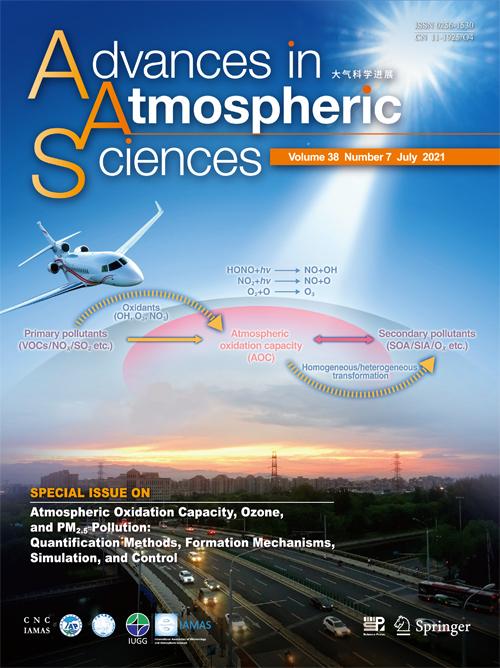
Credit: Advances in Atmospheric Sciences

Earth’s atmosphere has a budget, and when expenses outpace savings, secondary aerosols form in areas of excessive pollution. Greenhouse gases enter the atmosphere, and free radicals bond to the molecules, rendering them inert. But when there are more pollution molecules than free radicals, they are left to recombine and form ozone and visible particulate matter — smog and haze.

The precise mechanisms underlying this atmospheric oxidation capacity are not well understood, leaving the process inadequately described or completely missed in research, according to Yuesi Wang, professor with the State Key Laboratory of Atmospheric Boundary Layer Physics and Chemistry (LAPC), Institute of Atmospheric Physics (IAP), Chinese Academy of Sciences (CAS). To address this challenge, Wang and co-author Zirui Liu, also with LAPC, penned the preface to a special issue of Advances in Atmospheric Sciences, titled, “Atmospheric Oxidation Capacity, Ozone, and PM2.5 Pollution: Quantification Methods, Formation Mechanisms, Stimulation, and Control.”

“This special issue focuses on the quantification and simulation of atmospheric oxidation capacity processes to better probe the role of missing mechanisms participating in the formation of secondary aerosols,” Wang said.

The special issue contains 14 recently published scientific papers investigating atmospheric oxidation capacity processes through various approaches. The papers include field observations of key oxidizing species in different environments, laboratory dynamics studies on ozone formation and more.

Wang co-authored three of the featured papers, including one quantifying the free radical budget and ozone production with numerical modeling. In this study, Wang and his co-authors found that the aerosol uptake of hydrogen superoxide, which consists of a hydrogen and two oxygen atoms, can help break down certain pollutants, essentially expanding the free radical budget by 11% and reducing the daytime ozone production by 14%.

“This suggests the synergetic mechanism of complex air pollution formation and is useful for the development of environmental measures,” Wang said, noting the work has resulted in a deeper understanding of atmospheric oxidation capacity mechanisms.

He and his team have developed indexes, or indicators, to characterize the atmospheric oxidation capacity in Beijing. Next, they plan to evaluate how the indexes might be applied in other highly polluted regions of China as they further study the relationship between the indexes and air quality.

It is one example of the type of research the special issue highlights and demands more of, according to Wang.

“More in-depth analyses and attributions are still needed for atmospheric oxidation capacity quantification and simulations to further understand the secondary formation processes and improve the underlying mechanisms,” Wang said.

###

Media Contact
Zheng Lin
 @aasjournal

86-108-299-5053

Original Source

http://english.iap.cas.cn/home/News/202106/t20210611_271916.html

Related Journal Article

http://dx.doi.org/10.1007/s00376-021-1001-6

Tags: Atmospheric ScienceChemistry/Physics/Materials SciencesEarth SciencePolicy/EthicsPollution/RemediationScience/Health and the LawTransportation/Travel
Share12Tweet8Share2ShareShareShare2

Related Posts

Miniature Sensor Uses Light to Detect Touch — Chemistry

Miniature Sensor Uses Light to Detect Touch

May 8, 2026
Iron Minerals Determine Whether Dissolved Organic Matter Fuels Microbes or Becomes Long-Term Carbon Storage — Chemistry

Iron Minerals Determine Whether Dissolved Organic Matter Fuels Microbes or Becomes Long-Term Carbon Storage

May 8, 2026

Kate Evans Appointed Associate Lab Director for Biological and Environmental Systems Science at ORNL

May 8, 2026

Advancing Multiscale Modeling and Overcoming Operational Challenges in Autothermal CO₂-to-Methanol Reactors

May 8, 2026
Please login to join discussion

POPULAR NEWS

  • Research Indicates Potential Connection Between Prenatal Medication Exposure and Elevated Autism Risk

    840 shares
    Share 336 Tweet 210
  • New Study Reveals Plants Can Detect the Sound of Rain

    727 shares
    Share 290 Tweet 181
  • Scientists Investigate Possible Connection Between COVID-19 and Increased Lung Cancer Risk

    68 shares
    Share 27 Tweet 17
  • Salmonella Haem Blocks Macrophages, Boosts Infection

    61 shares
    Share 24 Tweet 15

About

We bring you the latest biotechnology news from best research centers and universities around the world. Check our website.

Follow us

Recent News

Urdu Fall Risk Questionnaire Adapted for Elderly

Key Pharmacological Markers for HIV Prevention in MSM

Taking 8,500 Steps Daily May Aid Long-Term Weight Management, Study Finds

Subscribe to Blog via Email

Enter your email address to subscribe to this blog and receive notifications of new posts by email.

Join 82 other subscribers
  • Contact Us

Bioengineer.org © Copyright 2023 All Rights Reserved.

Welcome Back!

Login to your account below

Forgotten Password?

Retrieve your password

Please enter your username or email address to reset your password.

Log In
No Result
View All Result
  • Homepages
    • Home Page 1
    • Home Page 2
  • News
  • National
  • Business
  • Health
  • Lifestyle
  • Science

Bioengineer.org © Copyright 2023 All Rights Reserved.