A numerical study published in the journal Fashion and Textiles has identified specific layering strategies that significantly enhance the impact resistance of multilayer high-performance fabric panels. The research, conducted by Canyi Huang and Lina Cui, systematically investigates the low-velocity impact response mechanisms of hybrid-layer fabric panels through comprehensive parametric analysis. By developing a finite element model that integrates yarn density, failure strain, and longitudinal modulus, the study reveals three fundamental design principles for optimizing protective material structures in impact engineering applications.
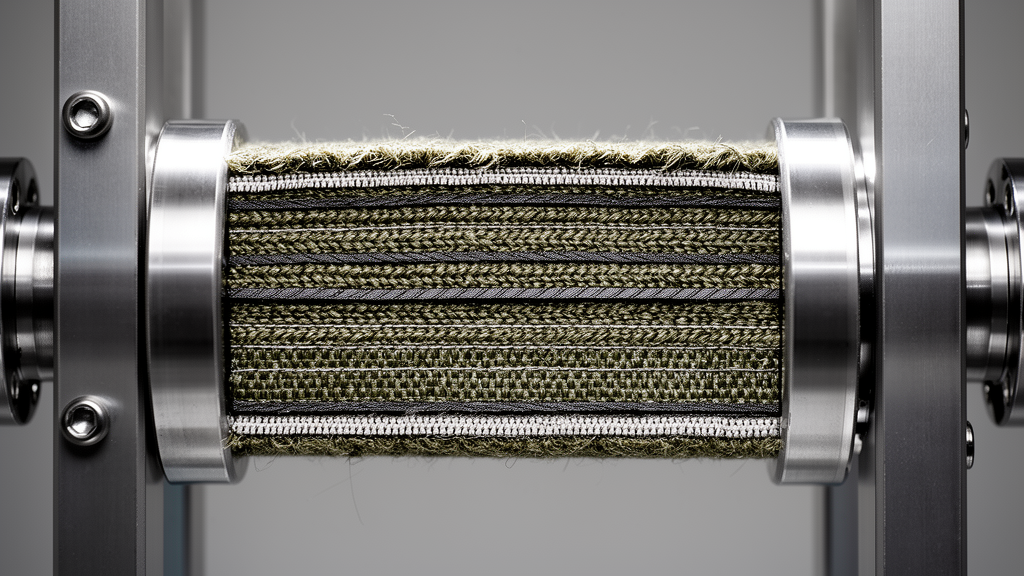
The investigation focuses on plain-woven Twaron® multilayer fabric panels, a material widely used in soft body armor and military equipment due to its excellent stiffness and high strength-to-weight ratio. The study addresses a critical gap in existing literature, which has predominantly focused on single-layer fabrics or high-velocity ballistic impacts. Low-velocity impact behavior is particularly relevant for body armor applications, yet it requires demanding experimental setups and extensive computational resources, with CPU calculation times potentially reaching twelve times that of high-velocity impact simulations.
To overcome these challenges, the researchers utilized a commercial finite element code, ANSYS®, to simulate low-velocity impact at the yarn level. The model was developed and validated using experimental results from previous work, ensuring that the numerical predictions accurately reflected physical reality. The validation process compared average experimental measurements with finite element simulation results regarding energy absorption performance, with regression line gradients of 0.998 confirming the model’s accuracy.
The study examined three key parameters affecting low-velocity impact performance: yarn density, yarn failure strain, and yarn longitudinal modulus. Each parameter was systematically tested at three distinct levels relative to baseline values. For instance, yarn density was varied from 1440 kg/m³ to 2880 kg/m³, while failure strain ranged from 0.04 to 0.08, and longitudinal modulus from 75 GPa to 150 GPa. Twenty-five fabric panel models were developed, and 25 impact simulations were performed to analyze the effects of different layering methods on impact performance.
The results indicate that the spatial arrangement of layers with varying material properties plays a crucial role in determining the panel’s energy absorption capacity. For hybrid-yarn-density panels, arranging the fabrics in descending yarn density order from the impact surface to the back layer demonstrated the highest energy absorption capacity. This configuration outperformed the ascending density arrangement, which exhibited the lowest performance. The descending-density layup achieves a staged, multi-mechanism absorption of impact energy, optimizing the stress propagation path and maximizing energy dissipation through synergistic effects between layers.
Similarly, the positioning of failure strain within the panel structure significantly influences impact resistance. The study found that hybrid panels in which the central layer possessed the greatest failure strain achieved the best improvement in impact-resistant performance. This configuration establishes a dynamic stress buffer zone, demonstrating superior balanced performance in both average contact force during impact events and prolongation of impact resistance duration. Conversely, panels with the least failure strain in the central layer exhibited the lowest energy absorption capacities.
The effect of longitudinal modulus on energy absorption was also pronounced. Panels with fabrics arranged according to decreasing yarn modulus from the impact surface resulted in the highest energy absorption capacity. In these configurations, the high-stiffness surface layer promptly distributes impact stresses, mitigating concentration risks, while subsequent compliant layers leverage extended deformation periods for progressive energy dissipation. This hierarchical energy management mechanism ultimately enhances the overall impact resistance of the panel.
Quantitative analysis revealed that the effect of yarn failure strain on energy absorption was particularly significant. With a 100% increase in yarn failure strain, the impact energy absorption increased by 301.3%, from 1030.9 MJ to 4136.5 MJ. In comparison, a 100% increase in yarn modulus led to a 73.5% increase in energy absorption, while a 100% increase in yarn density resulted in a 37.1% increase. These findings highlight the critical role of material ductility and stiffness in determining the protective efficiency of fabric panels.
The study also examined the stress distribution and fracture patterns within the multilayer panels. The von Mises stress distributions showed that in descending-density and descending-modulus configurations, the upper layers extended the impact resistance time of the lower layers by elastically deforming and rapidly dispersing impact forces. This reduced local stress concentrations, allowing the lower, more ductile layers to absorb remaining energy through larger deformation. In contrast, ascending configurations led to premature fracture and poorer energy absorption due to inadequate stress distribution.
The research provides a scientific basis for the gradient and functional design of protective materials. By controlling the distribution of density, modulus, and failure strain across material layers, multi-stage and multi-mechanism dissipation of impact energy can be achieved, significantly improving protective efficiency. The findings advance the theoretical framework for protective material design in impact engineering, offering guidelines for developing next-generation protective systems in body armor applications.
While the study offers valuable insights into the optimization of multilayer fabric panels, it is important to note that the results are based on numerical simulations. Although the model was validated against experimental data, the specific parameters and conditions used in the simulations may not fully capture all complexities of real-world impact scenarios. Future research integrating advanced manufacturing technologies, such as 3D weaving and nanocomposites, with smart materials could further drive the development of lightweight, adaptive protection systems with broad application prospects in military, aerospace, and sports safety fields.
The study underscores the importance of considering layer sequencing in the design of high-performance fabric panels. By understanding the critical role of yarn density, failure strain, and modulus, engineers can develop more effective protective systems that offer enhanced impact resistance. This knowledge is essential for advancing the field of protective engineering and improving the safety of individuals in various high-risk environments.
The experimental validation of the numerical model relied on a specific physical setup using an INSTRON™ Pneumatic Dynatup System 9250 HV drop-weight impact tester. In these tests, single-layer Twaron® fabric specimens, measuring 100 mm by 100 mm, were sandwiched between treated plywood plates featuring a central 70 mm diameter hole. A 12.7 mm hemispherical-head projectile made from 4,340 steel was used to impact the fabric at velocities ranging from 5 to 25 m/s, with intervals of 5 m/s. To ensure the repeatability of the results, at least five specimens were tested for each designated velocity. The comparison between these average experimental measurements and the finite element simulation results regarding energy absorption performance yielded regression line gradients of 0.998, confirming the accuracy of the numerical model used for the subsequent parametric analysis.
The specific material properties of the Twaron® CT612 fabric, provided by TENJIN™, were defined according to the manufacturer’s product manual and microscopic measurements. The yarns were modeled with a lenticular cross section, possessing a thread density of 11 threads per cm and a linear density of 550 dtex. The fabric thickness was set at 0.2 mm, and the yarn density was established at 1,440 kg/m³. The equivalent modulus in the longitudinal direction was 75 GPa. Friction coefficients were assigned as 0.3 for yarn-to-yarn interactions and 0.2 for yarn-to-impactor interactions. A maximum principal strain failure criterion was applied for element erosion, meaning that when the strain reached or exceeded the failure strain limit, the element was excluded from the calculation. This failure strain was calculated to be approximately 0.04 under an impact velocity of 25 m/s, based on previous work by Huang et al.
To manage computational costs while maintaining the integrity of the yarn-level simulation, the researchers utilized smaller sizes for the fabric and impactor in the multilayer panel simulations. The impactor was simulated as a hemispherical head with a diameter of 0.5 cm and a mass of 3 kg, whereas the validation model used a 12.7 mm diameter head with a mass of 7.07 kg. The multilayer fabric panels consisted of three layers of Twaron® fabric, each measuring 32 mm by 32 mm. A unified impact velocity of 25 m/s was applied to all simulations. The size of the yarns was kept at the original scale, but the number of yarns in both the warp and weft directions was reduced. The authors noted that since the primary focus was on comparing the effects of varying yarn parameters, the reduction in model size did not affect the final comparative results.
The computational demands of these simulations were substantial, reflecting the complexity of modeling low-velocity impact at the yarn level. On average, each impact simulation required approximately 12 hours to complete using an Intel Xeon® 12-core CPU and 64 GB of RAM. This computational intensity highlights the challenge of studying low-velocity impact behavior, which can require up to twelve times the CPU calculation time compared to high-velocity impact simulations. The high computational cost underscores the value of numerical methods in exploring parametric variations that would be prohibitively expensive or difficult to test experimentally, particularly given the need for special fixtures and sample designs for low-velocity impact on soft fabrics.
The study’s focus on low-velocity impact distinguishes it from much of the existing literature, which has predominantly investigated high-velocity ballistic impacts. While high-performance fibers like ultrahigh-molecular-weight polyethylene and aramid fibers are widely used in bulletproof protection, the specific mechanisms governing low-velocity impact in multilayer panels remain less understood. The researchers noted that elucidating these mechanisms is crucial for engineering applications, as hybrid-layered fabric body armor panels integrate the advantages of various materials with distinct mechanical properties. By systematically varying yarn density, failure strain, and longitudinal modulus, the study provides a detailed understanding of how these properties influence the impact response, offering a theoretical reference for the rational design of bulletproof fabrics.
The findings suggest that the arrangement of layers with different properties can significantly alter the failure modes and energy absorption characteristics of the panel. For instance, in hybrid-failure-strain panels, the fracture sequence was governed by the stacking configuration, leading to distinct failure mechanisms. In some configurations, such as panel S6, layer 3 experienced fracture while layer 2 remained intact, and layer 1 showed near-complete penetration by the impactor. This divergent failure mode contrasts with the progressive layer failure observed in other configurations, where layers fracture sequentially from the first to the third. These variations in interlayer fracture timing generated oscillatory behavior in the force-time curves, characterized by ascending fluctuations followed by a sharp decline upon complete structural failure.
The study also highlighted the role of interlayer friction and shear forces in the energy absorption process. The top fabric layer initially absorbs impact energy through yarn tensile deformation before transferring stress to underlying layers. The middle layer often exhibits better energy absorption than the top layer due to frictional interactions between adjacent layers, which create supplemental energy dissipation mechanisms. The bottom layer, meanwhile, demonstrates the highest energy absorption efficiency as it sustains impact forces for the longest duration before fracture occurs under identical parameter conditions. This sequential propagation of energy through the layers, combined with the specific mechanical properties of each layer, determines the overall protective efficiency of the multilayer fabric panel.
Subject of Research: Numerical analysis of layer sequencing effects on impact resistance in multilayer high-performance fabric panels
Article Title: Numerical decoding of layer sequencing effects on impact resistance in multilayer high performance fabric panels-the critical role of yarn density, failure strain and modulus
Article References: Huang, C., & Cui, L. (2026). Numerical decoding of layer sequencing effects on impact resistance in multilayer high performance fabric panels-the critical role of yarn density, failure strain and modulus. Fashion and Textiles, 13(1), Article 1. https://doi.org/10.1186/s40691-025-00422-1
Image Credits: AI Generated
DOI: 10.1186/s40691-025-00422-1
Keywords: impact resistance, multilayer fabric, yarn density, failure strain, longitudinal modulus, finite element analysis, protective materials, body armor, energy absorption, Twaron, Numerical, decoding
News Source: Denise Maddox. (November 10, 2026). Layer sequencing boosts impact resistance in high-performance fabric panels. Scienmag.