• HOME
  • NEWS
  • EXPLORE
    • CAREER
      • Companies
      • Jobs
    • EVENTS
    • iGEM
      • News
      • Team
    • PHOTOS
    • VIDEO
    • WIKI
  • BLOG
  • COMMUNITY
    • FACEBOOK
    • INSTAGRAM
    • TWITTER
Saturday, May 23, 2026
BIOENGINEER.ORG
No Result
View All Result
  • Login
  • HOME
  • NEWS
  • EXPLORE
    • CAREER
      • Companies
      • Jobs
        • Lecturer
        • PhD Studentship
        • Postdoc
        • Research Assistant
    • EVENTS
    • iGEM
      • News
      • Team
    • PHOTOS
    • VIDEO
    • WIKI
  • BLOG
  • COMMUNITY
    • FACEBOOK
    • INSTAGRAM
    • TWITTER
  • HOME
  • NEWS
  • EXPLORE
    • CAREER
      • Companies
      • Jobs
        • Lecturer
        • PhD Studentship
        • Postdoc
        • Research Assistant
    • EVENTS
    • iGEM
      • News
      • Team
    • PHOTOS
    • VIDEO
    • WIKI
  • BLOG
  • COMMUNITY
    • FACEBOOK
    • INSTAGRAM
    • TWITTER
No Result
View All Result
Bioengineer.org
No Result
View All Result
Home NEWS Science News Biology

Latitudinal gradient of plant phylogenetic diversity explained

Bioengineer by Bioengineer
April 26, 2019
in Biology
Reading Time: 2 mins read
0
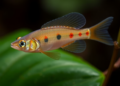
IMAGE
Share on FacebookShare on TwitterShare on LinkedinShare on RedditShare on Telegram

IMAGE

Credit: Jhonny Capichoni Massante

Why are there so many species in the tropics? For centuries, scientists have been seeking for the causes of the latitudinal gradient in species diversity – a pattern that has been documented for most groups of living species, including plants, insects, birds, and mammals.

Interestingly, an Estonian wooded meadow far up in the North holds the world record for species richness with tropical rain forests. Why? A group of scientists from Estonian universities (Massante et al. 2019) asked whether the evolutionary relatedness of species (i.e. phylogenetic diversity), apart from species number, explains these latitudinal patterns.

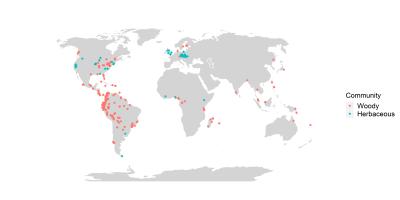
Massante and colleagues found contrasting latitudinal gradients of phylogenetic diversity between woody and herbaceous communities. They made a meta-study of published papers of 459 woody 589 herbaceous communities from the equator to up to 60 degrees North. They found that woody communities are composed of more closely-related species in the tropics whereas herbaceous species tend to be more closely-related at higher latitudes.

Massante and colleagues argue that these differences arise from speciation and dispersal. Most angiosperm woody species evolved in the tropics, whereas woody coniferous species emerged at higher latitudes. This causes a positive latitudinal diversity gradient in forests, i.e. high number of closely-related woody species in rain forests. Herbaceous species evolved in younger vegetation types at higher latitudes, e.g. grasslands. Therefore, a negative latitudinal diversity gradient can be found in grasslands, i.e. high number of closely-related herbaceous species in temperate grasslands.

This study adds further insight into the cradle/museum debate about the causes of diversity. The results support the view that the latitudinal diversity gradient may arise from different regions acting as either cradles or museums. In regions acting as evolutionary cradles, speciation produces communities containing closely-related species. Communities consisting of more distantly-related species are found in regions acting as museums, in which conditions promote the preservation of older species. These findings also reinforce the view that both evolutionary and ecological processes should be taken into account in future efforts to explain latitudinal diversity gradients. “Even though the high number of species in the tropics is well known, understanding their evolutionary relatedness has just started”, says Massante.

###

This research was carried out under the Estonian Research Council’s funding.

Media Contact
Jhonny Capichoni Massante
[email protected]

Related Journal Article

http://dx.doi.org/10.1038/s41598-019-42827-1

Tags: Biology
Share13Tweet8Share2ShareShareShare2

Related Posts

Rising Sightings of Blue and Fin Whales in the South East Atlantic — Biology

Rising Sightings of Blue and Fin Whales in the South East Atlantic

May 23, 2026
New Maps Reveal How European Landscapes Can Simultaneously Promote Climate Action and Biodiversity Conservation — Biology

New Maps Reveal How European Landscapes Can Simultaneously Promote Climate Action and Biodiversity Conservation

May 22, 2026

University of Cincinnati Structural Biologists Achieve World First in Visualizing Crucial Cell Protein

May 22, 2026

Reducing Fertilizer Use Through Strategic Scientific Partnerships

May 22, 2026
Please login to join discussion

POPULAR NEWS

  • blank

    New Study Reveals Plants Can Detect the Sound of Rain

    734 shares
    Share 293 Tweet 183
  • ESMO 2025: mRNA COVID Vaccines Enhance Efficacy of Cancer Immunotherapy

    312 shares
    Share 125 Tweet 78
  • Research Indicates Potential Connection Between Prenatal Medication Exposure and Elevated Autism Risk

    847 shares
    Share 339 Tweet 212
  • Common Food Preservatives Associated with Elevated Blood Pressure and Increased Heart Disease Risk

    55 shares
    Share 22 Tweet 14

About

We bring you the latest biotechnology news from best research centers and universities around the world. Check our website.

Follow us

Recent News

Chewing, Nutrition, and Frailty in Elderly Patients

Fractional SIR Model Explores Vaccination Impact on Childhood Diseases

Fish Consumption and Mercury Exposure in Chicago Asians

Subscribe to Blog via Email

Enter your email address to subscribe to this blog and receive notifications of new posts by email.

Join 83 other subscribers
  • Contact Us

Bioengineer.org © Copyright 2023 All Rights Reserved.

Welcome Back!

Login to your account below

Forgotten Password?

Retrieve your password

Please enter your username or email address to reset your password.

Log In
No Result
View All Result
  • Homepages
    • Home Page 1
    • Home Page 2
  • News
  • National
  • Business
  • Health
  • Lifestyle
  • Science

Bioengineer.org © Copyright 2023 All Rights Reserved.