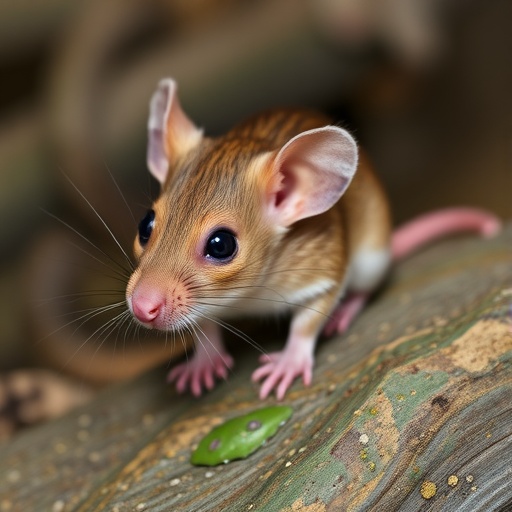
In a groundbreaking study published in npj Viruses, researchers have shed new light on the sophisticated mechanisms employed by Lassa virus to persist within its natural reservoir host, the Natal multimammate mouse (Mastomys natalensis). This discovery represents a significant advance in our understanding of how zoonotic viruses evade innate immune defenses, allowing them to establish chronic infections without causing apparent disease in their animal hosts. The implications for viral pathogenesis and spillover potential into human populations are profound, offering new avenues for therapeutic intervention and outbreak prevention.
Lassa virus is endemic in parts of West Africa and is responsible for Lassa fever, a hemorrhagic illness with significant morbidity and mortality in humans. While the virus’s ability to infect humans and cause severe disease is well documented, the mechanisms underlying its persistence in reservoir hosts have remained largely elusive. The Natal multimammate mouse harbors the virus asymptomatically, enabling continuous circulation in nature and periodic spillover into human populations. Understanding the viral strategies that allow it to circumvent host defenses in this rodent species is key to unraveling its ecology and transmission dynamics.
The research team led by Corrales and colleagues conducted an in-depth examination of the interactions between Lassa virus and key cellular components of the mouse’s innate immune system, focusing on macrophages and dendritic cells. These immune cells serve as the body’s first line of defense against viral infections by detecting, engulfing, and orchestrating responses to pathogens. Intriguingly, Lassa virus has developed unique adaptations that allow it to bypass or subvert these antiviral mechanisms, facilitating an environment of immune tolerance.
Through a combination of in vivo and in vitro experiments, the investigators demonstrated that Lassa virus infection results in a striking suppression of typical antiviral signaling pathways normally activated in macrophages and dendritic cells. These cells, which typically produce pro-inflammatory cytokines and type I interferons to inhibit viral replication and recruit other immune effectors, exhibited diminished responses upon viral challenge, thus failing to mount an effective antiviral defense. This muted immune activation is a pivotal factor in viral persistence.
Further molecular analyses revealed that Lassa virus strategically targets and interferes with signaling intermediates within these immune cells, effectively disrupting the communication cascade required for full immune activation. Among the pathways affected were those regulated by pattern recognition receptors (PRRs) such as Toll-like receptors (TLRs) and retinoic acid-inducible gene I (RIG-I)-like receptors, which are essential for viral recognition. By dampening these pathways, the virus avoids triggering alarms that would typically lead to its elimination.
Interestingly, the suppression of antiviral cytokine production did not entail a complete shutdown of immune functionality. Instead, the virus modulated macrophages and dendritic cells to adopt a state that supports viral replication while minimizing tissue damage and inflammation. This nuanced immune evasion strategy promotes viral survival within the host without provoking severe pathology, which might otherwise compromise the reservoir population stability.
The study also explored the differences in immune responses between the reservoir host and more susceptible species. Comparative analyses suggested that the evolved immune modulation mechanisms of Lassa virus are finely tuned to the biology of Mastomys natalensis. In contrast, humans and other non-reservoir species mount robust inflammatory responses to Lassa virus infection, resulting in significant immunopathology and disease. These findings highlight the delicate balance viruses strike between immune evasion and host survival in their natural reservoirs.
In addition to illuminating the intricacies of viral immune evasion, the researchers provided valuable insights into potential targets for antiviral therapies and vaccine development. By identifying the host pathways subverted by Lassa virus, novel strategies can be devised to bolster innate immune responses or specifically block the viral proteins responsible for immune interference. These approaches might reduce the risk of zoonotic spillover or ameliorate disease severity in infected humans.
Moreover, understanding the interaction between Lassa virus and reservoir host immunity enhances our predictive capabilities concerning viral evolution and emergence. The dynamic interplay between virus and host shapes viral genetic diversity and adaptation, with significant consequences for public health. For instance, shifts in viral immune evasion tactics could influence transmissibility or virulence upon crossing species barriers.
This research also reinforces the importance of continued surveillance of Lassa virus and its hosts in endemic regions. Accurate knowledge of viral persistence and immune evasion informs ecological models and outbreak preparedness efforts. Given the prevalence of Mastomys natalensis across West Africa and their role in maintaining Lassa virus circulation, integrated approaches involving wildlife monitoring, virology, and immunology are essential for comprehensive control strategies.
In summary, this study marks a pivotal advancement in virology by elucidating how Lassa virus manipulates innate immune cells in its natural reservoir to persist undetected. The Natally multimammate mouse’s macrophages and dendritic cells are subverted through precise interference with antiviral signaling pathways, enabling a stealthy viral existence. The implications extend beyond fundamental biological insight to practical applications in disease prevention and therapeutic design, offering hope for mitigating the impact of Lassa fever.
The findings underscore the complex virus-host coevolutionary mechanisms that underpin zoonotic diseases, emphasizing that effective control requires deep understanding of viral behavior in reservoir species. Such knowledge not only clarifies the molecular underpinnings of viral persistence but also inspires innovative solutions to disrupt these interactions. As research continues to unravel these sophisticated viral strategies, the prospect of reducing the burden of Lassa fever and similar zoonoses becomes more attainable.
Looking forward, the study opens exciting avenues for exploring how other arenaviruses and hemorrhagic fever viruses employ comparable immune evasion tactics in their reservoirs. Cross-disciplinary integration of molecular virology, ecology, and immunology will be critical for comprehensively addressing the threat of emerging infectious diseases. This work sets a compelling precedent for the kind of detailed mechanistic investigations needed to stay ahead in the ongoing battle against viral pathogens.
As researchers delve deeper into the viral and host factors that orchestrate immune modulation, they advance our capacity not only for reactive disease management but also for proactive risk assessment. Tailored interventions that enhance reservoir host resistance or disrupt viral stealth mechanisms may reduce zoonotic transmission upstream. Therefore, this study’s contributions resonate across the spectrum of infectious disease research and public health policy.
In closing, the revelation of Lassa virus’s ability to circumvent macrophage and dendritic cell defenses in its native mouse host represents a landmark in viral immunology. It provides a blueprint for understanding how pathogenic viruses achieve the delicate balance between efficient replication and minimal host damage within reservoir populations. As the scientific community builds upon these insights, new strategies for combating Lassa fever and preventing outbreaks internationally come into sharper focus, offering hope for improved global health outcomes.
Subject of Research: Lassa virus immune evasion mechanisms in the natural reservoir host, the Natal multimammate mouse (Mastomys natalensis), focusing on macrophage and dendritic cell antiviral defenses.
Article Title: Lassa virus circumvents macrophage and dendritic cell antiviral defences in its natural reservoir, the Natal multimammate mouse (Mastomys natalensis).
Article References:
Corrales, N., Wozniak, D.M., Yordanova, I.A. et al. Lassa virus circumvents macrophage and dendritic cell antiviral defences in its natural reservoir, the Natal multimammate mouse (Mastomys natalensis). npj Viruses 4, 9 (2026). https://doi.org/10.1038/s44298-026-00177-6
Image Credits: AI Generated
DOI: https://doi.org/10.1038/s44298-026-00177-6
Tags: asymptomatic carriers of Lassa viruschronic infections in rodentsimplications for outbreak preventioninnate immune defenses in viral infectionsLassa fever pathogenesisLassa virus immune evasion mechanismsNatal multimammate mouse studyspillover potential of Lassa virustherapeutic interventions for Lassa virusviral strategies for host evasionWest Africa viral diseaseszoonotic virus persistence