• HOME
  • NEWS
  • EXPLORE
    • CAREER
      • Companies
      • Jobs
    • EVENTS
    • iGEM
      • News
      • Team
    • PHOTOS
    • VIDEO
    • WIKI
  • BLOG
  • COMMUNITY
    • FACEBOOK
    • INSTAGRAM
    • TWITTER
Thursday, June 18, 2026
BIOENGINEER.ORG
No Result
View All Result
  • Login
  • HOME
  • NEWS
  • EXPLORE
    • CAREER
      • Companies
      • Jobs
        • Lecturer
        • PhD Studentship
        • Postdoc
        • Research Assistant
    • EVENTS
    • iGEM
      • News
      • Team
    • PHOTOS
    • VIDEO
    • WIKI
  • BLOG
  • COMMUNITY
    • FACEBOOK
    • INSTAGRAM
    • TWITTER
  • HOME
  • NEWS
  • EXPLORE
    • CAREER
      • Companies
      • Jobs
        • Lecturer
        • PhD Studentship
        • Postdoc
        • Research Assistant
    • EVENTS
    • iGEM
      • News
      • Team
    • PHOTOS
    • VIDEO
    • WIKI
  • BLOG
  • COMMUNITY
    • FACEBOOK
    • INSTAGRAM
    • TWITTER
No Result
View All Result
Bioengineer.org
No Result
View All Result
Home NEWS Science News Biology

Laser mapping project shows effects of physical changes in Antarctica’s Dry Valleys

Bioengineer by Bioengineer
August 8, 2017
in Biology
Reading Time: 2 mins read
0
Share on FacebookShare on TwitterShare on LinkedinShare on RedditShare on Telegram
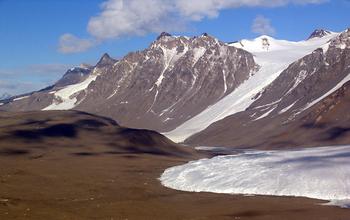
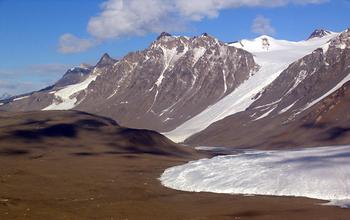
IMAGE

Credit: David Haney

Researchers funded by the National Science Foundation (NSF) have publicly released high-resolution maps of Antarctica's McMurdo Dry Valleys, a globally unique polar desert.

The high-resolution maps cover 3,564 square kilometers of the McMurdo Dry Valleys and allow researchers to compare present-day conditions with lower-resolution LIDAR surveys conducted almost 13 years ago.

Scientists from Portland State University led the new research project, which mapped the area using more sophisticated LIDAR, a remote-sensing method that uses laser beam pulses to measure the distance from the detector to the Earth's surface.

Two NSF-funded facilities, the Open Topography Facility and the Polar Geospatial Center, made the LIDAR data publicly available. A paper about the work was published in the journal Earth System Science Data.

The data, collected by aerial survey missions flown in the Southern Hemisphere in the summer of 2014-2015, provide detailed topography of the perpetually ice-free region, where surprising landscape changes, such as rapid erosion along some streams, have been observed in recent years.

The freely available datasets will allow scientists to get a handle on how widespread and how significant changes to the frozen landscape might be in this ecologically sensitive region.

The National Center for Airborne Laser Mapping and the Portland State University team carried out the mapping during an eight-week field season, beginning in December 2015. They flew instruments aboard a Twin Otter aircraft operated by Kenn Borek Air, Ltd., under contract to NSF.

Features of the McMurdo Dry Valleys are interesting to a wide range of scientists, from biologists to geologists to glaciologists. For example, the Dry Valleys are one of the few places on the massive continent — the size of the U.S. and Mexico combined — where bedrock is exposed, allowing geologists to reconstruct the continent's geological history from samples.

The region is home to one of NSF's Long-Term Ecological Research (LTER) sites, the McMurdo Dry Valleys LTER. Researchers at the site study the extremely cold and dry habitat, which is dominated by microbial life in the soil and in unique ecosystems under at least one of its glaciers and in several of its highly salty lakes.

The cold, dark environment of the McMurdo Dry Valleys is the ecosystem on Earth that most closely resembles the surface of Mars.

Evidence of past glacial advance and retreat is also more easily observed in the Dry Valleys, providing a window into the past behavior of the vast Antarctic ice sheets and their influence on global sea levels.

###

Media Contact

Peter West
[email protected]
@NSF

http://www.nsf.gov

Share12Tweet8Share2ShareShareShare2

Related Posts

New Study Seeks to Prolong Immune System Longevity — Biology

New Study Seeks to Prolong Immune System Longevity

June 18, 2026
Great Apes Display Individual Thinking Styles Similar to Humans, Study Finds — Biology

Great Apes Display Individual Thinking Styles Similar to Humans, Study Finds

June 17, 2026

Scientists Awarded $4 Million to Enhance Endangered Species Management on Military Lands

June 17, 2026

New Study Reveals Ebola Virus Persistence in the Central Nervous System, Led by Mount Sinai Microbiologists

June 17, 2026
Please login to join discussion

POPULAR NEWS

  • ESMO 2025: mRNA COVID Vaccines Enhance Efficacy of Cancer Immunotherapy

    326 shares
    Share 130 Tweet 82
  • Saying Goodbye to PGY-6: Pediatric Fellowship Realities

    102 shares
    Share 41 Tweet 26
  • Multi-Hospital Study Reveals Long Covid Burden Is Twice as High as Current Estimates

    92 shares
    Share 36 Tweet 23
  • Detection of EDCs in Breast Milk and Infant Urine Up to Six Months Highlights Early Exposure Risks

    76 shares
    Share 30 Tweet 19

About

We bring you the latest biotechnology news from best research centers and universities around the world. Check our website.

Follow us

Recent News

Confined Migration Causes DNA Damage in Neurons

Multimodal Multitask AI Transforms Lung Cancer Grading

New Study Seeks to Prolong Immune System Longevity

Subscribe to Blog via Email

Enter your email address to subscribe to this blog and receive notifications of new posts by email.

Join 82 other subscribers
  • Contact Us

Bioengineer.org © Copyright 2023 All Rights Reserved.

Welcome Back!

Login to your account below

Forgotten Password?

Retrieve your password

Please enter your username or email address to reset your password.

Log In
No Result
View All Result
  • Homepages
    • Home Page 1
    • Home Page 2
  • News
  • National
  • Business
  • Health
  • Lifestyle
  • Science

Bioengineer.org © Copyright 2023 All Rights Reserved.