• HOME
  • NEWS
  • EXPLORE
    • CAREER
      • Companies
      • Jobs
    • EVENTS
    • iGEM
      • News
      • Team
    • PHOTOS
    • VIDEO
    • WIKI
  • BLOG
  • COMMUNITY
    • FACEBOOK
    • INSTAGRAM
    • TWITTER
Tuesday, September 8, 2026
BIOENGINEER.ORG
No Result
View All Result
  • Login
  • HOME
  • NEWS
  • EXPLORE
    • CAREER
      • Companies
      • Jobs
        • Lecturer
        • PhD Studentship
        • Postdoc
        • Research Assistant
    • EVENTS
    • iGEM
      • News
      • Team
    • PHOTOS
    • VIDEO
    • WIKI
  • BLOG
  • COMMUNITY
    • FACEBOOK
    • INSTAGRAM
    • TWITTER
  • HOME
  • NEWS
  • EXPLORE
    • CAREER
      • Companies
      • Jobs
        • Lecturer
        • PhD Studentship
        • Postdoc
        • Research Assistant
    • EVENTS
    • iGEM
      • News
      • Team
    • PHOTOS
    • VIDEO
    • WIKI
  • BLOG
  • COMMUNITY
    • FACEBOOK
    • INSTAGRAM
    • TWITTER
No Result
View All Result
Bioengineer.org
No Result
View All Result
Home NEWS Science News Biology

Largest king penguin colony has shrunk nearly 90%

Bioengineer by Bioengineer
July 30, 2018
in Biology
Reading Time: 2 mins read
0
Share on FacebookShare on TwitterShare on LinkedinShare on RedditShare on Telegram
IMAGE

Credit: © Henry Weimerskirch

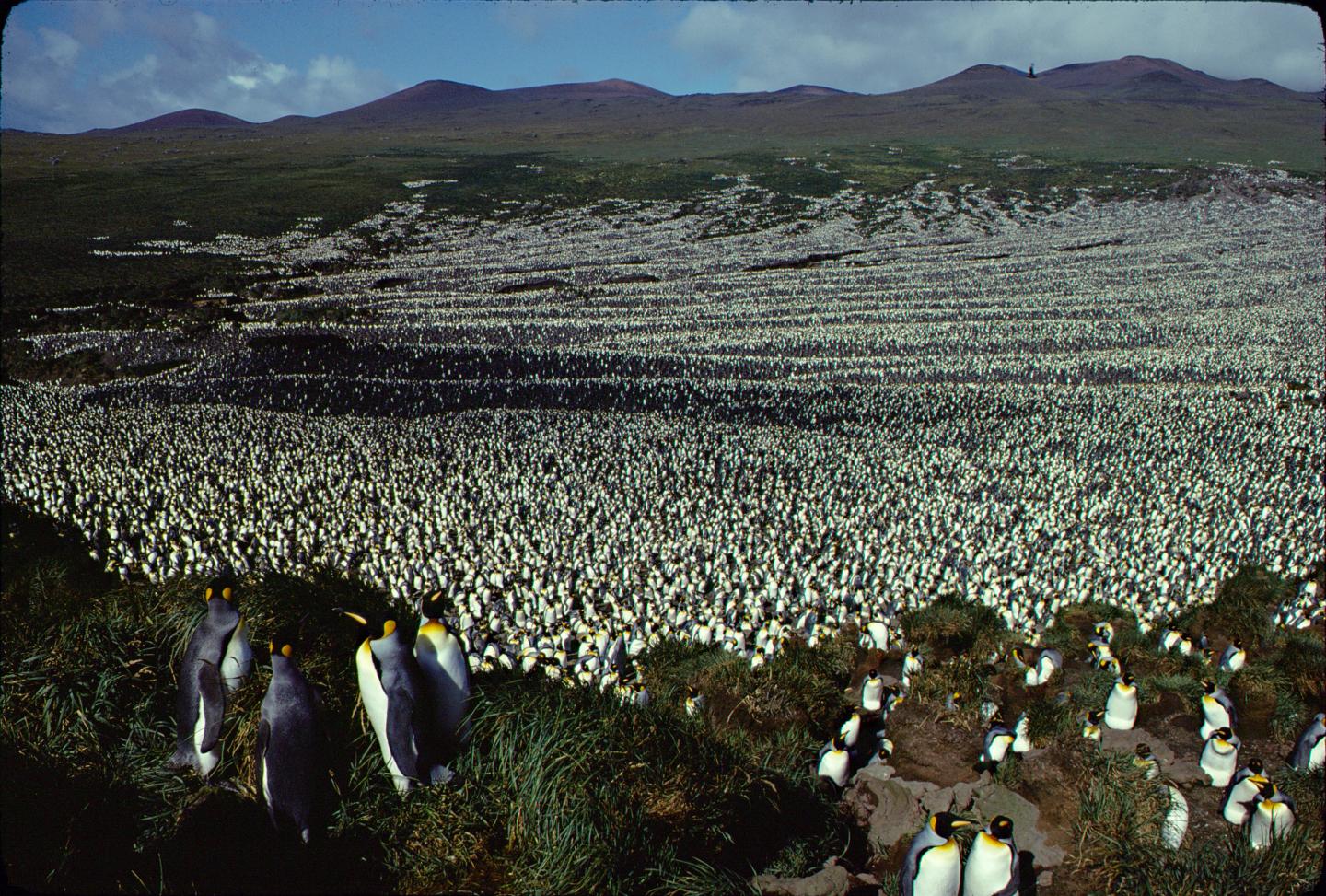
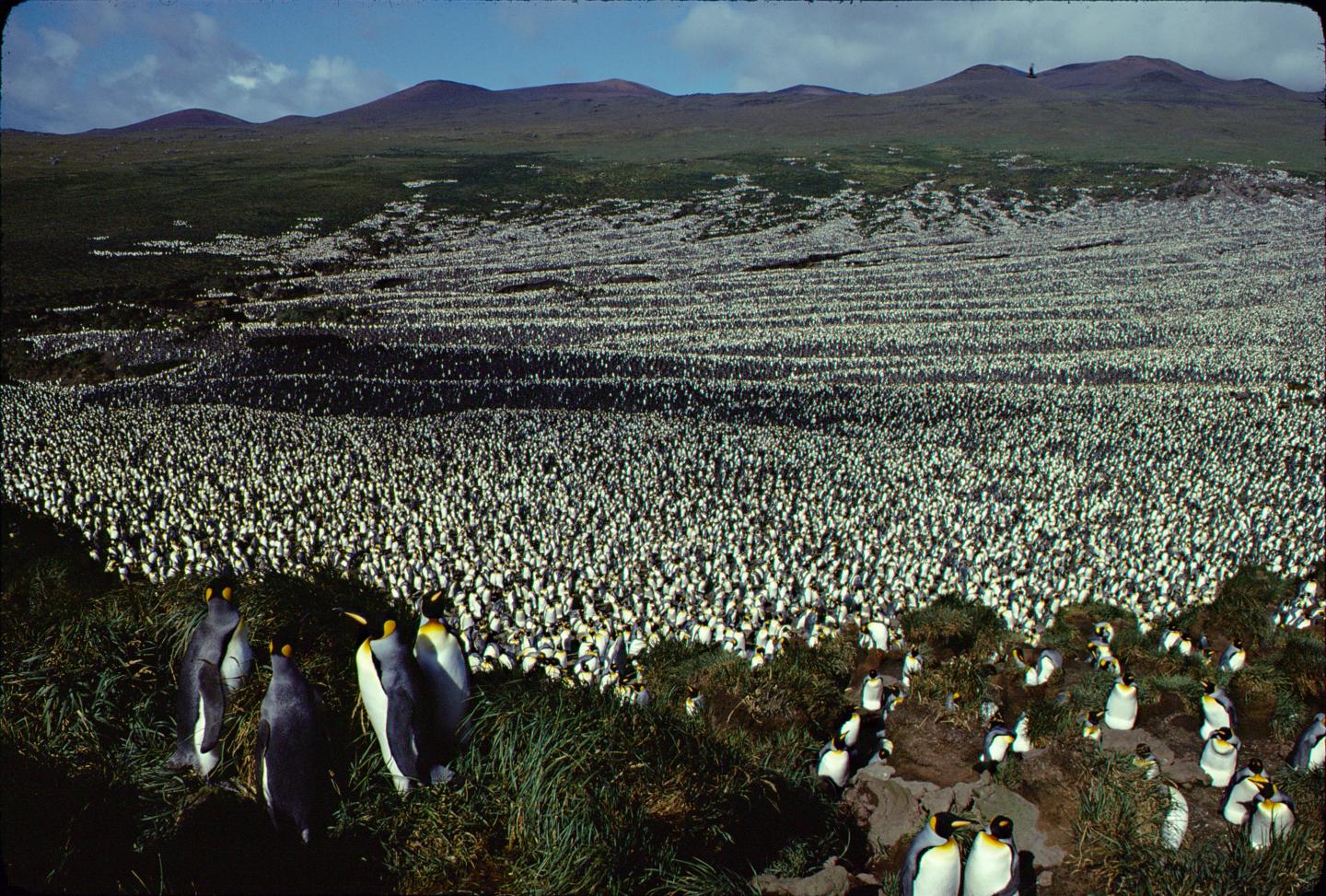
Known since the 1960s, the colony of king penguins (Aptenodytes patagonicus) on Île aux Cochons, in the southern Indian Ocean, had the distinction of being the world's biggest colony of king penguins and second biggest colony of all penguins. However, due to its isolation and inaccessibility, no new estimates of its size were made over the past decades.

The Chizé team used high-resolution satellite images to measure changes in the size of the colony since the island was last visited by a crew of scientists (1982). At the time, the colony included 500,000 breeding pairs and consisted of over two million penguins. To calculate the area occupied by the colony at different times between 1960 and the present, the researchers studied changes in its contours over the years. They found that the colony has shrunk, yielding its territory to encroaching vegetation. Photographs taken from a helicopter during the Antarctic Circumpolar Expedition confirm that the colony's penguin population has plummeted.

Data show that the decline began in the late 1990s, coinciding with a major climatic event in the Southern Ocean related to El Niño. This event temporarily affected the foraging capacities of another colony 100 km from Île aux Cochons, causing it to dwindle. The same process may be responsible for the fate of the Île aux Cochons colony. Its size may also subject it to density-dependent effects. That is, the larger the population, the fiercer the competition between individuals, slowing the growth of all members of the group. The repercussions of lack of food are thus amplified and can trigger an unprecedented rapid and drastic drop in numbers, especially following a climatic event like the one at the end of the 1990s.

Disease is another hypothesis entertained. Avian cholera is currently ravaging populations of seabirds on other islands in the Indian Ocean, like the albatross of Île Amsterdam and the penguins of Marion Island.

Still, none of these possibilities seems to offer a satisfactory explanation for a decline of the magnitude observed on Île aux Cochons. Field studies led by CNRS researchers, with support from the French Polar Institute (IPEV), and in close partnership with TAAF nature reserve staff, should be getting under way shortly to verify initial conclusions drawn from the satellite images.

###

Media Contact

Juliette Dunglas
[email protected]
01-449-64634

http://www.cnrs.fr

Original Source

http://www2.cnrs.fr/en/3143.htm http://dx.doi.org/10.1017/S0954102018000226

Share13Tweet8Share2ShareShareShare2

Related Posts

How Maternal Severe Illness During Pregnancy Can Impair Fetal Brain Development

How Maternal Severe Illness During Pregnancy Can Impair Fetal Brain Development

September 8, 2026
Iron Chelator Deferiprone Curbs Ferroptosis to Shield Liver from Parasite

Iron Chelator Deferiprone Curbs Ferroptosis to Shield Liver from Parasite

September 8, 2026

17(S)-HDHA counters UVB-induced skin aging via EGFR/MAPK pathway regulation

September 8, 2026

Glucosamine-coated carbon nanotubes show promise as antibacterial agents

September 8, 2026
Please login to join discussion

POPULAR NEWS

  • How Maternal Severe Illness During Pregnancy Can Impair Fetal Brain Development

    29 shares
    Share 12 Tweet 7
  • Comparing three radiotherapy plans for treating bilateral breast cancer

    29 shares
    Share 12 Tweet 7
  • New nomograms predict survival and recurrence after gastric cancer surgery

    29 shares
    Share 12 Tweet 7
  • Recyclable McR-TACs enable receptor-independent degradation of extracellular proteins

    29 shares
    Share 12 Tweet 7

About

We bring you the latest biotechnology news from best research centers and universities around the world. Check our website.

Follow us

Recent News

How Maternal Severe Illness During Pregnancy Can Impair Fetal Brain Development

Comparing three radiotherapy plans for treating bilateral breast cancer

New nomograms predict survival and recurrence after gastric cancer surgery

Subscribe to Blog via Email

Enter your email address to subscribe to this blog and receive notifications of new posts by email.

Join 85 other subscribers
  • Contact Us

Bioengineer.org © Copyright 2023 All Rights Reserved.

Welcome Back!

Login to your account below

Forgotten Password?

Retrieve your password

Please enter your username or email address to reset your password.

Log In
No Result
View All Result
  • Homepages
    • Home Page 1
    • Home Page 2
  • News
  • National
  • Business
  • Health
  • Lifestyle
  • Science

Bioengineer.org © Copyright 2023 All Rights Reserved.