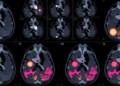
University of Colorado Cancer Center researchers recently completed the largest-ever study of thyroid cancer genetics, mining the data of 583 patient samples of advanced differentiated thyroid cancer and 196 anaplastic thyroid cancers. In addition to identification of specific genes that may drive these cancers and thus provide attractive targets for treatment, the researchers found that in several samples of advanced differentiated and anaplastic thyroid cancer (the most aggressive and dangerous forms of the disease), mechanisms meant to repair faulty DNA had been broken. These broken repair mechanisms led to a subset of thyroid cancers accumulating a high number of genetic alterations – and this "high mutation burden" is a marker recognized by the FDA to recommend treatment with anti-cancer immunotherapies.
"Anaplastic thyroid cancer is a particularly terrible cancer – people wonder what makes it so bad, and advanced thyroid cancer causes significant morbidity. I've had a very productive relationship with Foundation Medicine, primarily to study rare salivary gland cancers and I'm pleased that we've been able to extend our collaboration to the study of thyroid cancers to hopefully answer some of these questions," says Daniel Bowles, MD, clinical and translational investigator at CU Cancer Center and Head of Cancer Research at the Denver Veterans Administration Medical Center.
Bowles worked with first author Nikita Pozdeyev, MD, PhD, to analyze tumor samples submitted by oncologists from around the United States to Foundation Medicine for genetic analysis that could inform treatment strategies. Interestingly, the fact that clinicians who submitted these samples were specifically seeking possible treatment strategies meant that the majority of samples were from advanced cancers.
"Genetic analysis of early-stage thyroid cancers is most often not necessary – we successfully treat these tumors with surgery and radioactive iodine," Pozdeyev says. "But with distant metastases, genetic information becomes important for treatment. Because oncologists had sought this genetic information, our study is enriched for advanced cases."
The researchers point out that even large treatment centers are likely to only a few of these most dangerous, anaplastic thyroid cancers every year. Due to the current study's industry-academia collaboration, the researchers were able to explore 196 of these anaplastic thyroid cancers, "giving us sufficient analytical power to use machine learning and statistical analysis to make sense of the data," Pozdeyev says.
In addition to finding that some anaplastic thyroid cancers carried a high overall mutation burden that could make immunotherapy an attractive treatment option, the group found specific genetic changes driving anaplastic cancers, including amplifications of the genes KDR, KIT and PDGFRA. These genes encode a kind of on-off switch called "receptor tyrosine kinases" that many cancer cells use to speed their growth and proliferation. In this case, these receptor tyrosine kinases happen to be targeted by the drug lenvatinib, which earned FDA approval for use in kidney cancer. In collaboration with Drs. Bryan Haugen and Rebecca Schweppe, the researchers treated a cohort of thyroid cancer cell lines with lenvatinib, finding that it was the cell line with amplification of KDR, KIT and PDGFRA that was especially sensitive to the drug, hinting that treatment with lenvatinib may be an attractive strategy against a subset of anaplastic thyroid cancers.
"As a clinician, I learn from this study that every patient with advanced thyroid cancer that we consider for systemic therapy should be genotyped – knowledge of genetic background may affect how we treat that patient," Pozdeyev says. "There are many drugs targeting many genetic changes that are approved for other cancers, which we would not usually think to use in thyroid cancer. Some of the findings in this paper will potentially change that."
###
Results are published online ahead of print in the journal Clinical Cancer Research.
Media Contact
Garth Sundem
[email protected]
@CUAnschutz
http://www.ucdenver.edu
http://www.coloradocancerblogs.org/largest-ever-study-of-thyroid-cancer-genetics-finds-new-mutations-suggests-immunotherapy/
Related Journal Article
http://dx.doi.org/10.1158/1078-0432.CCR-18-0373