• HOME
  • NEWS
  • EXPLORE
    • CAREER
      • Companies
      • Jobs
    • EVENTS
    • iGEM
      • News
      • Team
    • PHOTOS
    • VIDEO
    • WIKI
  • BLOG
  • COMMUNITY
    • FACEBOOK
    • INSTAGRAM
    • TWITTER
Thursday, June 25, 2026
BIOENGINEER.ORG
No Result
View All Result
  • Login
  • HOME
  • NEWS
  • EXPLORE
    • CAREER
      • Companies
      • Jobs
        • Lecturer
        • PhD Studentship
        • Postdoc
        • Research Assistant
    • EVENTS
    • iGEM
      • News
      • Team
    • PHOTOS
    • VIDEO
    • WIKI
  • BLOG
  • COMMUNITY
    • FACEBOOK
    • INSTAGRAM
    • TWITTER
  • HOME
  • NEWS
  • EXPLORE
    • CAREER
      • Companies
      • Jobs
        • Lecturer
        • PhD Studentship
        • Postdoc
        • Research Assistant
    • EVENTS
    • iGEM
      • News
      • Team
    • PHOTOS
    • VIDEO
    • WIKI
  • BLOG
  • COMMUNITY
    • FACEBOOK
    • INSTAGRAM
    • TWITTER
No Result
View All Result
Bioengineer.org
No Result
View All Result
Home NEWS Science News Chemistry

Large scale feasts at ancient capital of Ulster drew crowds from across Iron Age Ireland

Bioengineer by Bioengineer
December 24, 2019
in Chemistry
Reading Time: 2 mins read
0
IMAGE
Share on FacebookShare on TwitterShare on LinkedinShare on RedditShare on Telegram

Study explores scale of human mobility through analysis of animal bones
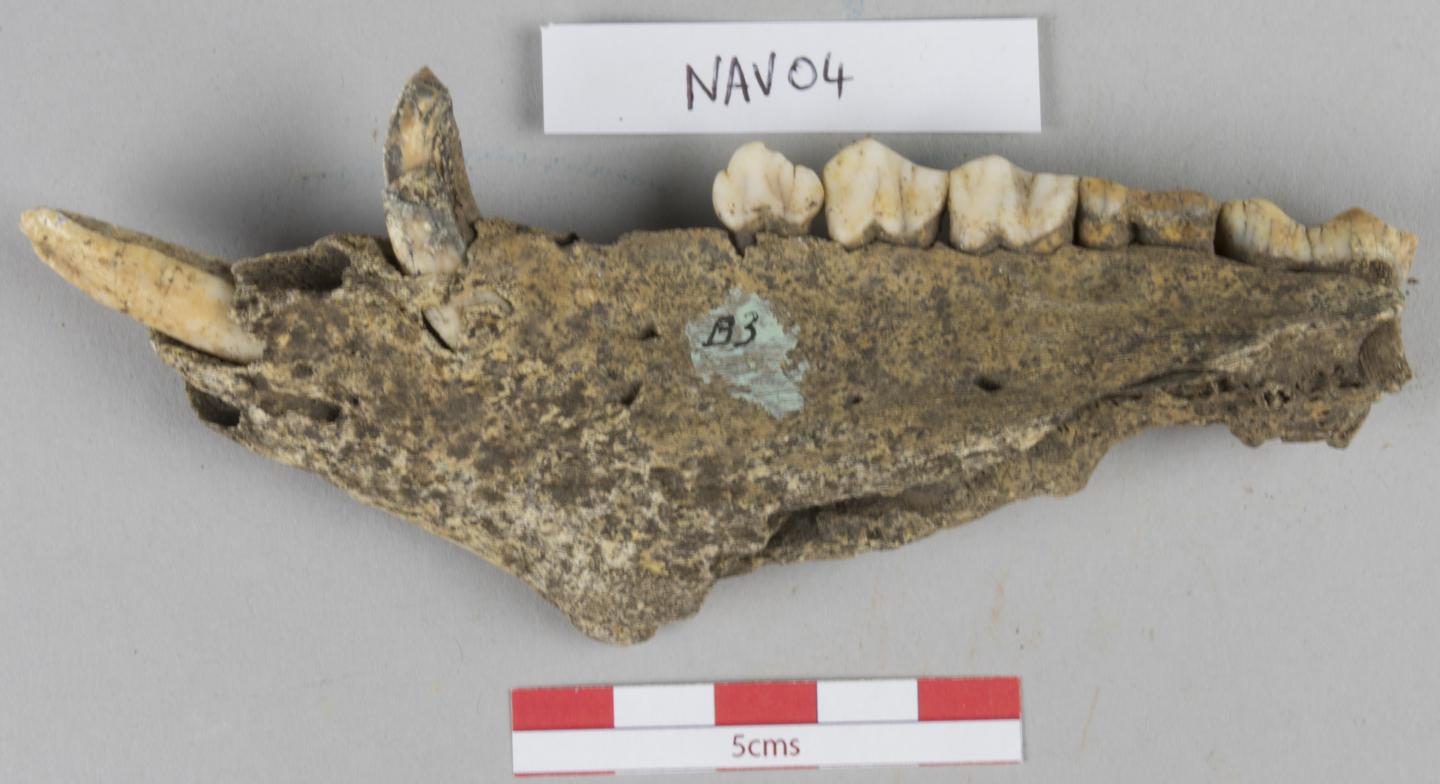
IMAGE

Credit: Dr Richard Madgwick

People transported animals over huge distances for mass gatherings at one of Ireland’s most iconic archaeological sites, research concludes.

Dr Richard Madgwick of Cardiff University led the study, which analysed the bones of 35 animals excavated from Navan Fort, the legendary capital of Ulster. Researchers from Queen’s University Belfast, Memorial University Newfoundland and the British Geological Survey were also involved in the research.

The site had long been considered a centre for ritual gatherings, as excavations found a huge 40m diameter building and a barbary ape cranium, likely from at least as far as Iberia. Results suggest the pigs, cattle and sheep were brought from across Ireland, perhaps being reared as far afield as Galway, Donegal, Down, Tyrone and Antrim. Evidence suggests some were brought over more than 100 miles.

Dr Madgwick, based in Cardiff University’s School of History, Archaeology and Religion, said: “Our results provide clear evidence that communities in Iron Age Ireland were very mobile and that livestock were also moved over greater distances than was previously thought.

“The high proportion of pig remains found there is very rare for this period. This suggests that Navan Fort was a feasting centre, as pigs are well-suited as feasting animals and in early Irish literature pork is the preferred food of the feast.

“It is clear that Navan Fort had a vast catchment and that the influence of the site was far-reaching.”

Researchers used multi-isotope analysis on samples of tooth enamel to unlock the origins of each animal. Food and water have chemical compositions linked to the geographical areas where they are sourced. When animals eat and drink, these chemical signals are archived in their teeth, allowing scientists to investigate the location where they were raised.

Co-author of the research, Dr Finbar McCormick, of Queen’s University, Belfast, said: “In the absence of human remains, multi-isotope analysis of animals found at Navan Fort provides us with the best indication of human movement at that time.

“Feasting, almost invariably associated with sacrifice, was a social necessity of early societies where the slaughter of a large domesticate necessitated the consumption of a large amount of meat in a short period of time.”

Earlier this year, Dr Madgwick’s research of 131 pigs found at sites near Stonehenge revealed animals came from as far away as Scotland and numerous other locations across the British Isles. Before this, the origins of people who visited this area and the extent of the population’s movements at the time had been long-standing enigmas in British prehistory.

Dr Madgwick added: “Transporting animals across the country would have involved a great deal of time and effort so our findings demonstrate the important role they played in society. Food was clearly a central part of people’s exchanges and traditions.”

###

The full paper will be available here: http://www.nature.com/articles/s41598-019-55671-0

Media Contact
Dr Richard Madgwick
[email protected]
07-754-058-841

Related Journal Article

http://dx.doi.org/10.1038/s41598-019-55671-0

Tags: ArchaeologyBiochemistryOld World
Share12Tweet8Share2ShareShareShare2

Related Posts

AI and Physics Collaborate to Design Advanced Hydrogen Storage Materials

June 25, 2026

International Team Including Dresden Scientists Develops Novel Designer Proteins for Advanced Study of Living Tissue

June 25, 2026

New Study Uncovers Key Factors Driving Water Chemistry in Nanoscale Environments

June 25, 2026

Plasma Technology Extends Catalyst Lifespan in Hydrogen Production

June 24, 2026
Please login to join discussion

POPULAR NEWS

  • Saying Goodbye to PGY-6: Pediatric Fellowship Realities

    103 shares
    Share 41 Tweet 26
  • Multi-Hospital Study Reveals Long Covid Burden Is Twice as High as Current Estimates

    92 shares
    Share 36 Tweet 23
  • Detection of EDCs in Breast Milk and Infant Urine Up to Six Months Highlights Early Exposure Risks

    77 shares
    Share 31 Tweet 19
  • New Drug Candidate Developed at McMaster Shows Potential for Treating Brain Cancer

    58 shares
    Share 23 Tweet 15

About

We bring you the latest biotechnology news from best research centers and universities around the world. Check our website.

Follow us

Recent News

Tracking Lanthanide-Labeled Microplastics in Plants

POSTECH Researchers Slash Cost of Reconstituted Cell-Free Systems by 95%

AI and Physics Collaborate to Design Advanced Hydrogen Storage Materials

Subscribe to Blog via Email

Success! An email was just sent to confirm your subscription. Please find the email now and click 'Confirm' to start subscribing.

Join 82 other subscribers
  • Contact Us

Bioengineer.org © Copyright 2023 All Rights Reserved.

Welcome Back!

Login to your account below

Forgotten Password?

Retrieve your password

Please enter your username or email address to reset your password.

Log In
No Result
View All Result
  • Homepages
    • Home Page 1
    • Home Page 2
  • News
  • National
  • Business
  • Health
  • Lifestyle
  • Science

Bioengineer.org © Copyright 2023 All Rights Reserved.