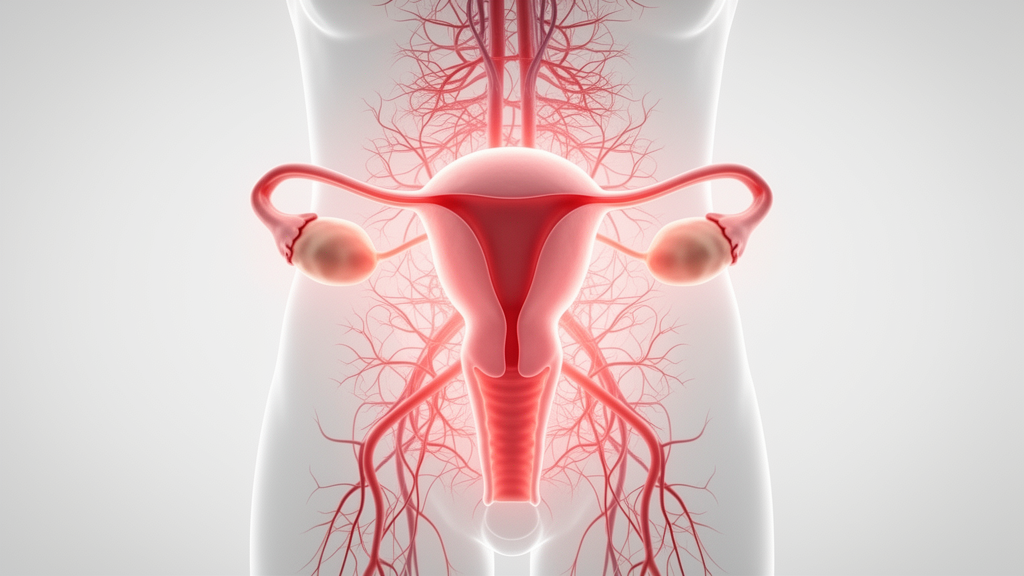
A multinational observational study involving nearly four million women across seven countries has provided the most comprehensive real-world assessment to date of heavy menstrual bleeding and its associated health conditions. Published in eClinicalMedicine, the research utilized the European Health Data and Evidence Network (EHDEN) to analyze routine clinical records from nine distinct data sources spanning Germany, Hungary, the Netherlands, Norway, Spain, the United Kingdom, and the United States. The primary objective was to estimate the incidence rate of heavy menstrual bleeding and characterize the prevalence of co-occurring conditions in clinical settings, addressing a significant gap in epidemiological data where previous studies were often limited in scope or heterogeneous in design.
The study defined heavy menstrual bleeding as excessive menstrual blood loss that interferes with a woman’s physical, emotional, social, and material quality of life. To capture the full reproductive lifespan, the researchers included women aged 11 to 55 years. The index date for each participant was defined as the first recorded diagnosis of heavy menstrual bleeding in their respective database. Women were excluded if they had undergone a hysterectomy or bilateral oophorectomy, experienced menopause, or had a diagnosis of uterine or ovarian cancer prior to the index date. This rigorous inclusion and exclusion criteria ensured that the cohort represented women actively at risk for menstrual bleeding complications during their reproductive years.
The data sources varied significantly in their coverage of healthcare settings, which was a critical factor in the study’s design. Some sources, such as the UK Clinical Practice Research Datalink and Dutch Integrated Primary Care Information, covered primary care only. Others, like the Spanish Hospital del Mar system and Hungarian Semmelweis University Clinical Data, focused exclusively on hospital care. The remaining sources, including two US claims databases and the Norwegian Linked Health Registry, covered all three healthcare settings: primary care, specialist non-hospital care, and hospital care. This variation allowed the researchers to examine how the detection and characterization of heavy menstrual bleeding differ across different levels of the healthcare system.
The overall incidence rate of heavy menstrual bleeding varied markedly depending on the healthcare setting covered by the data source. The highest incidence rates were observed in data sources that included all healthcare settings, with the Clinformatics database reporting a rate of 25.9 per 1,000 person-years. In contrast, hospital-only data sources reported the lowest rates, with the Semmelweis University Clinical Data source recording an incidence of 0.7 per 1,000 person-years.
When stratified by age, the incidence rates were highest among women aged 30 to 44 years across most data sources. In the Clinformatics database, the incidence for this age group reached 32.7 per 1,000 person-years. The youngest age group, 11 to 29 years, showed the lowest incidence rates, ranging from 0.3 to 18.5 per 1,000 person-years depending on the data source. The oldest group, 45 to 55 years, had incidence rates that were generally lower than the 30 to 44 group but higher than the youngest group.
The study also examined the prevalence of co-occurring conditions in the 365 days prior to the index date. Uterine leiomyoma, commonly known as fibroids, was the most prevalent diagnosed condition considered likely to underlie heavy menstrual bleeding. Its prevalence ranged from 0.9% in the CPRD GOLD primary care source to 10.5% in the IMASIS hospital source. Endometrial polyps and ovulatory dysfunction were also identified as common underlying conditions, though their prevalence varied significantly between primary care and hospital settings. Conditions such as coagulopathy, endometrial hyperplasia, and adenomyosis were uncommon across all data sources, with adenomyosis being rarely captured, likely due to the recent introduction of specific diagnostic codes and the reliance on imaging for confirmation.
Pain, anaemia, and dysmenorrhoea were among the most common co-occurring conditions regardless of the healthcare setting. Pain, defined both generally and as gynaecological pain, was the most prevalent condition in most data sources, with rates reaching 20.9% in the Clinformatics database. Anaemia, including iron deficiency anaemia, was also frequently recorded, with prevalence ranging from 3.4% to 11.5% depending on the source. Dysmenorrhoea was most prevalent in the US and German data sources but was rare in the hospital-only sources. These findings highlight the significant burden of symptoms that accompany heavy menstrual bleeding and the need for comprehensive clinical assessment.
Following the index date, the prevalence of several co-occurring conditions changed, potentially reflecting changes in clinical management. The prevalence of pain, anaemia, and dysmenorrhoea decreased substantially in the 365 days after the diagnosis of heavy menstrual bleeding. This decrease may indicate that treatment for heavy menstrual bleeding can alleviate these associated symptoms. Conversely, the prevalence of endometrial polyps increased in the US data sources, and endometriosis prevalence rose in several sources. These post-diagnosis changes suggest that clinicians may be conducting further investigations to identify underlying causes after a formal diagnosis of heavy menstrual bleeding is made.
The study emphasized the importance of considering data source characteristics when interpreting results from real-world data. Differences in healthcare coverage, diagnostic coding practices, and patient populations contributed to the observed variability in incidence rates and condition prevalence. The researchers noted that lower prevalences of certain underlying conditions, such as adenomyosis and endometrial hyperplasia, compared to specialist clinic studies, may reflect incomplete diagnostic coding or the fact that routine data captures a broader, less selected population. This underscores the need for high-quality, detailed diagnostic coding to accurately characterize heavy menstrual bleeding in real-world settings.
Limitations of the study include the retrospective observational design, which relies on existing clinical records and may not capture the full extent of the condition. The index event represents the first recorded code in the database, which may not align with the actual first occurrence of symptoms or the first clinical consultation. Additionally, data on race and ethnicity were largely unavailable, preventing analysis of potential disparities in diagnosis and management. The use of age-based identification rather than confirmed reproductive status may also dilute the population at risk, as some women in the denominator may not have been biologically at risk throughout the observation period.
In conclusion, this large-scale multinational study provides valuable insights into the incidence and characterization of heavy menstrual bleeding in real-world clinical settings. The findings highlight the significant variation in diagnosis and management across different healthcare systems and the need for improved data capture and diagnostic coding. By identifying the most common co-occurring conditions and their changes following diagnosis, the study offers a foundation for future research into the treatment and management of heavy menstrual bleeding and its associated health impacts.
The study period spanned from January 1, 2000, or the earliest available date thereafter, to the end of data availability, which ranged from 2021 to 2024 across the nine data sources. To ensure robust baseline assessment, women were required to have continuous observation for 365 days prior to their index date. The median age at the first diagnosis of heavy menstrual bleeding was relatively consistent across the different data sources, ranging from 38 to 42 years. However, the duration of observation varied significantly; for instance, the Spanish IMASIS source had the longest pre-index observation time at 11.9 years, while the US Clinformatics source had the shortest at 2.5 years. Post-index observation times also differed, with the Norwegian registry providing the longest follow-up at 6.8 years and the German IQVIA source the shortest at 1.0 year. These variations in data availability and observation windows are critical when comparing results across the different national and healthcare-specific cohorts.
Annual incidence trends revealed distinct patterns depending on the healthcare setting and age group. The two US data sources covering all healthcare settings showed a marked increase in incidence rates between 2014 and 2016. In contrast, primary care-only data sources generally remained stable, with the exception of a slightly decreasing trend in the CPRD GOLD source. The hospital-only IMASIS source reported a notable increase in incidence starting in 2017. When stratified by age, the youngest group (11–29 years) showed an increasing annual incidence trend across most data sources, although this was not observed in the small Hungarian sample or the German source due to insufficient data. Conversely, the oldest age group (45–55 years) experienced a slight decrease in annual incidence in primary care-only settings.
The study utilized the PALM-COEIN classification system to categorize diagnosed conditions likely to underlie heavy menstrual bleeding, a framework originally developed for abnormal uterine bleeding more broadly. The researchers noted that some categories, such as iatrogenic bleeding associated with hormonal medication, are less relevant to chronic heavy menstrual bleeding and were therefore not evaluated. The low prevalence of certain conditions, such as adenomyosis and endometrial hyperplasia, compared to specialist clinic studies, may reflect the fact that routine data captures a broader, less selected population. Additionally, the relatively recent introduction of specific diagnostic codes for adenomyosis in 2022 and the reliance on imaging or surgical confirmation for diagnosis contribute to under-capture in routine records. This highlights the challenge of using administrative data to assess conditions that require specialized diagnostic workups not uniformly available across all healthcare settings.
Statistical analysis was conducted using the Observational Health Data Sciences and Informatics tools, specifically the DARWIN EU IncidencePrevalence R package for incidence rate calculations. Confidence intervals for incidence rates were calculated using exact methods, though potential overdispersion was not formally assessed, meaning uncertainty around estimates may be underestimated. The study also acknowledged that age-based identification rather than confirmed reproductive status could dilute the population at risk, as some women in the denominator may not have been biologically at risk throughout the observation period. Furthermore, the index event represents the first recorded code in the database, which may not align with the actual first occurrence of symptoms or the first clinical consultation. These methodological considerations are essential for interpreting the observed incidence rates and prevalence estimates accurately.
Subject of Research: Incidence of heavy menstrual bleeding and prevalence of co-occurring conditions from seven countries across Europe and North America: an EHDEN real-world data study
Article Title: Incidence of heavy menstrual bleeding and prevalence of co-occurring conditions from seven countries across Europe and North America: an EHDEN real-world data study
Article References: Pineda-Moncusi, M., Bagyura, Z., Dinkel-Keuthage, C., Gemzell-Danielsson, K., Hayati, S., Heikinheimo, O., Herrera, R., Imthurn, B., Khalid, S., Kiss, L. Z., Leis, A., Manlik, K., Mayer, M.-A., Möller, C., Ramírez Anguita, J. M., Trinh, N. T. H., Saydam, S. S., Schiffer Acar, M., Nordeng, H., … Candore, G. (2026). Incidence of heavy menstrual bleeding and prevalence of co-occurring conditions from seven countries across Europe and North America: an EHDEN real-world data study. eClinicalMedicine, 101, Article 104297. https://doi.org/10.1016/j.eclinm.2026.104297
Image Credits: AI Generated
DOI: 10.1016/j.eclinm.2026.104297
Keywords: Incidence, heavy, menstrual, bleeding, prevalence, co-occurring, conditions, seven, countries, across, Europe, North
News Source: Ophelia Keating. (November 8, 2026). Large European Study Maps Heavy Menstrual Bleeding Incidence. Scienmag.