• HOME
  • NEWS
  • EXPLORE
    • CAREER
      • Companies
      • Jobs
    • EVENTS
    • iGEM
      • News
      • Team
    • PHOTOS
    • VIDEO
    • WIKI
  • BLOG
  • COMMUNITY
    • FACEBOOK
    • INSTAGRAM
    • TWITTER
Saturday, November 14, 2026
BIOENGINEER.ORG
No Result
View All Result
  • Login
  • HOME
  • NEWS
  • EXPLORE
    • CAREER
      • Companies
      • Jobs
        • Lecturer
        • PhD Studentship
        • Postdoc
        • Research Assistant
    • EVENTS
    • iGEM
      • News
      • Team
    • PHOTOS
    • VIDEO
    • WIKI
  • BLOG
  • COMMUNITY
    • FACEBOOK
    • INSTAGRAM
    • TWITTER
No Result
View All Result
Bioengineer.org
No Result
View All Result
Home NEWS Science News Health

Large Bladder Stone Found in Recurrent Inguinal Hernia Following Prostatectomy

by
November 9, 2026
in Health
Reading Time: 2 mins read
0
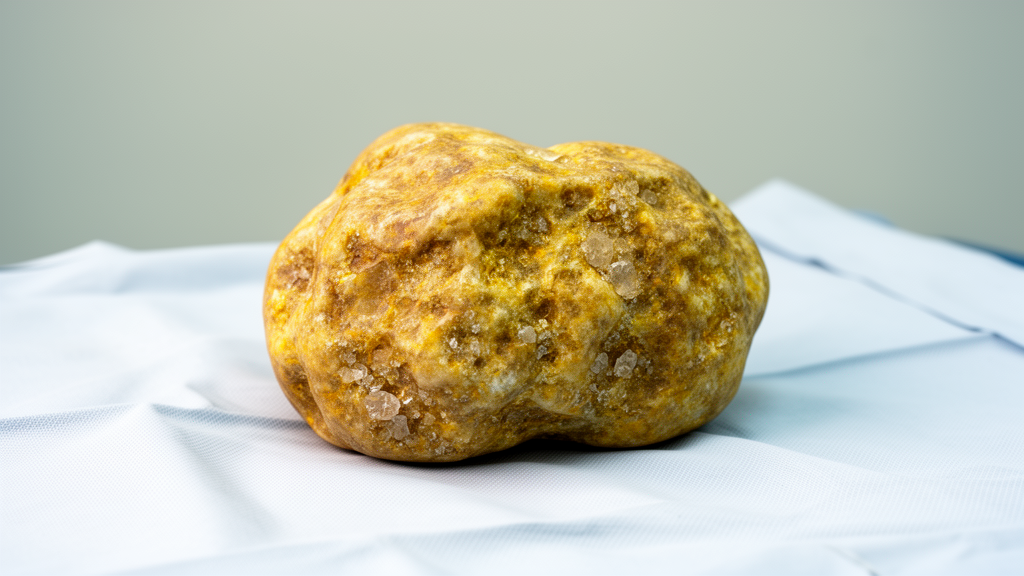
Large Bladder Stone Found in Recurrent Inguinal Hernia Following Prostatectomy

Large Bladder Stone Found in Recurrent Inguinal Hernia Following Prostatectomy

Share on FacebookShare on TwitterShare on LinkedinShare on RedditShare on Telegram

A 72-year-old male patient presented with a ten-year history of a right groin mass accompanied by lower urinary tract symptoms, including urgency, frequency, and dysuria, along with several months of hematuria. According to a case report published in BMC Surgery, subsequent evaluations revealed that the patient had developed a recurrent inguinal hernia that involved a segment of the urinary bladder housing a large vesical calculus.

The patient’s clinical background included two previous inguinal hernia repairs and an open transvesical prostatectomy performed 18 months earlier to treat benign prostatic hyperplasia. A vesical stone had been detected preoperatively via ultrasonography prior to that procedure; however, surgeons could not locate the calculus during the operation, leading them to stop the extraction attempt at that time.

Because the patient experienced persistent complaints and groin pain, clinicians initiated further diagnostic investigations. Both ultrasonography and computed tomography imaging revealed a recurrent inguinal hernia containing a bladder component and an enclosed calculus measuring 3 by 3 centimeters. Although recommended for diagnostic evaluation, preoperative cystoscopy was not performed because the patient refused the intervention.

Surgical exploration of the groin confirmed an extraperitoneal direct inguinal hernia containing the bladder and the stone within the herniated portion. Clinicians performed a cystolithotomy to extract the calculus, which measured 3.2 by 3.0 centimeters and consisted primarily of calcium oxalate monohydrate. Following extraction, the cystotomy was closed in two layers, and the hernia was repaired using the Shouldice method reinforced with additional polypropylene mesh.

The patient experienced an uneventful postoperative recovery and remained symptom-free at a one-year follow-up examination, exhibiting no clinical evidence of hernia recurrence and no radiological remnants of the calculus on plain abdominal radiography.

According to the case report, a vesical hernia traversing the inguinal canal represents an uncommon variant of a sliding hernia associated with bladder outlet obstruction in older men. The authors observed that vesical calculi situated within a herniated segment of the bladder are extremely rare and often missed during clinical assessment.

The authors emphasized that if a known vesical stone cannot be located during an operative intervention, further investigation is required because of its potential presence inside a herniated bladder segment.

Subject of Research: Recurrent inguinal bladder hernia containing a vesical calculus

Article Title: Recurrent inguinal bladder hernia containing a large vesical calculus after unsuccessful stone retrieval during transvesical prostatectomy: a case report

Article References: Bin-Sahel, O. H. A., Bajubair, E. M. O., Sadaqat, A., Javaid, M. H., & Batyour, A. B. M. (2026). Recurrent inguinal bladder hernia containing a large vesical calculus after unsuccessful stone retrieval during transvesical prostatectomy: a case report. BMC Surgery. https://doi.org/10.1186/s12893-026-04334-9

Image Credits: AI Generated

DOI: 10.1186/s12893-026-04334-9

Keywords: inguinal hernia, bladder hernia, vesical calculus, cystolithotomy, prostatectomy, urology, Shouldice repair, computed tomography, Recurrent, inguinal, bladder, hernia

News Source: Ophelia Keating. (November 9, 2026). Large Bladder Stone Found in Recurrent Inguinal Hernia Following Prostatectomy. Scienmag.


Tags: bladderbladder herniacomputed tomographycystolithotomyherniainguinalinguinal herniaprostatectomyRecurrentShouldice repairurologyvesical calculus
Share12Tweet7Share2ShareShareShare1

Related Posts

Smart Cyber Operating Theater Testbed Integrates Surgical Devices Using OPeLiNK Architecture

Smart Cyber Operating Theater Testbed Integrates Surgical Devices Using OPeLiNK Architecture

November 14, 2026
BUN to Creatinine Ratio Shows Nonlinear Mortality Risk in Older Atrial Fibrillation

BUN to Creatinine Ratio Shows Nonlinear Mortality Risk in Older Atrial Fibrillation

November 14, 2026

Staged Fixation Restores Joint Function in Complex Floating Hip Case Report

November 14, 2026

Machine Learning Model Predicts In-Hospital Mortality in Severe Fever with Thrombocytopenia Syndrome

November 14, 2026

POPULAR NEWS

  • Disordered Protein Termini Suppress Cotranslational Degradation in Yeast and Human Cells

    Disordered Protein Termini Suppress Cotranslational Degradation in Yeast and Human Cells

    29 shares
    Share 12 Tweet 7
  • Open-Source Python Library pt13528 Verifies ISO Proficiency Statistics and Exposes Discrepancies

    29 shares
    Share 12 Tweet 7
  • Machine Learning Model Predicts In-Hospital Mortality in Severe Fever with Thrombocytopenia Syndrome

    29 shares
    Share 12 Tweet 7
  • Machine Learning Accurately Predicts Chronic Ankle Reinjury Using Sex-Adjusted Thresholds

    29 shares
    Share 12 Tweet 7

About

We bring you the latest biotechnology news from best research centers and universities around the world. Check our website.

Follow us

Recent News

Optimized Lightweight Face Recognition Network Improves Performance on Embedded AI Platforms

Smart Cyber Operating Theater Testbed Integrates Surgical Devices Using OPeLiNK Architecture

BUN to Creatinine Ratio Shows Nonlinear Mortality Risk in Older Atrial Fibrillation

Subscribe to Blog via Email

Enter your email address to subscribe to this blog and receive notifications of new posts by email.

Join 87 other subscribers
  • Contact Us

Bioengineer.org © Copyright 2023 All Rights Reserved.

Welcome Back!

Login to your account below

Forgotten Password?

Retrieve your password

Please enter your username or email address to reset your password.

Log In
No Result
View All Result
  • Homepages
    • Home Page 1
    • Home Page 2
  • News
  • National
  • Business
  • Health
  • Lifestyle
  • Science

Bioengineer.org © Copyright 2023 All Rights Reserved.