A systematic review examining the biotransformation of soil pollutants reveals that terrestrial gastropods, most notably the giant land snail Achatina fulica, can mechanically fragment and partially chemically alter polystyrene microplastics within their digestive tracts. While previous bioremediation investigations largely focused on aquatic fauna, soil-dwelling insects, or bacterial communities, this synthesized body of literature demonstrates that land snails interact directly with synthetic polymers contaminating surface soils and agricultural substrates. Through physical grinding by specialized mouthparts and subsequent biochemical processing in the gut, these terrestrial invertebrates break down expanded polystyrene foam into minute particles while initiating oxidative alterations along the synthetic polymer chains. Rather than leaving the ingested plastic inert, the snails’ physiological processes generate smaller, structurally modified fragments exhibiting altered functional chemistry. Although the organisms do not achieve complete mineralization into carbon dioxide and water, their biological activity significantly alters the physical properties, size distributions, and microbial accessibility of persistent plastics across terrestrial habitats.
Conducted under the formal Preferred Reporting Items for Systematic Reviews and Meta-Analyses guidelines, the underlying investigation synthesized peer-reviewed literature and academic theses published between 2000 and 2025 across Scopus, Web of Science, ScienceDirect, PubMed, and Google Scholar. The systematic search employed targeted descriptors focusing on microplastics, polystyrene degradation, biotransformation, terrestrial gastropods, snails, Achatina fulica, environmental fate, and soil microplastics to capture all relevant experimental findings. Initial database queries yielded 118 publications, which were refined to 89 distinct records after removing duplicate entries during the preliminary identification phase. Title and abstract evaluations subsequently narrowed the pool to 34 candidate articles deemed eligible for comprehensive full-text assessment. Ultimately, the authors selected 22 studies meeting rigorous inclusion criteria that required experimental, microbiological, enzymatic, or ecological evidence of plastic degradation, fragmentation, or transformation by soil organisms. Within this final evidentiary cohort, 12 studies specifically investigated terrestrial gastropod interactions with microplastics, while the remaining 10 supported comparative analyses against insects, earthworms, and broader ecological pathways.
The imperative for evaluating gastropod-mediated plastic transformation stems from mounting environmental burdens, as global annual plastic manufacturing reached approximately 400 million metric tons by 2024. Among these synthetic materials, polystyrene exceeds 20 million tons of annual output, with its expanded foam variety representing a ubiquitous pollutant across aquatic and terrestrial boundaries. Standard regulatory frameworks distinguish microplastics according to rigorous dimensional parameters, with the U.S. National Oceanic and Atmospheric Administration defining them as synthetic polymer particles measuring less than 5 millimeters in diameter, whereas the International Organization for Standardization classifies microplastics between 1 micrometer and 5 millimeters, reserving the term nanoplastics for particles below 1 micrometer. In terrestrial settings, agricultural soils represent immense environmental sinks, with European agricultural lands alone receiving an estimated 63,000 to 430,000 tonnes of microplastics annually through sewage sludge amendments. Compounding this influx, agricultural practices utilizing plastic mulching films composed of polyethylene and polyvinyl chloride, contaminated composts, pesticide applications, atmospheric dust deposition, tire wear particles, and urban runoff continuously enrich topsoils with synthetic residues.
Within contaminated soils, microplastics disrupt fundamental ecological functions by infiltrating soil aggregates, altering soil porosity, water holding capacity, and permeability, while accelerating evaporation, reducing mechanical stability, and accelerating pollutant leaching. Synthetic particles also impair fertility by interfering with soil enzyme kinetics and disturbing the biogeochemical cycling of carbon, nitrogen, and phosphorus. Prior investigations into macroinvertebrate-mediated soil dynamics confirmed that earthworms, such as Lumbricus terrestris, actively transport polyethylene beads ranging from 710 to 2800 micrometers through soil profiles, incorporating particles into burrow linings and middens. However, excessive exposure above 25 percent weight-by-weight induces sublethal weight loss and mortality in earthworms, and their processing of biodegradable polyesters yields limited depolymerization. Conversely, certain insect larvae, including Tenebrio molitor, Tenebrio obscurus, and Zophobas atratus, effectively digest expanded polystyrene, depolymerizing the material into carbon dioxide and water through obligate gut microbial symbionts such as Enterobacter asburiae and Bacillus species, demonstrating distinct biological mechanisms that contrast sharply with gastropod processing.
Terrestrial snails represent an ecologically pervasive faunal group uniquely positioned to interact with microplastic debris distributed across agricultural topsoils and urban ground surfaces. Furthermore, land snail species such as Helix aperta and Helix pomatia exhibit pronounced burrowing behaviors, excavating several centimeters into soil horizons during seasonal estivation in hot periods and hibernation during colder months. These gastropods depend heavily on ambient environmental conditions, maintaining optimal physiological activity between 18 and 20 degrees Celsius alongside 70 to 80 percent relative humidity, while surviving unfavorable environmental stress by secreting an epiphragm, a protective mucus-calcareous barrier that covers the shell aperture to conserve essential moisture and thermal stability. Because of their soil-dwelling habits and feeding behaviors, terrestrial snails inevitably ingest deposited plastics, creating substantial contact interfaces that influence the movement and fate of microplastics.
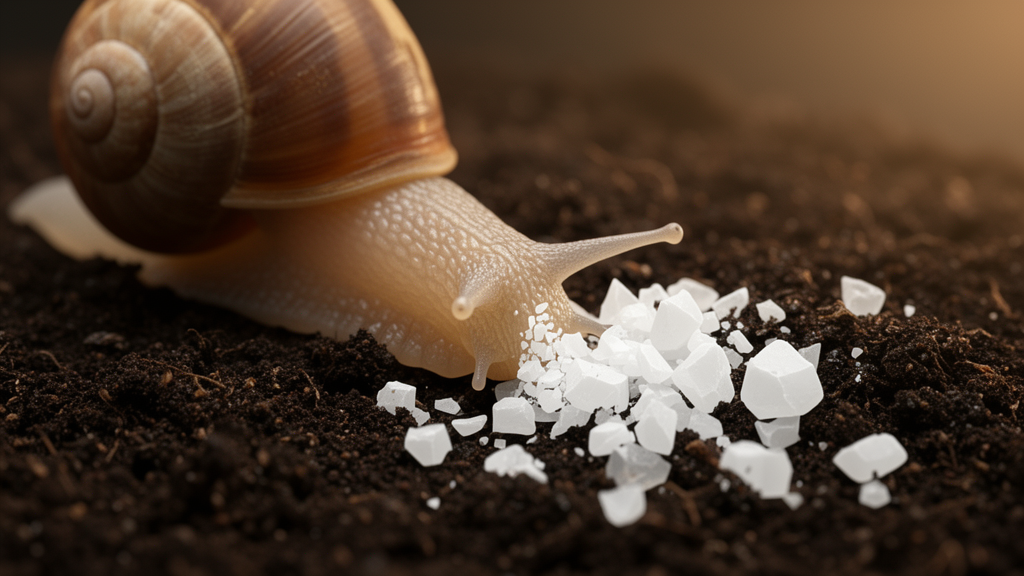
Laboratory evaluations focused on the giant land snail Achatina fulica reveal distinct mechanical processing dynamics when the animals are exposed to expanded polystyrene foam. Utilizing its microscopic radular teeth, Achatina fulica aggressively abrasively scrapes the synthetic foam during feeding, producing visible surface indentations and reducing macroplastic blocks into micro- and nanoplastic fragments. Quantitative analysis of the particulates expelled in snail feces established a measurable mass loss of 30.7 percent, demonstrating substantial physical and structural processing of the ingested material. The mechanical grinding actions yield excreted microplastic particles with a recorded mean diameter of 1.34 millimeters, which exhibit irregular shapes and enhanced surface roughness compared to pristine polymer matrices. Complementary qualitative gel permeation chromatography performed on the recovered fecal residues showed an unexpected increase in overall molecular weight, which researchers attributed to the selective enzymatic digestion and breakdown of lower-molecular-weight polymer chains, leaving behind fractions dominated by higher-molecular-weight residues that escaped initial biochemical processing.
Beyond mechanical fragmentation, spectroscopic examinations have confirmed that passage through the gastropod digestive tract induces genuine chemical modifications across the polystyrene structure. Fourier transform infrared spectroscopy and proton nuclear magnetic resonance characterizations of expelled residues detected the formation of novel functional groups, including carbonyl, hydroxyl, and carbon-carbon double bonds. The appearance of these oxygen-containing functional groups indicates oxidative depolymerization, signifying that endogenous biochemical reactions cleave stable carbon-carbon bonds along the synthetic polymer backbone. Crucially, antibiotic suppression experiments revealed that polystyrene depolymerization persisted unabated when the snails’ internal gut bacterial flora was chemically inhibited. This persistence confirms that endogenous digestive enzymes produced by the gastropod itself serve as the principal driving agents behind the observed plastic breakdown, rather than symbiotic intestinal microbes.
Although endogenous digestive enzymes spearhead the initial chemical oxidation of polystyrene, microbial sequencing demonstrated that plastic ingestion prompts profound taxonomic shifts within the gastropod intestinal microbiome. Exposure to polystyrene significantly elevated the relative abundance of bacterial taxa belonging to the Enterobacteriaceae and Sphingobacteriaceae families, which are widely recognized for their metabolic capacity to degrade complex hydrocarbons. This ecological reorganization indicates a complementary two-stage biotransformation framework, wherein host-derived digestive enzymes execute initial surface oxidation and chain scission, subsequently allowing specialized opportunistic gut bacteria to interact with the functionalized plastic fragments.
Despite their transformative capabilities, gastropods experience substantial physiological stress and toxicological burdens following exposure to environmental microplastics and nanoplastics. Controlled experimental trials across various gastropod taxa revealed marked elevations in reactive oxygen species production, severe lipid peroxidation, and diminished antioxidant defenses, such as depressed glutathione peroxidase activity. For instance, Lissachatina fulica exposed for 28 days to polyethylene terephthalate fibers measuring 1257.8 micrometers at 0.71 grams per kilogram of soil exhibited significant malondialdehyde increases alongside lost antioxidant capacity. Similarly, exposure to polyethylene pellets elevated malondialdehyde concentrations within the digestive glands of Cornu aspersum, whereas polystyrene nanospheres measuring 0.028 micrometers disrupted gut microbiome diversity and reduced overall snail growth rates.
Because terrestrial gastropods achieve only partial oxidative depolymerization rather than full mineralization into carbon dioxide and water, their environmental impact represents an intricate ecological trade-off. Snail digestion converts macroplastic debris into smaller, oxidized microplastic fragments that feature greater structural brittleness, expanded surface areas, and novel chemical functionalization, rendering the residues substantially more bioavailable to indigenous soil microbial communities. However, the retention and accumulation of modified particles within snail tissues introduces serious ecological hazards, facilitating the trophic transfer of contaminants to natural predators including birds, amphibians, and small foraging mammals. The systematic review underscores that current scientific understanding remains preliminary, heavily constrained by short-term laboratory studies centered almost exclusively on expanded polystyrene. Translating these early biological insights into viable environmental bioremediation strategies will require extensive long-term field mesocosm experiments, detailed proteomic profiling of digestive enzymes, expanded evaluations across diverse commercial polymers including polyethylene, polypropylene, and polyethylene terephthalate, and rigorous risk assessments of food-web contamination pathways.
Subject of Research: Terrestrial gastropod biotransformation and mechanical degradation of soil polystyrene microplastics
Article Title: Systematic review on the potential role of terrestrial gastropods in microplastic transformation and bioremediation
Article References: Jahedi, F., Jahedi, A., Takdastan, A., Jaafarzadeh Haghighi Fard, N., & Rad, H. D. (2026). Systematic review on the potential role of terrestrial gastropods in microplastic transformation and bioremediation. Discover Life, 56(1), Article 7. https://doi.org/10.1007/s11084-026-09726-8
Image Credits: AI Generated
DOI: 10.1007/s11084-026-09726-8
Keywords: Achatina fulica, microplastics, polystyrene, terrestrial gastropods, bioremediation, radular abrasion, soil contamination, expanded polystyrene, digestive enzymes, gut microbiota, depolymerization, sewage sludge, Lumbricus terrestris, oxidative stress, environmental fate, Enterobacteriaceae, Sphingobacteriaceae
News Source: Drew Townsend. (November 21, 2026). Land Snails Mechanically Fragment and Partially Oxidize Soil Polystyrene Microplastics. Scienmag.