• HOME
  • NEWS
  • EXPLORE
    • CAREER
      • Companies
      • Jobs
    • EVENTS
    • iGEM
      • News
      • Team
    • PHOTOS
    • VIDEO
    • WIKI
  • BLOG
  • COMMUNITY
    • FACEBOOK
    • INSTAGRAM
    • TWITTER
Sunday, May 24, 2026
BIOENGINEER.ORG
No Result
View All Result
  • Login
  • HOME
  • NEWS
  • EXPLORE
    • CAREER
      • Companies
      • Jobs
        • Lecturer
        • PhD Studentship
        • Postdoc
        • Research Assistant
    • EVENTS
    • iGEM
      • News
      • Team
    • PHOTOS
    • VIDEO
    • WIKI
  • BLOG
  • COMMUNITY
    • FACEBOOK
    • INSTAGRAM
    • TWITTER
  • HOME
  • NEWS
  • EXPLORE
    • CAREER
      • Companies
      • Jobs
        • Lecturer
        • PhD Studentship
        • Postdoc
        • Research Assistant
    • EVENTS
    • iGEM
      • News
      • Team
    • PHOTOS
    • VIDEO
    • WIKI
  • BLOG
  • COMMUNITY
    • FACEBOOK
    • INSTAGRAM
    • TWITTER
No Result
View All Result
Bioengineer.org
No Result
View All Result
Home NEWS Science News

Lab tests show molecule appears to spur cell death in tumors, inflammation

Bioengineer by Bioengineer
August 17, 2017
in Science News
Reading Time: 2 mins read
0
Share on FacebookShare on TwitterShare on LinkedinShare on RedditShare on Telegram
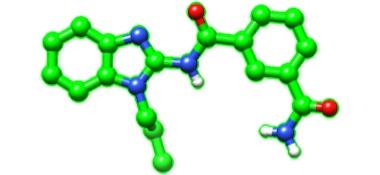
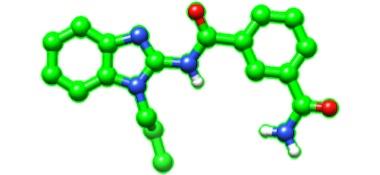
IMAGE

Credit: Duke Health

DURHAM, N.C. — A drug-like molecule developed by Duke Health researchers appears to intercede in an inflammatory response that is at the center of a variety of diseases, including some cancers, rheumatoid arthritis and Crohn's disease.

The molecule, called Takinib, works on a cell-signaling protein called tumor necrosis factor alpha, or TNF-alpha, which is a major contributor to tissue inflammation. In recent years, several biological drugs have been developed to interfere with TNF-alpha and treat both auto-immune disorders and some cancers, but patients often develop resistance or side effects.

The Duke team, lead by Timothy Haystead, Ph.D., a professor in the Department of Pharmacology and Cancer Biology, and Emily Derbyshire, Ph.D., assistant professor in the Department of Chemistry, conducted cell-based experiments to learn how the Takinib molecule influences a series of events to suppress cell death. Their work appears in the Aug. 17 issue of the journal Cell Chemical Biology.

The researchers found that Takinib inhibits an enzyme called TAK-1, which serves as a switch controlling cell survival in the TNF-alpha signaling process.

"The delicate balance between survival and death is often disrupted in disease, and this molecule is able to target the process," Haystead said. "This compound could potentially enhance the positive parts of TNF-alpha by only targeting tumor cells or inflammatory cells."

The compound also appears to be effective in small amounts, potentially reducing the toxicity that has been shown in biological compounds targeting the same inflammatory pathway.

Derbyshire said additional studies are underway to test Takinib in animals, focusing first on the molecule's effects in rheumatoid arthritis to determine whether it could have therapeutic benefit and then expanding to other diseases, including malaria.

"Takinib is unique for its ability to selectively target a pathway, since many inhibitors shut everything down," Derbyshire said. "It appears to have a more surgical ability to inhibit this pathway."

###

In addition to Derbyshire and Haystead, study authors include Juliane Totzke, Deepak Gurbani, Rene Raphemot, Philip F. Hughes, Khaldon Bodoor, David A. Carlson, David R. Loiselle, Asim K. Bera, Liesl S. Eibschutz, Marisha M. Perkins, Amber L. Eubanks, Phillip L. Campbell, David A. Fox and Kenneth D. Westover.

The National Institute of Health provided some of the study's funding support (GM099796); additional support is detailed in the study. Derbyshire and Haystead have filed patents for Takinib.

Media Contact

Sarah Avery
[email protected]
919-660-1306
@DukeHealth

http://www.dukehealthnews.org

Share12Tweet8Share2ShareShareShare2

Related Posts

Comparing Robust Intelligent Controls for 3-DOF Robots — Technology and Engineering

Comparing Robust Intelligent Controls for 3-DOF Robots

May 24, 2026
Predicting Flashover on Polluted Insulators with CNN-LSTM — Technology and Engineering

Predicting Flashover on Polluted Insulators with CNN-LSTM

May 24, 2026

Sepsis from C. difficile Infection Has Comparable Mortality

May 24, 2026

Mortality Trends in Dallas Very Preterm Neonates, 1977–2024

May 24, 2026
Please login to join discussion

POPULAR NEWS

  • ESMO 2025: mRNA COVID Vaccines Enhance Efficacy of Cancer Immunotherapy

    314 shares
    Share 126 Tweet 79
  • New Study Reveals Plants Can Detect the Sound of Rain

    734 shares
    Share 293 Tweet 183
  • Research Indicates Potential Connection Between Prenatal Medication Exposure and Elevated Autism Risk

    847 shares
    Share 339 Tweet 212
  • Common Food Preservatives Associated with Elevated Blood Pressure and Increased Heart Disease Risk

    56 shares
    Share 22 Tweet 14

About

We bring you the latest biotechnology news from best research centers and universities around the world. Check our website.

Follow us

Recent News

Comparing Robust Intelligent Controls for 3-DOF Robots

Predicting Flashover on Polluted Insulators with CNN-LSTM

Sepsis from C. difficile Infection Has Comparable Mortality

Subscribe to Blog via Email

Enter your email address to subscribe to this blog and receive notifications of new posts by email.

Join 83 other subscribers
  • Contact Us

Bioengineer.org © Copyright 2023 All Rights Reserved.

Welcome Back!

Login to your account below

Forgotten Password?

Retrieve your password

Please enter your username or email address to reset your password.

Log In
No Result
View All Result
  • Homepages
    • Home Page 1
    • Home Page 2
  • News
  • National
  • Business
  • Health
  • Lifestyle
  • Science

Bioengineer.org © Copyright 2023 All Rights Reserved.