• HOME
  • NEWS
  • EXPLORE
    • CAREER
      • Companies
      • Jobs
    • EVENTS
    • iGEM
      • News
      • Team
    • PHOTOS
    • VIDEO
    • WIKI
  • BLOG
  • COMMUNITY
    • FACEBOOK
    • INSTAGRAM
    • TWITTER
Thursday, June 25, 2026
BIOENGINEER.ORG
No Result
View All Result
  • Login
  • HOME
  • NEWS
  • EXPLORE
    • CAREER
      • Companies
      • Jobs
        • Lecturer
        • PhD Studentship
        • Postdoc
        • Research Assistant
    • EVENTS
    • iGEM
      • News
      • Team
    • PHOTOS
    • VIDEO
    • WIKI
  • BLOG
  • COMMUNITY
    • FACEBOOK
    • INSTAGRAM
    • TWITTER
  • HOME
  • NEWS
  • EXPLORE
    • CAREER
      • Companies
      • Jobs
        • Lecturer
        • PhD Studentship
        • Postdoc
        • Research Assistant
    • EVENTS
    • iGEM
      • News
      • Team
    • PHOTOS
    • VIDEO
    • WIKI
  • BLOG
  • COMMUNITY
    • FACEBOOK
    • INSTAGRAM
    • TWITTER
No Result
View All Result
Bioengineer.org
No Result
View All Result
Home NEWS Science News

Lab on a chip designed to minimize preterm births

Bioengineer by Bioengineer
April 13, 2017
in Science News
Reading Time: 3 mins read
0
Share on FacebookShare on TwitterShare on LinkedinShare on RedditShare on Telegram
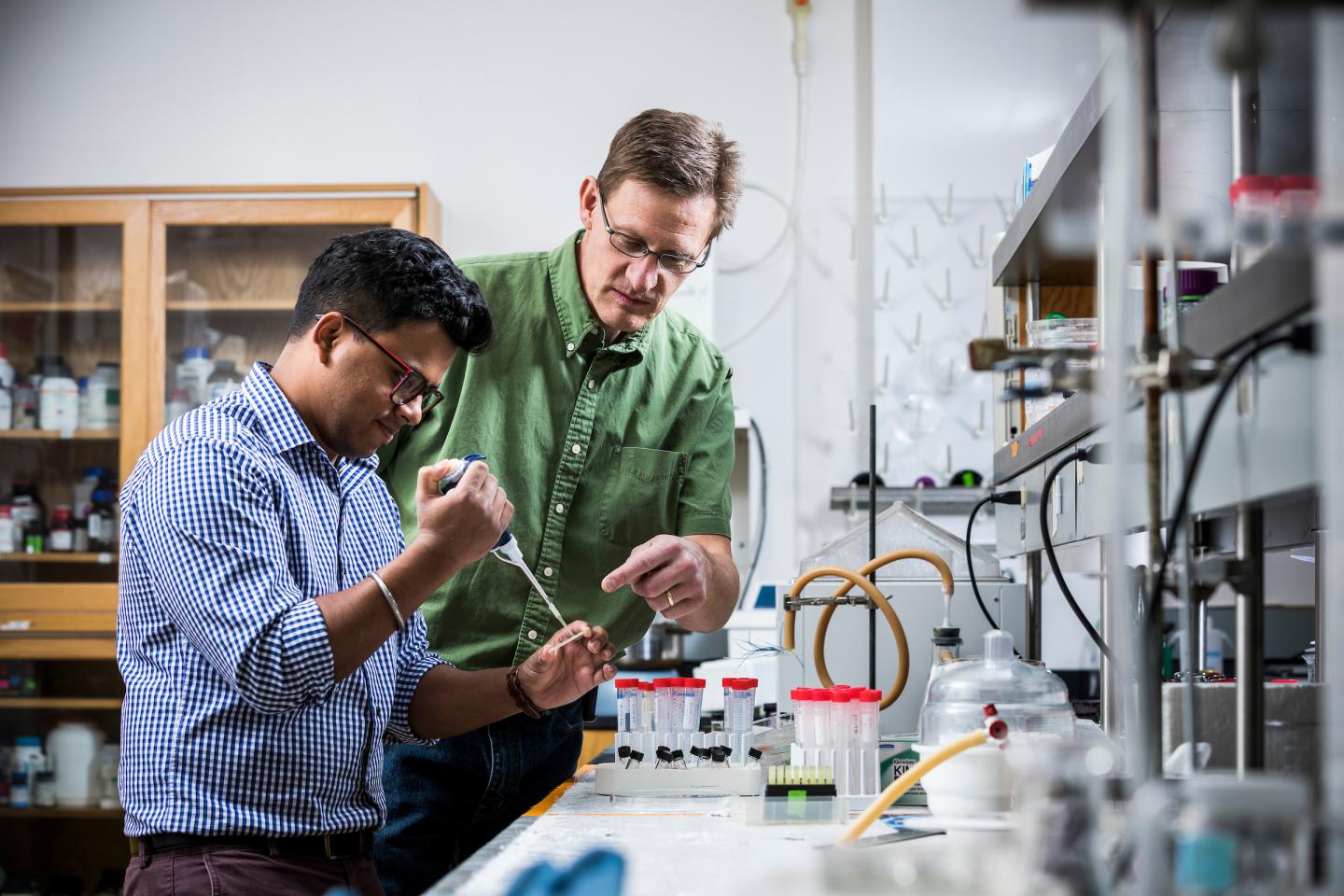
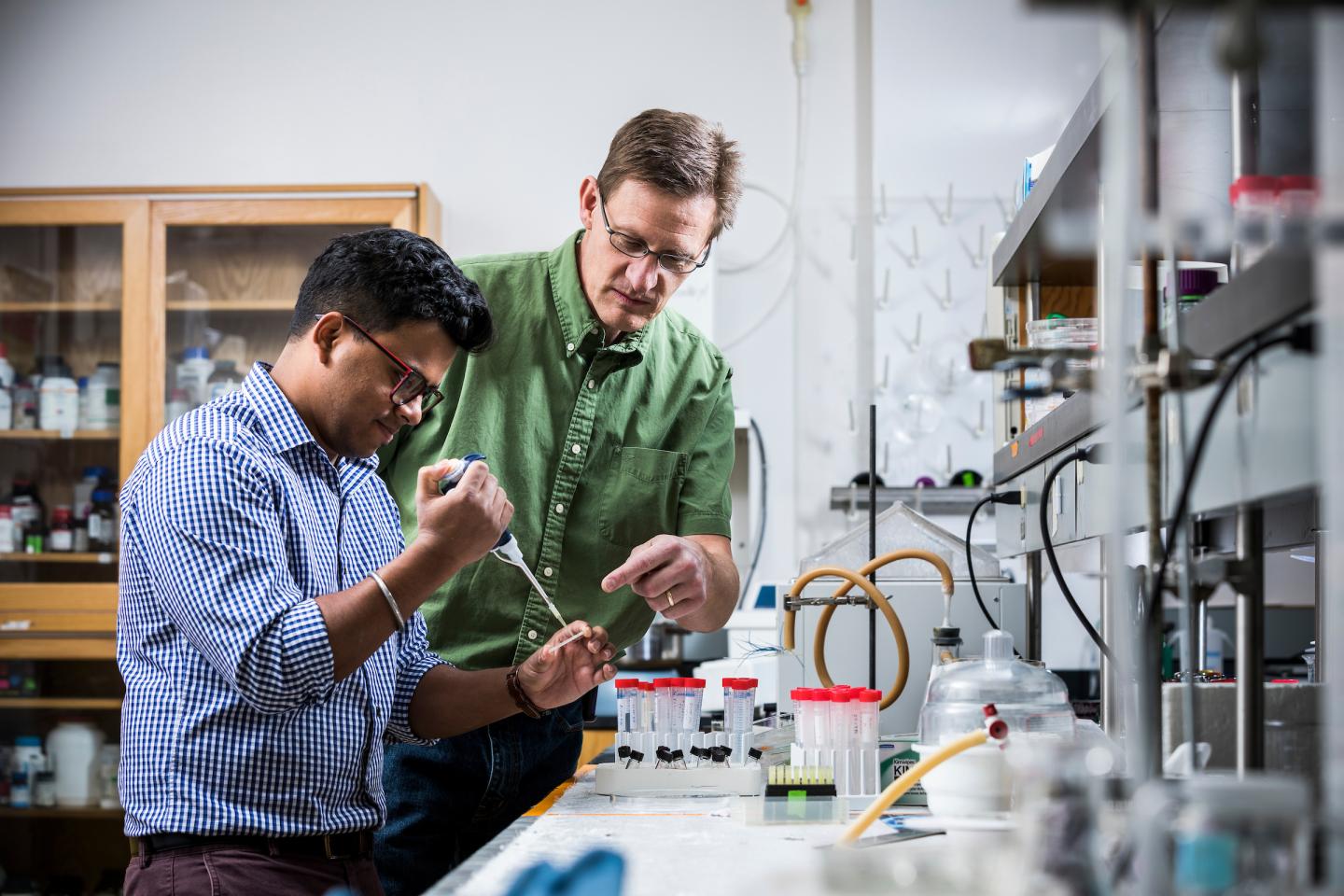
IMAGE

Credit: Nate Edwards/BYU

In the United States alone, a half million babies are born preterm; worldwide, the number is an estimated 15 million. Complications associated with preterm birth are the no. 1 cause of death for children under 5, and those who live often face a range of health problems.

But with help from a palm-sized plastic rectangle with a few pinholes in it, Brigham Young University researchers are hoping to minimize the problem of premature deliveries. The small chip — integrated microfluidic device if you speak chemistry — is designed to predict, with up to 90 percent accuracy, a woman's risk for a future preterm birth.

"It's like we're shrinking a whole laboratory and fitting it into one small microchip," said BYU chemistry Ph.D. student Mukul Sonker, who is the lead author of a study recently published in Electrophoresis and funded in part by the National Institutes of Health.

The goal for the device is to take a finger-prick's worth of blood and measure a panel of nine identified preterm birth biomarkers — essentially biological flags that can tip people off to diseases or other conditions. There aren't any current biomarker-based diagnostics for preterm births, and doctors typically only keep tabs on women who have other clear risk factors.

For the most part, "the symptom of preterm labor is a woman goes into labor, and at that point you're managing the outcome instead of trying to prepare for it," said Adam Woolley, BYU chemistry professor and study co-author.

With their oldest child, Woolley's wife began having contractions early in her third trimester. With the help of hospital intervention, eventually her contractions stopped and she was able to carry their son full term. "Ours was only a glimpse into the potential problems of a preterm birth, but it is still really satisfying to know that the research my students and I are doing now could help others in some way with this important medical issue."

There's still work to be done at the front end of the process, but for this study, Sonker and Woolley, along with BYU post-docs Radim Knob and Vishal Sahore, created the chip and a system for preconcentrating and separating biomarkers on it. That's important, explained Sonker, "because when you look at these proteins and peptides, they're present in such a trace amount, but if you preconcentrate them on the chip, you can get enough of a signal for prediction."

Among other benefits, the device is cheap, small and fast: once fully developed, said Woolley, "it will help make detecting biomarkers a simple, automated task."

Some peg the annual costs associated with preterm birth just in the United States at close to $30 billion, so one clear perk of such a screening tool, said Woolley, is economic. More significantly, he added, "there are a lot of preterm babies who don't survive: if we could get them to survive and thrive, it would be a huge gain to society."

###

Media Contact

Andrea Christensen
[email protected]
801-422-4377
@byu

http://www.byu.edu

############

Story Source: Materials provided by Scienmag

Share12Tweet8Share2ShareShareShare2

Related Posts

Tracking Lanthanide-Labeled Microplastics in Plants

June 25, 2026

POSTECH Researchers Slash Cost of Reconstituted Cell-Free Systems by 95%

June 25, 2026

AI and Physics Collaborate to Design Advanced Hydrogen Storage Materials

June 25, 2026

Natural Hallucinogens: Evolution’s Ecological Tools, Not Mere Chemical Byproducts

June 25, 2026
Please login to join discussion

POPULAR NEWS

  • Saying Goodbye to PGY-6: Pediatric Fellowship Realities

    103 shares
    Share 41 Tweet 26
  • Multi-Hospital Study Reveals Long Covid Burden Is Twice as High as Current Estimates

    92 shares
    Share 36 Tweet 23
  • Detection of EDCs in Breast Milk and Infant Urine Up to Six Months Highlights Early Exposure Risks

    77 shares
    Share 31 Tweet 19
  • New Drug Candidate Developed at McMaster Shows Potential for Treating Brain Cancer

    58 shares
    Share 23 Tweet 15

About

We bring you the latest biotechnology news from best research centers and universities around the world. Check our website.

Follow us

Recent News

Tracking Lanthanide-Labeled Microplastics in Plants

POSTECH Researchers Slash Cost of Reconstituted Cell-Free Systems by 95%

AI and Physics Collaborate to Design Advanced Hydrogen Storage Materials

Subscribe to Blog via Email

Success! An email was just sent to confirm your subscription. Please find the email now and click 'Confirm' to start subscribing.

Join 82 other subscribers
  • Contact Us

Bioengineer.org © Copyright 2023 All Rights Reserved.

Welcome Back!

Login to your account below

Forgotten Password?

Retrieve your password

Please enter your username or email address to reset your password.

Log In
No Result
View All Result
  • Homepages
    • Home Page 1
    • Home Page 2
  • News
  • National
  • Business
  • Health
  • Lifestyle
  • Science

Bioengineer.org © Copyright 2023 All Rights Reserved.