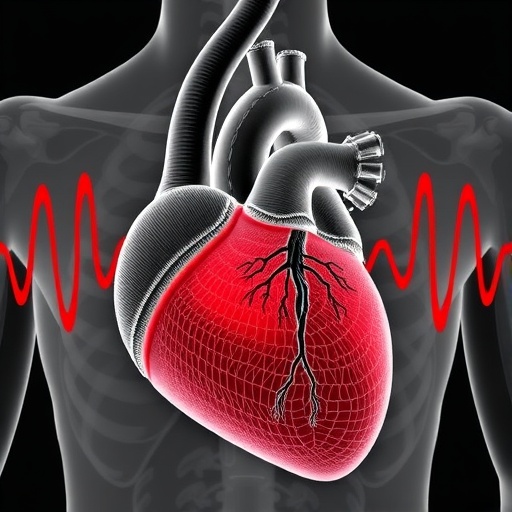
In a groundbreaking study published in Nature Communications in 2026, researchers have unveiled a critical biochemical pathway linking epicardial adipose tissue to lymphatic metabolic dysfunction in patients with atrial fibrillation. This discovery centers on kynurenic acid, a metabolite within the tryptophan degradation pathway, which appears to mediate the deleterious effects of epicardial fat on cardiac lymphatic function. The implications of this research are profound, shedding new light on the complex crosstalk between adipose tissue and cardiac electrophysiology and opening potential avenues for targeted therapeutic interventions in atrial fibrillation.
Epicardial fat, the visceral adipose tissue enveloping the myocardium, has garnered increasing attention as an active endocrine organ rather than a mere energy storage depot. It secretes a variety of bioactive molecules, including adipokines, cytokines, and metabolites that can influence underlying cardiac structures. The present study elucidates how epicardial fat influences the lymphatic system within the heart, disrupting its metabolic homeostasis and thereby contributing to the pathogenesis of atrial fibrillation.
The lymphatic system in the heart is critical for maintaining fluid balance, immune cell trafficking, and the clearance of metabolic waste products. Lymphatic vascular dysfunction can lead to edema, inflammation, and ultimately impair cardiac conduction systems, facilitating arrhythmogenesis. Despite mounting evidence implicating epicardial fat in cardiac diseases, the mechanisms linking it to lymphatic dysfunction have remained obscure until now.
An intensive biochemical analysis identified kynurenic acid as a pivotal mediator secreted by epicardial adipose tissue. Kynurenic acid arises from the kynurenine pathway, the principal route of tryptophan catabolism. It functions as an endogenous antagonist for excitatory amino acid receptors and participates in modulating oxidative stress and inflammation. This study uncovered that elevated kynurenic acid levels, emanating from epicardial fat, negatively impact lymphatic endothelial cell metabolism, disrupting energy homeostasis and lymphatic drainage capacity.
To investigate these phenomena, the researchers employed a multifaceted approach combining human cardiac tissue samples, animal models of atrial fibrillation, and in vitro cellular assays. Metabolomic profiling of epicardial fat samples from patients with atrial fibrillation revealed significantly higher kynurenic acid concentrations compared to controls. This aberrant metabolic signature correlated positively with markers denoting lymphatic dysfunction, such as lymphatic leakage and impaired lymphangiogenesis.
In preclinical models, administration of kynurenic acid recapitulated lymphatic metabolic disturbances characteristic of those observed in atrial fibrillation. Notably, kynurenic acid altered mitochondrial bioenergetics in lymphatic endothelial cells, reducing ATP production and increasing reactive oxygen species generation. These cellular derangements culminated in compromised lymphatic contractility and structural integrity, hallmark features of lymphatic vascular insult.
The mechanistic dissection further demonstrated that kynurenic acid acts via binding to the G protein-coupled receptor 35 (GPR35) expressed on lymphatic endothelial cells. Activation of GPR35 triggered downstream signaling cascades that impaired mitochondrial function and remodeled the cytoskeletal architecture, weakening endothelial barrier properties. Importantly, pharmacological inhibition of GPR35 rescued mitochondrial bioenergetics and restored lymphatic function in experimental models, highlighting its potential as a drug target.
In the context of atrial fibrillation, these lymphatic perturbations facilitate a pro-inflammatory microenvironment conducive to electrical remodeling of atrial myocytes. The study posits that the ensuing structural and electrical remodeling lowers the threshold for arrhythmic events. Correspondingly, human atrial tissue from patients exhibited elevated expression of inflammatory cytokines alongside kynurenic acid accumulation, linking epicardial fat metabolism with electrophysiological abnormalities.
These findings fundamentally shift the understanding of atrial fibrillation pathogenesis, framing epicardial fat not merely as a passive risk factor but as an active driver of lymphatic metabolic dysfunction through kynurenic acid signaling. This paradigm underscores the need to consider metabolic and immunologic crosstalk between cardiac adipose depots and lymphatic vasculature when developing antiarrhythmic therapies.
The therapeutic implications are far-reaching. Targeting the kynurenine pathway to modulate kynurenic acid production or antagonizing GPR35 signaling within the cardiac lymphatic endothelium could restore lymphatic metabolic balance and attenuate arrhythmogenic substrate formation. Future clinical trials may explore selective enzyme inhibitors or receptor antagonists to prevent or reverse atrial fibrillation progression.
Moreover, this work highlights the value of metabolomics and receptor biology in delineating complex cardiac disease mechanisms. By integrating molecular, cellular, and physiological data, the study provides a holistic model of epicardial fat-induced lymphatic dysfunction as a pathogenic axis in atrial fibrillation. This approach fosters precision medicine strategies tailored to patient-specific metabolic profiles.
The study also raises intriguing questions about systemic metabolic alterations in atrial fibrillation and the possible roles of kynurenic acid beyond the heart. Given kynurenic acid’s immunomodulatory properties, its impact on systemic inflammation and other cardiovascular comorbidities merits further scrutiny. Understanding how epicardial fat-derived metabolites interact with distant organs could reveal novel links between metabolic syndrome and arrhythmia.
Furthermore, the discovery of GPR35 as a mediator introduces a new player in cardiac lymphatic biology. Previously underappreciated in cardiovascular contexts, GPR35 may serve broader functions in endothelial metabolism and immune cell recruitment. Demystifying its ligands and downstream effectors will expand insights into vascular health and disease.
Technological advances enabling high-resolution imaging and metabolic flux analysis were instrumental in this research. Employing cutting-edge live-cell mitochondrial assays and sophisticated in vivo models allowed the precise quantification of lymphatic metabolic impairment induced by kynurenic acid. These methodologies set a precedent for future investigations dissecting cardiac microenvironment interactions.
In summary, Takahashi, Abe, Yoshida, and colleagues have unveiled a novel metabolic interplay between epicardial adipose tissue and cardiac lymphatic function mediated by kynurenic acid. This biochemical pathway emerges as a crucial factor in the etiology of atrial fibrillation, providing a promising target for innovative therapeutic strategies. Through cellular bioenergetic disruption and receptor-mediated signaling cascades, kynurenic acid orchestrates lymphatic dysfunction that fosters arrhythmogenic conditions, fundamentally redefining how adipose tissue influences cardiac electrophysiology.
The convergence of adipose-derived metabolites, lymphatic vasculature, and electrical remodeling spotlighted in this work underscores the complexity of atrial fibrillation beyond traditional electrophysiological paradigms. As this research advances, it holds transformative potential to refine diagnosis, risk stratification, and treatment of arrhythmias, translating molecular insights into clinical breakthroughs. The elucidation of epicardial fat’s role in modulating cardiac lymphatic metabolism heralds a new frontier in cardiovascular science.
Subject of Research: Metabolic and molecular mechanisms by which epicardial fat influences cardiac lymphatic function in atrial fibrillation.
Article Title: Kynurenic acid mediates epicardial fat-induced lymphatic metabolic dysfunction in atrial fibrillation.
Article References: Takahashi, M., Abe, I., Yoshida, N. et al. Kynurenic acid mediates epicardial fat-induced lymphatic metabolic dysfunction in atrial fibrillation. Nat Commun (2026). https://doi.org/10.1038/s41467-026-72974-9
Image Credits: AI Generated
Tags: bioactive molecules secreted by epicardial fatcardiac lymphatic vascular dysfunction and arrhythmiaepicardial adipose tissue in heart diseaseepicardial fat as endocrine organ in cardiologyepicardial fat impact on cardiac electrophysiologykynurenic acid and atrial fibrillationlymphatic metabolic dysfunction in cardiologylymphatic system role in cardiac functionmetabolic homeostasis disruption in atrial fibrillationtargetedtryptophan degradation pathway and heart health