


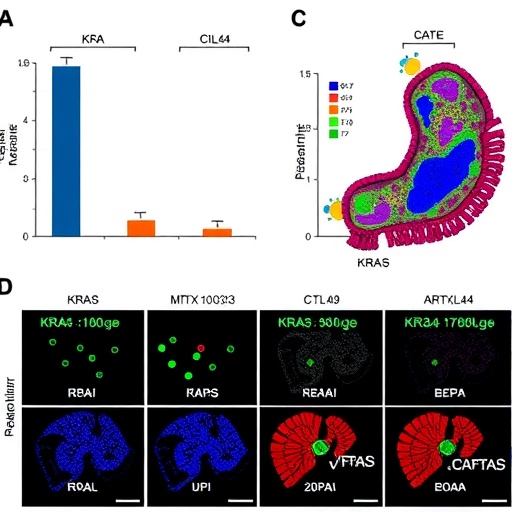
A new viral-science report highlights fresh evidence that directly targeting oncogenic KRAS can prime the immune system to fight pancreatic cancer—especially when paired with immune checkpoint blockade. Researchers report that two KRAS-focused small molecules can reshape the tumor microenvironment in ways that make anti-CTLA4 therapy markedly more effective.
Pancreatic ductal adenocarcinoma remains notoriously resistant to treatment, in part because tumors often suppress T-cell activity and exclude or dysfunction immune cells. In this study, the team focused on mutant KRAS-driven cancers, using targeted inhibitors designed to interfere with oncogenic signaling rather than broadly damaging cells.
The authors compare MRTX1133 and daraxonrasib, both intended to disrupt specific KRAS-dependent pathways. They then examine how these drugs influence antigen presentation, inflammatory signaling, and the functional state of cytotoxic lymphocytes within tumor-bearing models. The results show that KRAS inhibition is not merely cytostatic; it can act as an immunomodulatory trigger.
Strikingly, the combination with anti-CTLA4 produces synergistic anti-tumor effects. Anti-CTLA4, which blocks inhibitory signaling that restrains T-cell activation, appears to amplify the immune-stimulating changes initiated by KRAS inhibition. Across experiments, tumors treated with both modalities exhibited stronger control than either approach alone.
Mechanistically, the study links synergy to improved T-cell engagement and enhanced anti-tumor immunity. KRAS targeting is associated with increased immune activation signatures, suggesting that the tumor becomes more “visible” to adaptive immunity. When CTLA4 is concurrently inhibited, T cells sustain effector function rather than returning to suppressed states.
The work also emphasizes specificity: synergy emerges with the KRAS-directed agents rather than generic treatment, implying that oncogenic signaling actively maintains immunosuppressive programs. By interrupting that maintenance, KRAS inhibitors help unlock immune pathways that anti-CTLA4 can then reinforce.
Importantly for translation, these findings support a rationale for rational combination therapy in KRAS-mutant pancreatic cancer. Instead of treating checkpoint blockade as a standalone immunotherapy, the study positions KRAS targeting as a priming step that increases checkpoint therapy responsiveness.
Overall, the research frames KRAS inhibition as an immune rewiring strategy, converting an often immune-cold disease into one more susceptible to T-cell–mediated attack. The authors conclude that combining KRAS-targeted drugs with anti-CTLA4 may provide a path toward deeper and more durable responses for patients with pancreatic cancer driven by oncogenic KRAS.
Subject of Research: Pancreatic cancer; oncogenic KRAS targeting; anti-CTLA4 immunotherapy
Article Title: Oncogenic Kras targeting with MRTX1133 or Daraxonrasib specifically synergize with anti-CTLA4 to promote anti-tumor immunity in pancreatic cancer.
Article References: Mahadevan, K.K., Maldonado, A.S., Li, B. et al. Oncogenic Kras targeting with MRTX1133 or Daraxonrasib specifically synergize with anti-CTLA4 to promote anti-tumor immunity in pancreatic cancer. Nat Commun (2026). https://doi.org/10.1038/s41467-026-75960-3
Image Credits: AI Generated
Tags: anti-CTLA4 therapycombination immunotherapycytotoxic lymphocyte activationimmune checkpoint blockadeimmune system priming in pancreatic cancerinflammatory signaling in tumor microenvironmentKRAS inhibitors in pancreatic cancermutant KRAS-driven tumorssynergy between KRAS inhibitors and immune therapytargeted small molecule therapyTumor Immune Evasiontumor microenvironment modulation


