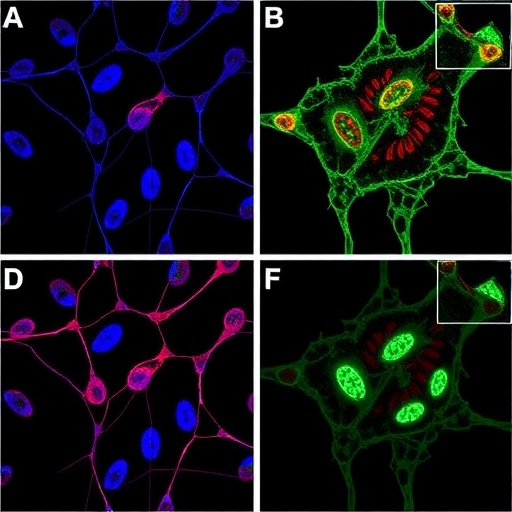
Recent research has illuminated the intricate relationship between the oncogenic KRAS gene and the preparation of the tumor microenvironment prior to the onset of pancreatic cancer. The study conducted by Allgöwer, Mulaw, and Nagai delves into how KRAS mutations drive the production of a specific secretome that plays a vital role in facilitating the initial stages of cancer development. This innovative work, set to appear in the journal Molecular Cancer, provides new insights into the biological mechanisms that underpin pancreatic cancer, a disease notorious for its lethal nature and poor prognosis.
Pancreatic cancer is one of the deadliest types of cancer, characterized by late-stage diagnosis and limited treatment options. The KRAS gene, when mutated, is found in over 90% of pancreatic ductal adenocarcinoma cases, making it a critical player in tumor initiation and development. This research reveals that KRAS doesn’t act alone; instead, it orchestrates a series of biological events that prepare the surrounding microenvironment for tumor growth. Such findings could pave the way for novel therapeutic strategies aimed at disrupting this cycle early in the carcinogenesis process.
Central to this study is the concept of a “secretome,” which refers to the array of proteins secreted by cells into the extracellular environment. In the context of cancer, the secretome can influence the behavior of neighboring cells, facilitating processes such as inflammation, immune evasion, and nutrient acquisition. The researchers focused on identifying the components of the KRAS-driven secretome, highlighting the role of tumor necrosis factor alpha (TNFα) as a key player. TNFα, a potent inflammatory cytokine, is known to shape the immune landscape and is implicated in various stages of cancer progression.
The researchers utilized sophisticated proteomic techniques to profile the secretome produced by KRAS-mutated pancreatic cancer cells. They discovered a significant increase in the levels of TNFα, suggesting that KRAS not only drives tumor growth directly but also alters the local cellular milieu to support its own expansion. By promoting TNFα release, the mutated KRAS gene aids in creating an inflammatory niche that can attract immune cells, resulting in a paradoxical effect: while these immune cells can target tumor cells, they can also promote cancer progression when influenced by the tumor’s secretome.
Further exploration revealed that the inflammatory environment fostered by TNFα contributes to the remodeling of the extracellular matrix—a crucial component of the tissue architecture that surrounds tumors. This matrix remodeling is essential for allowing cancerous cells to invade neighboring tissues and migrate to distant sites, a hallmark of metastatic disease. The findings suggest that interventions targeting TNFα or its downstream signaling pathways may have the potential to disrupt the supportive microenvironment, thereby hindering cancer progression.
Moreover, the research emphasizes the importance of understanding the interplay between cancer cells and their microenvironment. The KRAS-driven secretome is not merely a byproduct of tumor growth; it is an active participant in establishing a cancer-promoting niche. This insight could shift how researchers and clinicians approach pancreatic cancer, advocating for strategies that simultaneously target the tumor itself and modify its surrounding environment.
An equally compelling aspect of the study is its implications for cancer therapy. By revealing the molecular dialogues between KRAS-mutated cells and their microenvironment, the researchers highlight potential therapeutic targets that could be exploited. For example, drugs that inhibit TNFα signaling or block its receptors might not only dampen inflammation but also reduce the supportive advantages that tumors gain from their microenvironments.
The specific mutational landscape of KRAS in pancreatic cancer has long made it a daunting target for therapeutic intervention. However, the revelation that it can be exploited to alter the secretome opens new avenues for treatment. This could potentially involve combination therapies that disrupt tumor signaling while simultaneously reprogramming the immune environment to respond more effectively to cancer cells.
As research progresses, the challenge will be to translate these findings from bench to bedside. Understanding the nuances of how TNFα and other components of the KRAS-driven secretome function together will be essential in designing effective clinical trials. Personalized medicine approaches, which tailor treatment strategies based on individual tumor secretomes, could also emerge as a viable route forward.
Ultimately, this research can help demystify the complexities of pancreatic cancer biology and foster the development of innovative diagnostic tools. Identifying specific biomarkers associated with the KRAS-driven secretome may allow for earlier detection of pancreatic cancer, potentially improving survival outcomes. The study encourages a shift toward a more holistic view of cancer treatment, one that encompasses not only the tumor cells themselves but also their interactions with surrounding tissues and immune systems.
In conclusion, the work by Allgöwer et al. offers a groundbreaking perspective on the KRAS-driven secretome and its role in preparing the niche for pancreatic cancer development. By revealing the intricate connections between KRAS mutations and their surrounding environment, the research lays the groundwork for future studies aimed at disrupting these critical interactions. The potential to translate these findings into therapeutic modalities represents a hopeful step forward in the ongoing battle against one of the most formidable cancers known to humankind.
This new understanding of the KRAS-driven secretome may soon change the landscape of pancreatic cancer therapy, allowing specialists to not only target the cancer itself but also the nurturing environment that fuels its growth. The synergy of these strategies could enhance treatment efficacy and ultimately improve patient outcomes in the face of this challenging disease.
Subject of Research: KRAS-driven secretome and its role in pancreatic cancer onset
Article Title: An oncogenic KRAS-driven secretome involving TNFα promotes niche preparation prior to pancreatic cancer onset
Article References:
Allgöwer, C., Mulaw, M.A., Nagai, J. et al. An oncogenic KRAS-driven secretome involving TNFα promotes niche preparation prior to pancreatic cancer onset.
Mol Cancer (2026). https://doi.org/10.1186/s12943-025-02541-1
Image Credits: AI Generated
DOI: 10.1186/s12943-025-02541-1
Keywords: KRAS, pancreatic cancer, secretome, TNFα, tumor microenvironment, cancer therapy, proteomics
Tags: biological mechanisms of pancreatic cancerearly stages of carcinogenesisextracellular protein secretioninsights into cancer biologyKRAS mutations in pancreatic cancerKRAS-driven cancer nichelethal nature of pancreatic cancernovel therapeutic strategies for canceroncogenic KRAS gene functionspancreatic ductal adenocarcinoma researchsecretome in cancer developmenttumor microenvironment preparation