Taste buds, delicate sensory organs responsible for detecting flavors, have long been known to depend heavily on the nerves connecting them to the brain. When these nerves suffer damage, taste buds generally degenerate, only to regenerate once neural connections are restored. However, the precise cellular and molecular mechanisms underlying this complex process have remained elusive—until now. In a groundbreaking study conducted by researchers at Korea University College of Medicine, led by Dr. Dong-Hoon Kim and Professor Yong Taek Jeong, a crucial player has been identified: the c-Kit protein. Their findings, recently published in the International Journal of Oral Science, reveal that c-Kit signaling enables sweet-sensing taste cells to resist nerve injury and play an indispensable role in taste bud regeneration.
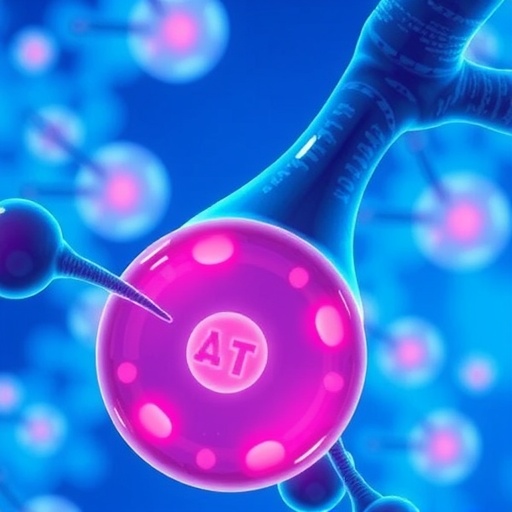
The research delineates that not all taste cells respond uniformly to nerve damage. While most taste cells rapidly degenerate following nerve severance, sweet-sensing cells expressing the protein c-Kit exhibit a remarkable resilience. Using sophisticated mouse models, the study demonstrated that following nerve transection, these c-Kit-expressing sweet cells withstand injury, in stark contrast to other taste cell types. This selective survival suggests an intrinsic cellular mechanism that preserves the sweet taste modality—a phenomenon that has puzzled scientists due to its persistence even when other taste qualities diminish.
By cultivating taste bud organoids—three-dimensional miniatures of taste tissue—the team was able to simulate and manipulate taste cell survival and regeneration in vitro. Notably, even when deprived of external survival signals, the sweet taste cells maintained their growth autonomously. However, introducing imatinib, a c-Kit–blocking drug commonly used in oncology, led to the total ablation of these surviving sweet cells. Consequently, the regeneration of other taste cell types was also hindered, underscoring the pivotal role of c-Kit signaling not only in sweet cell survival but also in orchestrating the broader regenerative cascade of the taste bud.
The identification of c-Kit as a molecular linchpin for taste bud resilience represents a novel breakthrough in sensory biology. Historically, the degeneration and recovery of taste buds have been viewed as a uniform process tightly linked to nerve integrity. This study disrupts that paradigm by revealing cell-type-specific differences that influence taste preservation and recovery dynamics. Understanding why sweet taste cells persevere better may elucidate everyday experiences such as altered taste perception during upper respiratory infections, where some flavors fade faster than others.
In examining the regenerative process, the researchers uncovered that recovery is not solely dependent on these c-Kit+ sweet-sensing cells. They found that certain Type III taste cells acquire stem-like properties following injury, contributing to the repair of the epithelium surrounding the taste buds. This dual mechanism highlights a sophisticated biological interplay where c-Kit+ sweet cells lead the regeneration of taste cells, while Type III cells participate in tissue remodeling and repair, expanding the scope of cellular actors involved in taste bud homeostasis.
Technically, the study employed nerve transection to mimic peripheral nerve injury, closely replicating clinical scenarios of taste loss due to trauma or surgery. By tracing cellular responses over time and applying targeted pharmacological blockade, the team mapped out the dependencies within the taste bud’s complex microenvironment. Their application of organoid technology further allowed precise dissection of intrinsic versus extrinsic factors governing cell survival—an approach that may soon enable controlled manipulation of taste pathways for therapeutic ends.
The implications of this research extend far beyond the lab. By revealing a molecular target that confers damage resistance to a subset of taste cells, the study lays foundational groundwork for future interventions aimed at mitigating taste disorders. Given the central role taste plays in nutrition, appetite, and overall quality of life, particularly among patients undergoing chemotherapy or experiencing neurological injuries, such targeted strategies could revolutionize the management of sensory impairments.
Professor Yong Taek Jeong expressed optimism about the translational potential of their findings, emphasizing that while immediate clinical applications are not yet realized, the ability to selectively control specific taste cell populations opens exciting avenues for flavor science and nutritional support. The study redefines our understanding of taste bud biology, suggesting that sensory recovery after nerve injury is a hierarchically organized, cell-type-dependent phenomenon governed by c-Kit signaling.
This research also stimulates new questions pertaining to the molecular pathways downstream of c-Kit in sweet cells, the source of regenerative signals in the taste bud niche, and whether similar mechanisms operate in other sensory systems. The potential to harness these insights could inform regenerative medicine approaches aimed at restoring sensory functions compromised by disease, age, or physical trauma.
Moreover, the study deepens our grasp of why taste qualities differ in their vulnerability to damage, a question with implications ranging from clinical diagnostics to the food industry. For instance, the preserved sweetness sensation despite varying degrees of nerve damage might influence dietary choices and appetite regulation, reinforcing the need to integrate sensory biology with nutritional science.
In summary, the pioneering work from Korea University College of Medicine presents a paradigm shift in sensory neuroscience. By unmasking c-Kit as the molecular guardian of sweet taste cells and revealing complementary roles for supporting taste cell types, it sets the stage for a new era in understanding and potentially manipulating the sensory experience of taste. The convergence of nerve biology, cell signaling, and organoid technology in this study provides a powerful framework that could catalyze breakthroughs in both fundamental research and clinical application.
Subject of Research: Animals
Article Title: c-Kit signaling confers damage-resistance to sweet taste cells upon nerve injury
News Publication Date: 29-Jul-2025
References: DOI: 10.1038/s41368-025-00387-3
Image Credits: Korea University College of Medicine
Keywords: Life sciences, Neuroscience, Cell biology, Molecular biology, Biochemistry, Developmental biology, Pharmacology, Taste, Sensory systems
Tags: c-Kit protein role in taste bud regenerationcellular mechanisms of taste bud survivalInternational Journal of Oral Science studyKorea University taste researchmolecular signaling in taste cellsnerve injury and taste perceptionprotein signaling in sensory biologyresearch on taste bud degenerationsensory organs and nerve connectionssweet taste cell resilience to nerve damagesweet-sensing taste cells and c-Kittaste cell response to nerve severance