• HOME
  • NEWS
  • EXPLORE
    • CAREER
      • Companies
      • Jobs
    • EVENTS
    • iGEM
      • News
      • Team
    • PHOTOS
    • VIDEO
    • WIKI
  • BLOG
  • COMMUNITY
    • FACEBOOK
    • INSTAGRAM
    • TWITTER
Friday, July 10, 2026
BIOENGINEER.ORG
No Result
View All Result
  • Login
  • HOME
  • NEWS
  • EXPLORE
    • CAREER
      • Companies
      • Jobs
        • Lecturer
        • PhD Studentship
        • Postdoc
        • Research Assistant
    • EVENTS
    • iGEM
      • News
      • Team
    • PHOTOS
    • VIDEO
    • WIKI
  • BLOG
  • COMMUNITY
    • FACEBOOK
    • INSTAGRAM
    • TWITTER
  • HOME
  • NEWS
  • EXPLORE
    • CAREER
      • Companies
      • Jobs
        • Lecturer
        • PhD Studentship
        • Postdoc
        • Research Assistant
    • EVENTS
    • iGEM
      • News
      • Team
    • PHOTOS
    • VIDEO
    • WIKI
  • BLOG
  • COMMUNITY
    • FACEBOOK
    • INSTAGRAM
    • TWITTER
No Result
View All Result
Bioengineer.org
No Result
View All Result
Home NEWS Science News Biology

Koala virus could explain why humans have ‘junk’ DNA

Bioengineer by Bioengineer
August 7, 2018
in Biology
Reading Time: 2 mins read
0
Share on FacebookShare on TwitterShare on LinkedinShare on RedditShare on Telegram
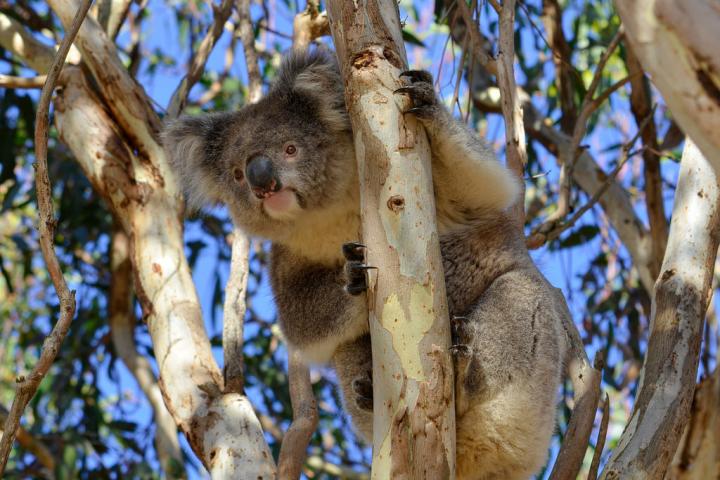
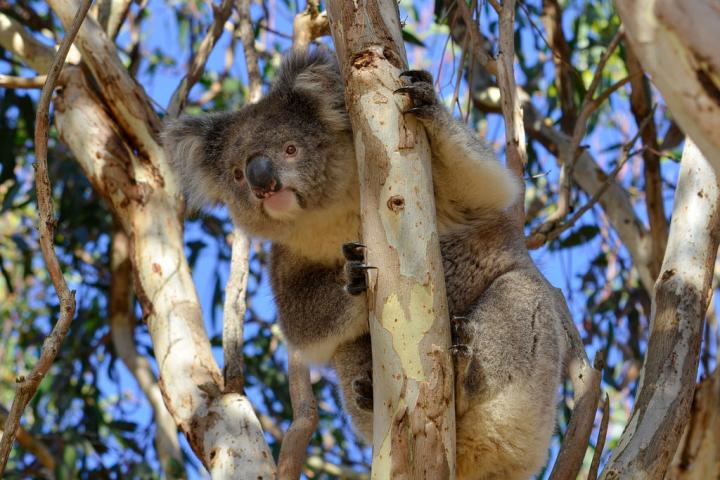
IMAGE

Credit: Chris Fithall

A koala virus could help researchers explain millions of years of accumulated 'junk' DNA in the human genome.

An international team of researchers – including scientists from The University of Queensland – is studying a virus infecting koalas in the hope it could demonstrate how viruses have altered the DNA of humans and other species throughout history.

Virologist Professor Paul Young, the Head of UQ's School of Chemistry and Molecular Biosciences, said the team has analysed the effects of the retrovirus infection.

"Retroviruses insert their genome into their host's chromosome, from where they make more copies of themselves," he said.

"Some can also infect what are known as germline cells, which alters the host genetic code and that of all their descendants."

Retrovirus insertions in humans date back more than five million years, which means it's difficult to know what happened when the first interactions took place.

"About a decade ago, we discovered that the wild koala population was being invaded by a retrovirus," Professor Young said.

"This isn't great news for the koala, but it has provided us with an opportunity to study what's happening to these retroviral genomes early in their association with a new host."

He said new retroviruses within a species could continue to replicate with disastrous consequences but, over time, their disease-causing effects usually stopped and either took on new functions or became inert 'junk' DNA.

"Until now, scientists could only guess at why and how this happened," Professor Young said.

UQ's Professor Joanne Meers said it would be exciting to see a retrovirus in action.

"Because the koala retrovirus is still relatively young – less than 50,000 years old – and not yet 'fixed' in a certain location within the koala genome, scientists can monitor this early engagement between a retrovirus and its host."

Professor Alex Greenwood, from the Leibniz Institute for Zoo and Wildlife Research in Berlin, said this was an important opportunity.

"This means that the koala, a species not usually associated with biomedical breakthroughs, is providing key insights into a process that has shaped eight per cent of the human genome, and will likely show us what happened millions of years ago when retroviruses first invaded the human genome."

###

The research is published in the Proceedings of the National Academy of Sciences [DOI: 10.1073/pnas.1807598115].

It has been supported by the Australian Research Council, the Australian Museum Foundation, BioPlatforms Australia, the New South Wales Environmental Trust, the National Institute of General Medical Sciences (NIGMS), the Morris Animal Foundation and the Deutscher Akademischer Austauschdienst.

Media Contact

Paul Young
[email protected]
@uq_news

http://www.uq.edu.au

Related Journal Article

http://dx.doi.org/10.1073/pnas.1807598115

Share12Tweet7Share2ShareShareShare1

Related Posts

Study Challenges Rising Global Trade in Critically Endangered Sand Tiger Sharks

Study Challenges Rising Global Trade in Critically Endangered Sand Tiger Sharks

July 10, 2026
Drosophila as a Key Genetic Model for Studying Extracellular Vesicles

Drosophila as a Key Genetic Model for Studying Extracellular Vesicles

July 10, 2026

BU receives $4.6M grant to advance lung science research training

July 10, 2026

Unmedicated Depressed Women Show Reduced Heat Tolerance Compared to SSRI Users

July 10, 2026
Please login to join discussion

POPULAR NEWS

  • Detection of EDCs in Breast Milk and Infant Urine Up to Six Months Highlights Early Exposure Risks

    77 shares
    Share 31 Tweet 19
  • New Drug Candidate Developed at McMaster Shows Potential for Treating Brain Cancer

    58 shares
    Share 23 Tweet 15
  • KTU Researchers Explore Ultrasound’s Role in Enhancing Blood Flow Beyond Diagnostics

    53 shares
    Share 21 Tweet 13
  • 高齢者の骨粗鬆症治療の持続性比較

    51 shares
    Share 20 Tweet 13

About

BIOENGINEER.ORG

We bring you the latest biotechnology news from best research centers and universities around the world. Check our website.

Follow us

Recent News

Cruise ship air pollution may worsen viral infection severity

Scientists Capture Cosmic Drift Preceding Star Birth

Genetic Mapping Reveals New Treatments for Bone Diseases

Subscribe to Blog via Email

Enter your email address to subscribe to this blog and receive notifications of new posts by email.

Join 84 other subscribers
  • Contact Us

Bioengineer.org © Copyright 2023 All Rights Reserved.

Welcome Back!

Login to your account below

Forgotten Password?

Retrieve your password

Please enter your username or email address to reset your password.

Log In
No Result
View All Result
  • Homepages
    • Home Page 1
    • Home Page 2
  • News
  • National
  • Business
  • Health
  • Lifestyle
  • Science

Bioengineer.org © Copyright 2023 All Rights Reserved.