• HOME
  • NEWS
  • EXPLORE
    • CAREER
      • Companies
      • Jobs
    • EVENTS
    • iGEM
      • News
      • Team
    • PHOTOS
    • VIDEO
    • WIKI
  • BLOG
  • COMMUNITY
    • FACEBOOK
    • INSTAGRAM
    • TWITTER
Wednesday, September 2, 2026
BIOENGINEER.ORG
No Result
View All Result
  • Login
  • HOME
  • NEWS
  • EXPLORE
    • CAREER
      • Companies
      • Jobs
        • Lecturer
        • PhD Studentship
        • Postdoc
        • Research Assistant
    • EVENTS
    • iGEM
      • News
      • Team
    • PHOTOS
    • VIDEO
    • WIKI
  • BLOG
  • COMMUNITY
    • FACEBOOK
    • INSTAGRAM
    • TWITTER
  • HOME
  • NEWS
  • EXPLORE
    • CAREER
      • Companies
      • Jobs
        • Lecturer
        • PhD Studentship
        • Postdoc
        • Research Assistant
    • EVENTS
    • iGEM
      • News
      • Team
    • PHOTOS
    • VIDEO
    • WIKI
  • BLOG
  • COMMUNITY
    • FACEBOOK
    • INSTAGRAM
    • TWITTER
No Result
View All Result
Bioengineer.org
No Result
View All Result
Home NEWS Science News Health

Knowledge that can improve identification and risk stratification of a heart disorder that can cause sudden cardiac death

Bioengineer by Bioengineer
July 26, 2023
in Health
Reading Time: 2 mins read
0
Knowledge that can improve identification and risk stratification of a heart disorder that can cause sudden cardiac death
Share on FacebookShare on TwitterShare on LinkedinShare on RedditShare on Telegram

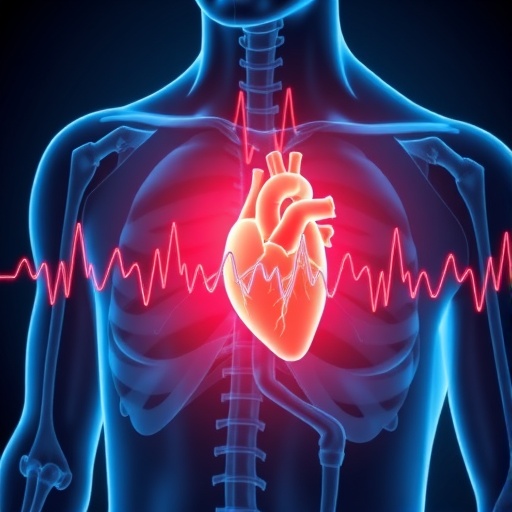
Scientists at deCODE genetics, a subsidiary of Amgen, in collaboration with researchers at the National University Hospital of Iceland, have published a study on a cardiac electrical abnormality that can potentially result in sudden cardiac death.

Knowledge that can improve identification and risk stratification of a heart disorder that can cause sudden cardiac death

Credit: decode genetics

Scientists at deCODE genetics, a subsidiary of Amgen, in collaboration with researchers at the National University Hospital of Iceland, have published a study on a cardiac electrical abnormality that can potentially result in sudden cardiac death.

The study, recently published, in the Journal of the American Heart Association, focuses on sequence variants found in the Icelandic population that associate the QT interval on the electrocardiogram. An abnormal QT interval can increase the risk of severe heart rhythm abnormalities and sudden cardiac death.

This study yielded twelve rare variants that associates with the QTc interval, including eight in known long QT syndrome genes. The prevalence of sequence variants associated with QT prolongation was found to be higher than previous estimates based on clinical studies. This study provides new and unique information regarding the genetic epidemiology of QT prolongation, penetrance of sequence variants and their association with serious events.

The relationship between the sequence variants and the risk of serious adverse effects varied significantly. The two most clinically severe sequence variants prolong the QT interval extensively and can increase the risk of sudden cardiac death almost fivefold. The most common sequence variant, has a small effect on the QT interval and does not appear to increase the risk of sudden cardiac death in the baseline state. However, certain clinical circumstances, such as electrolyte disturbances and when taking medications that have prolongation, of the QT interval as an adverse effect, may render individuals with this variant more susceptible to serious arrhythmias.

The scientists conclude that the extensive knowledge about the genotype/phenotype relationship, as presented in the study, can lead to improved identification and risk stratification for individuals with QT prolonging variants, potentially leading to a more precise clinical approach. This is the goal of precision medicine, a recent discipline, that focuses on a more individualized approach incorporating genetic findings, taking into account variability in lifestyle and environmental factors in addition to utilizing digital healthcare possibilities.


Journal

Journal of the American Heart Association

DOI

10.1161/JAHA.123.029845

Method of Research

Meta-analysis

Subject of Research

Human tissue samples

Article Title

Screening for Rare Coding Variants That Associate With the QTc Interval in Iceland

Article Publication Date

18-Jul-2023
Share12Tweet8Share2ShareShareShare2

Related Posts

Wearable monitor improves diagnosis of heart rhythm disorders after fainting

August 31, 2026

Visualisation of magnetic field-induced nanoparticle clusters and mechanical property changes in a breast phantom for inductive moderate hyperthermia

August 31, 2026

Multidisciplinary intervention in frail elderly patients with cardiovascular diseases: a multicentre, single-blinded, randomised controlled trial

August 31, 2026

Machine Learning Model Development and Evaluation for Non-contact Lower Limb Injury Risk Prediction in Elite Male Rugby Union: A Multi-team, Multi-season Analysis

August 31, 2026

POPULAR NEWS

  • β-Sitosterol from Ipomoea carnea Jacq. As a promising anti-inflammatory agent: Evidence from in silico modeling and in vitro validation

    29 shares
    Share 12 Tweet 7
  • Design, fabrication and characterization of a wearable Fiber Bragg grating sensor for cardiorespiratory monitoring using finger plethysmography

    29 shares
    Share 12 Tweet 7
  • KAIST opens the era of industrial-scale microbial foods, proposing growth strategies for the next-generation protein market

    29 shares
    Share 12 Tweet 7
  • Virologist awarded $2 million NIH grant to investigate how virus-infected cells live and die

    29 shares
    Share 12 Tweet 7

About

We bring you the latest biotechnology news from best research centers and universities around the world. Check our website.

Follow us

Recent News

β-Sitosterol from Ipomoea carnea Jacq. As a promising anti-inflammatory agent: Evidence from in silico modeling and in vitro validation

Design, fabrication and characterization of a wearable Fiber Bragg grating sensor for cardiorespiratory monitoring using finger plethysmography

KAIST opens the era of industrial-scale microbial foods, proposing growth strategies for the next-generation protein market

Subscribe to Blog via Email

Success! An email was just sent to confirm your subscription. Please find the email now and click 'Confirm' to start subscribing.

Join 85 other subscribers
  • Contact Us

Bioengineer.org © Copyright 2023 All Rights Reserved.

Welcome Back!

Login to your account below

Forgotten Password?

Retrieve your password

Please enter your username or email address to reset your password.

Log In
No Result
View All Result
  • Homepages
    • Home Page 1
    • Home Page 2
  • News
  • National
  • Business
  • Health
  • Lifestyle
  • Science

Bioengineer.org © Copyright 2023 All Rights Reserved.