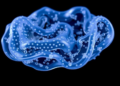
![[Figure 1] Synthesis of Core@Multi-shell Upconversion Nanoparticles with Uniform Size and Shape](https://bioengineer.org/wp-content/uploads/2025/04/KIST-Unveils-Cutting-Edge-Full-Color-Upconversion-Nanoparticle-Technology-for-Ultra-High-Precision.j.jpeg)
![[Figure 1] Synthesis of Core@Multi-shell Upconversion Nanoparticles with Uniform Size and Shape](https://scienmag.com/wp-content/plugins/wp-fastest-cache-premium/pro/images/blank.gif)
Revolutionizing Display Technology with Advanced Upconversion Nanoparticles
In a groundbreaking development that could redefine the landscape of display technology, researchers led by Dr. Ho Seong Jang at the Extreme Materials Research Center of the Korea Institute of Science and Technology (KIST) have unveiled an innovative upconversion nanoparticle technology. This pioneering research details the synthesis of core@multi-shell nanostructures, which are previously unseen multi-layer formats wherein several shell layers envelop a central core particle. This ingenious design enables these nanoparticles to achieve high color purity in red, green, and blue (RGB) light emission from a single nanoparticle by appropriately tuning the infrared wavelength.
As the demand for vibrant and immersive visual experiences escalates, conventional display technologies continue to face limitations. Standard two-dimensional flat screens fall short of accurately depicting the three-dimensional nuances of reality, thus stifling depth perception. Consider the cinematic marvel “Avatar,” which garnered widespread acclaim for its groundbreaking 3D imagery. While audiences lauded the visual splendor, the necessity for specialized glasses impeded accessibility, leading to the evolution of glasses-free 3D displays. However, these advancements came with a trade-off—viewers often experienced eye fatigue and discomfort.
Within this context, the emergence of three-dimensional volumetric display technology represents a crucial advancement. This next-generation technology harnesses the principles of physics and material science to manifest three-dimensional images in physical space. For this paradigm shift to reach its full potential, the reliance on upconversion nanoparticles that absorb infrared light and subsequently emit visible light becomes essential. A significant hurdle persists in the necessity for such nanoparticles to facilitate the emission of all three primary colors—red, green, and blue—simultaneously, a feat that existing materials struggle to achieve.
The challenge lies in the fact that many currently available upconversion materials can emit only a single color per particle, while others capable of red, green, and blue emissions often grapple with low brightness or restricted color reproduction—attributes that hinder their viability in vibrant displays. In an innovative response to these limitations, researchers at KIST have meticulously calibrated the material composition of the core and shell layers to induce RGB luminescence from a solitary nanoparticle.
By applying three distinct wavelengths of near-infrared light, the researchers successfully elicited red, green, and blue emissions at different excitation wavelengths. This multi-faceted approach involved refining the core element to emit green light, the inner shell for red, and the outer shell for blue. Remarkably, this engineering culminated in a nanoparticle capable of displaying high color purity combined with strong luminescence intensity across the RGB spectrum.
The implications of these advancements are profound; the nanoparticles developed by the KIST team allow for a diverse range of colors to be manifested through simultaneous applications of multiple near-infrared light wavelengths. Impressively, they achieved an expansive color gamut of 94.2% within the NTSC standard and a staggering 133% within the sRGB spectrum. Such a high level of color accuracy not only meets but surpasses the demands of modern display technologies, setting new benchmarks for color precision.
Furthermore, the researchers showcased the practical applications of upconversion nanoparticles by fabricating transparent nanoparticle-polymer composites. These composites have demonstrated the capability to project multifaceted colors, thereby facilitating the realization of full-color three-dimensional volumetric displays. Envision a future where audiences can experience lifelike visuals without the hindrance of eyewear—this innovative technology opens up a realm of possibilities.
Dr. Jang emphasizes the commercial potential of their remarkable invention, stating, “Upconversion nanoparticles that can absorb near-infrared light and generate high color reproduction and full-color luminescence will enable the commercialization of 3D volumetric displays that allow us to visualize true three-dimensional images.” The applications extend far beyond traditional displays, poised to revolutionize not only the viewing experience but also enhance security measures through advanced anti-counterfeiting and tamper-proof technologies.
KIST, established in 1966 as Korea’s inaugural government-funded research institute, has consistently aimed to address national and societal challenges while fostering innovation and growth through cutting-edge research. With this novel achievement in upconversion nanoparticles, KIST has once again underscored its commitment to advancing science and technology in tangible ways. The institution’s ongoing efforts instill optimism for the future, fostering anticipation for upcoming breakthroughs that hold the potential to further transform various industries.
In conclusion, this revolutionary research releases a wave of excitement for scientists and engineers globally, heralding a new era of display technology that harmonizes scientific ingenuity with artistic expression. The convergence of advanced materials science and optical engineering is paving the way for more immersive experiences in media and communications. As researchers continue to push the boundaries of what’s possible, society stands on the cusp of a visual revolution that promises to reshape how we perceive the digital world.
Subject of Research: Upconversion Nanoparticle Technology
Article Title: Multicolor Fine-Tunable Upconversion Luminescence from a Single Nanoparticle for Full-Color Displays with a Wide Color Gamut
News Publication Date: 26-Feb-2025
Web References: Advanced Functional Materials
References: None
Image Credits: Korea Institute of Science and Technology
Keywords
Nanoparticles, Upconversion, Luminescence, Display Technology, Color Gamut, Volumetric Displays, Optical Engineering, Materials Science, RGB Emission, Near-Infrared Light, KIST, Dr. Ho Seong Jang.
Tags: core@multi-shell nanostructuresglasses-free 3D displayshigh color purity RGB emissionimmersive visual experiencesinfrared wavelength tuningKIST display technology innovationsnext-generation display solutionsovercoming limitations in display technologythree-dimensional depth perceptionultra-high precision color displaysupconversion nanoparticle technologyvolumetric display advancements